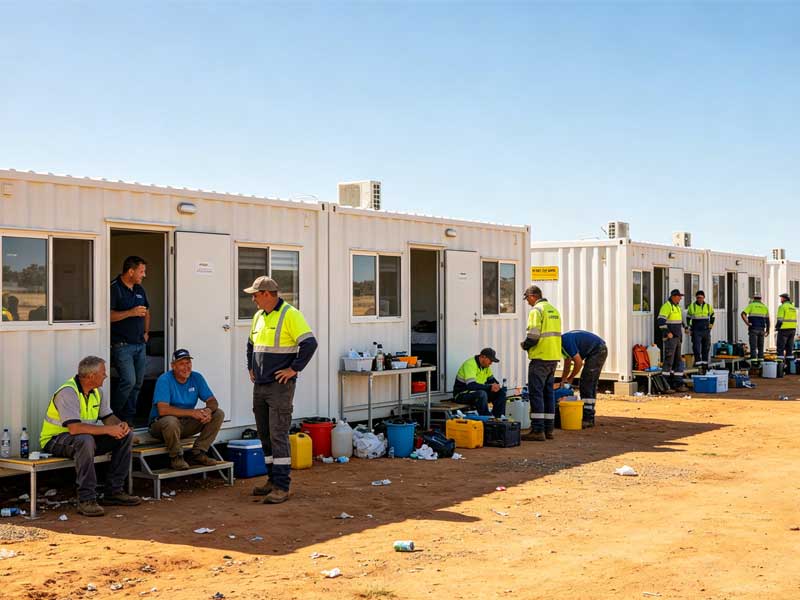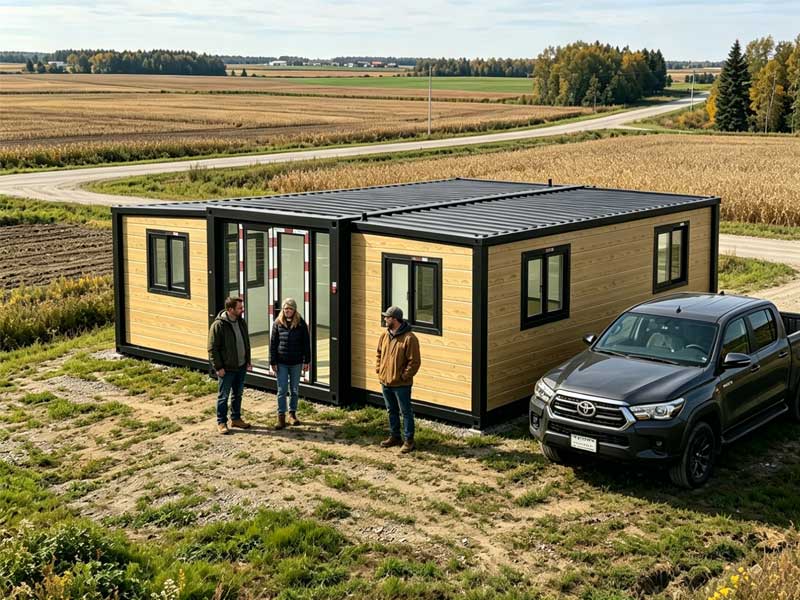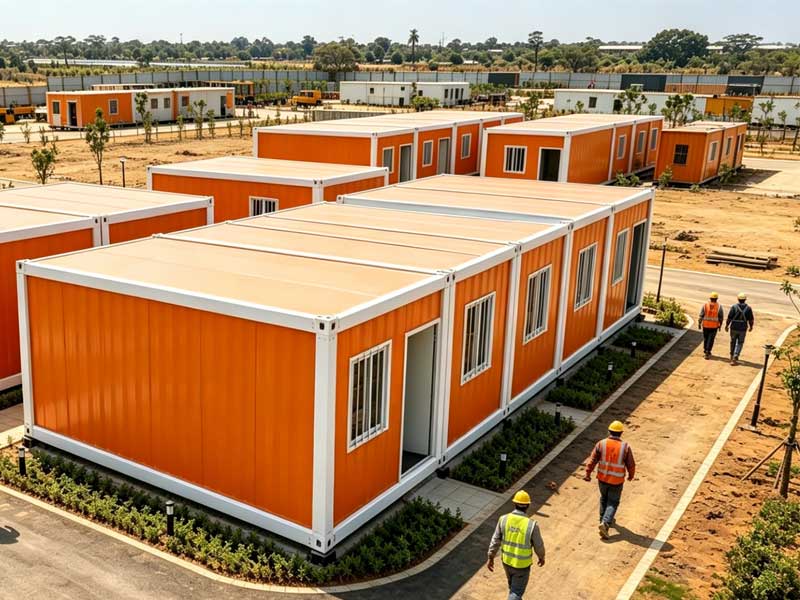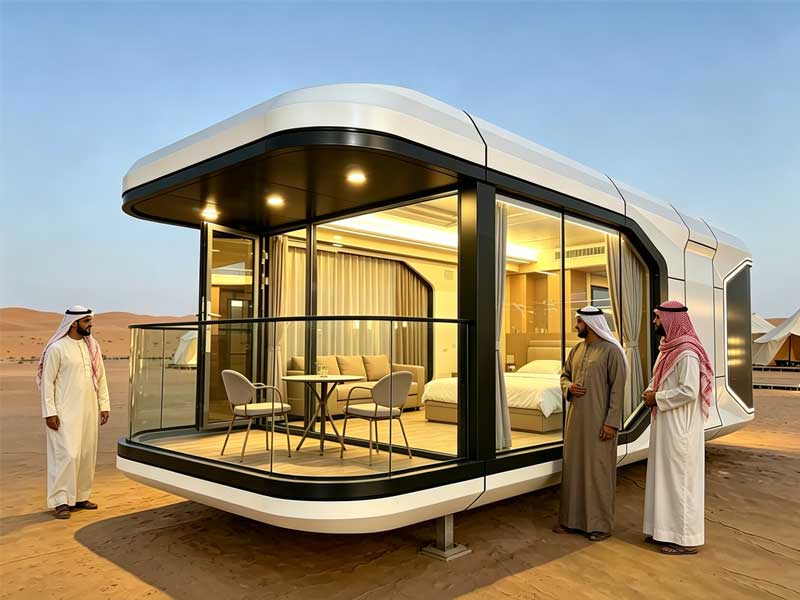


In remote parts of Western Australia, construction schedules rarely go exactly as planned.
That was one of the first things the client mentioned during our early discussions for a mining accommodation project near Newman in the Pilbara region.
The project was tied to a workforce expansion phase for a local iron ore operation. The client, a Perth-based mining contractor, originally intended to use conventional site-built temporary buildings. But after reviewing local labor availability and transport costs, the team realized the timeline would become difficult to control before the summer operating season arrived.
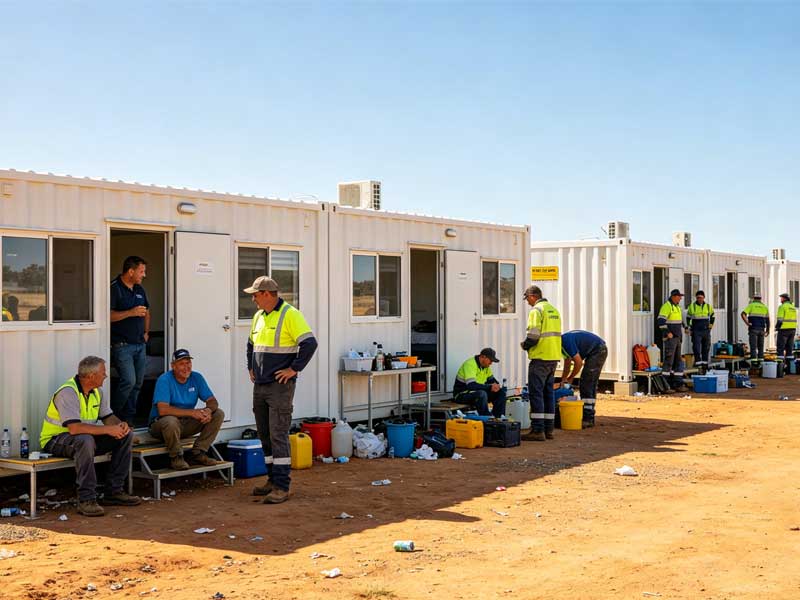
By that stage, daytime temperatures at the site were already starting to rise.
The client eventually shifted toward modular container accommodation because most of the structural and interior work could be completed before the units reached the mining area.
The project included:
Workforce sleeping units
Site office modules
Shower and sanitation facilities
Utility support spaces
From the beginning, the conversation focused less on appearance and more on reliability under remote operating conditions.
Project Information
Item | Details |
Project Area | Newman, Pilbara Region, Western Australia |
Client Type | Mining Operations Contractor |
Main Application | Workforce Accommodation Camp |
Product Type | Modular Container Housing |
Production Time | Approximately 45 Days |
Delivery Route | China → Perth Port → Inland Pilbara Transport |
One challenge appeared early during the planning stage.
The access road to the project area was frequently used by oversized mining transport vehicles, which meant delivery schedules sometimes changed with little notice. The client specifically asked whether the container modules could tolerate longer waiting times and repeated loading adjustments during inland transportation.
That concern ended up influencing several structural reinforcement details later in production.
Why the Client Moved Away from Traditional Site Construction
According to the client’s project coordinator, labor costs for remote construction in Western Australia had increased noticeably compared with previous years.
The original plan involved partial on-site assembly using locally sourced subcontractors. But after reviewing accommodation demand forecasts and installation timing, the contractor became concerned about delays during the hottest months of the year.
The client later explained:
“Once the schedule starts slipping in remote areas, everything becomes more expensive.”
That was one of the reasons the project moved toward modular mining accommodation container units instead of conventional temporary structures.
Another factor was transportation durability.
The contractor had previously experienced damage on a different prefab project where long inland transport routes caused alignment issues before installation. For this reason, they wanted a system with stronger structural rigidity during freight movement.
Heat Management Became a Bigger Issue Than Expected
Early drawings for the project originally used a standard wall insulation configuration.
A few weeks later, after another site meeting in Pilbara, the client contacted the engineering team again and requested thicker roof insulation and improved ventilation openings.
The reason was simple.
Several existing camp buildings at nearby operations were becoming difficult to cool during peak afternoon temperatures.
After internal discussion, several adjustments were added before production:
Higher-density roof insulation
Additional ventilation spacing near ceiling areas
Lighter exterior surface color
Improved sealing around openings exposed to dust-heavy winds
Extra anti-corrosion treatment for external steel sections
One small but practical modification involved the roof color.
The original darker finish absorbed too much heat during testing discussions, so the final units used a lighter sand-gray coating instead.
It was not a major engineering change, but the client believed it would help reduce indoor heat buildup during summer afternoons.
Living Standards at Mining Camps Are Changing
Several years ago, many mining accommodation projects focused mainly on maximizing bed capacity.
The client on this project approached things differently.
During one video meeting, the operations team mentioned that workforce turnover had become a growing issue across several remote projects. Long shifts combined with poor accommodation conditions were making it harder to retain experienced workers.
As a result, the client requested several layout upgrades that were not part of the original budget discussion:
Single-person sleeping rooms
Better acoustic separation between units
Residential-style split air conditioning systems
More durable bathroom materials
Additional nighttime ventilation options
One site supervisor later commented during installation:
“People can accept remote work conditions, but they still want decent rest after shift.”
That comment ended up shaping much of the final interior configuration.
Engineering Adjustments During Production
Because the modules would remain operational for an extended period, the project required additional engineering review for local conditions in Western Australia.
The consulting team reviewed:
Wind resistance calculations
Anchoring layouts
Electrical systems
Fire separation spacing
Drainage planning around seasonal rainfall areas
One interesting detail came up during production.
After reviewing inland transportation conditions, the client requested reinforcement around several lifting connection points because some delivery routes involved uneven temporary access roads near the site.
Those reinforcement adjustments were added before shipment instead of being modified later on-site.
That decision probably avoided installation delays after arrival.
Shipment and Inland Transportation
The units were shipped from South China to Perth before continuing inland toward Newman by truck.
Partway through the inland route, transportation timing changed because oversized mining equipment traffic temporarily affected access scheduling on one section of the road network.
The delay itself was not serious, but it reinforced why the client originally wanted modular systems with fewer on-site construction dependencies.
According to the logistics coordinator, keeping most of the finishing work completed before shipment helped reduce installation pressure once the units finally arrived.
Installation at the Mining Site
The installation environment was far more difficult than a standard urban construction project.
During deployment, the site experienced:
Strong daytime heat
Dust-heavy wind conditions
Limited local labor availability
Restricted crane scheduling windows
Because the modules arrived largely pre-finished, the on-site team mainly focused on positioning, utility connections, and final adjustments.
The installation supervisor later said:
“Reducing the amount of site work probably saved us the most time.”
Compared with traditional remote construction, the modular system allowed the project to move forward with a smaller installation crew.
Feedback After Initial Use
Several weeks after the first accommodation blocks became operational, the client shared follow-up feedback with the project team.
One point mentioned repeatedly was thermal performance during afternoon heat conditions.
According to the site coordinator:
“The insulation worked better than we expected during the hotter part of the day.”
The client also noted that fewer transportation-related corrections were needed during installation compared with some previous prefab projects used at other sites.
That was important because adjustment work in remote mining regions can quickly increase labor costs.
Why Container Housing Continues Growing in Australian Mining Projects
For many remote Australian mining projects, the decision to use container housing is becoming less about temporary construction and more about operational efficiency.
Contractors increasingly prioritize:
Faster deployment schedules
Reduced site labor dependency
Better transportation durability
Easier phased expansion
More predictable installation timelines
For companies searching for remote mining workforce container accommodation in Western Australia, those practical advantages often matter more than purely architectural considerations.
FAQ
Q1: Are Hanliang modular container accommodation units suitable for long-distance inland transportation in Western Australia’s Pilbara region?
A1: Yes. All container modules are customized with reinforced steel structures, thickened load-bearing frames and strengthened lifting connection points, specially adapted to Pilbara’s uneven temporary roads, complex mining traffic conditions and repeated loading and unloading. The optimized structural rigidity effectively avoids deformation, damage and component misalignment during long-distance cross-desert transportation, solving the common logistics damage pain points of traditional prefab buildings.
Q2: How do the container houses adapt to Pilbara’s high-temperature and dusty extreme mining climate?
A2: Hanliang adopts targeted climate adaptation upgrades for local harsh conditions. The overall configuration includes high-density enhanced roof insulation, optimized ceiling ventilation systems, dustproof sealing for all openings, anti-UV and anti-corrosion exterior treatment, and heat-reflective light-colored sand-gray coating. These customized upgrades effectively reduce indoor heat accumulation, resist strong dusty winds, and maintain stable indoor comfort even in peak summer high-temperature environments.
Q3: Why do Western Australian mining contractors prefer modular container housing over traditional site-built buildings?
A3: The core advantages focus on solving remote mining project pain points. Modular container housing completes most factory prefabrication of structure, insulation and interior decoration, greatly reducing reliance on scarce and high-cost local construction labor. It shortens on-site installation cycles, avoids construction delays caused by high temperature and bad weather, and features strong transportation durability and controllable project schedules, delivering higher cost performance and operational stability for remote mining camps.
Hanliang Container Housing Solutions
Hanliang continues supporting modular accommodation projects for mining, infrastructure, and industrial operations across demanding international environments.
From workforce camps in Western Australia to remote industrial accommodation projects in Africa and the Middle East, modern container housing increasingly depends on practical deployment experience, transportation reliability, and climate-specific engineering adaptation.
Hanliang container housing systems are developed around long-distance transportation stability, flexible modular installation, and real-world operational requirements for remote project environments.