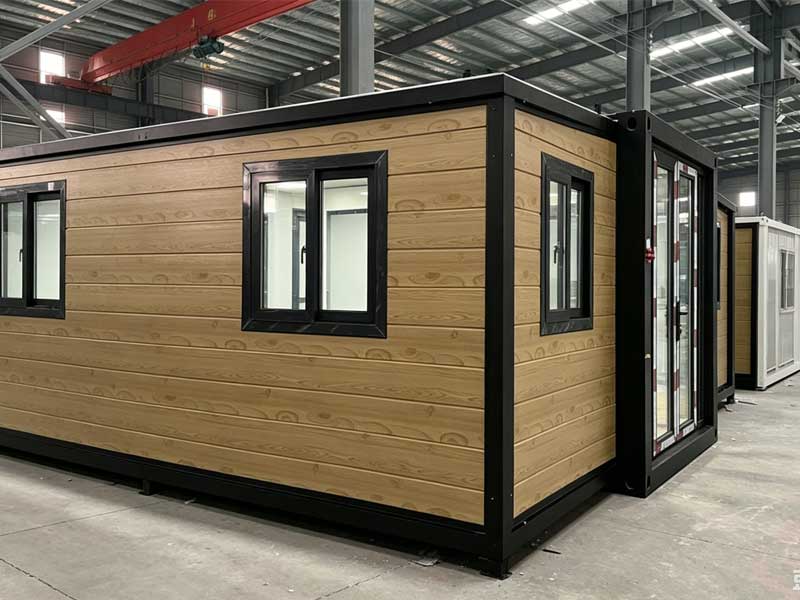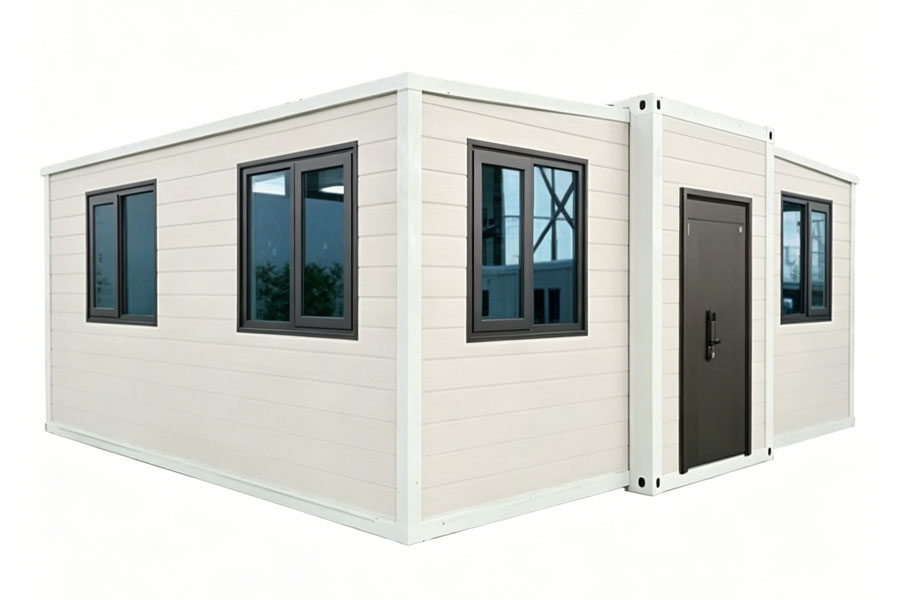



As a professional manufacturer of expandable container houses, one of the most frequent questions we receive from U.S. developers, contractors, and distributors is:
“Can Hengmao’s Chinese-made expandable houses be legally installed in the United States?”
From our experience serving North American clients, the answer is clear:
Yes — when designed, engineered, and documented in accordance with IRC, IBC, and local jurisdiction requirements.
Legality in the U.S. is not about country of origin. It is about compliance.
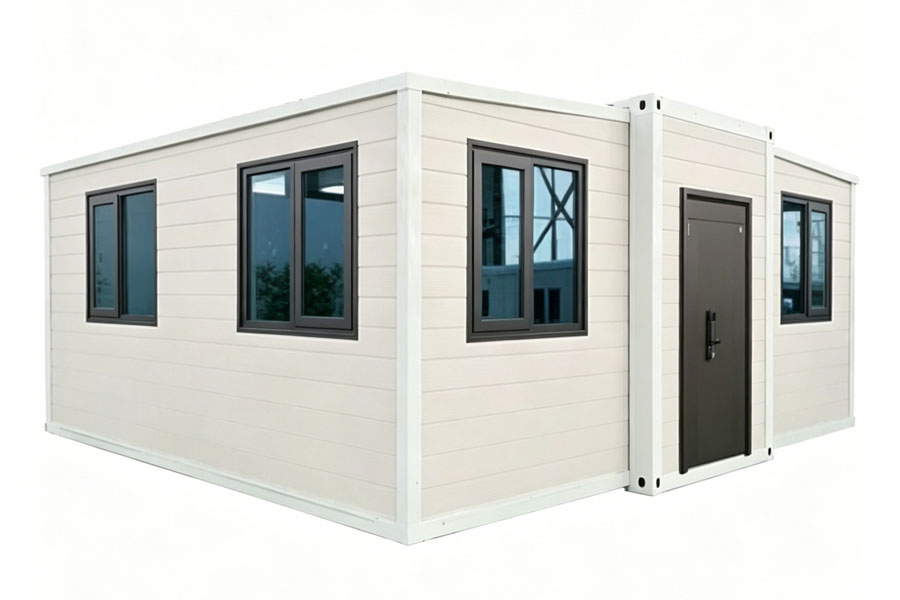
This article explains how U.S. building codes apply to double-wing expandable houses and how we prepare our products to meet those requirements.
Understanding the U.S. Code Framework
In the United States, building approval is governed primarily by:
International Residential Code (IRC) – For single-family homes, ADUs, and townhouses up to three stories.
International Building Code (IBC) – For commercial structures, workforce housing, schools, and larger developments.
Both codes are developed by the International Code Council (ICC) and adopted by states with local amendments.
Which Code Applies to Expandable Houses?
Application Scenario | Code Typically Applied |
|---|---|
Backyard ADU | IRC |
Single-family residence | IRC |
Workforce housing camp | IBC |
Commercial office module | IBC |
Hospitality cabin | IRC or IBC (depends on use) |
Every project must be evaluated based on occupancy type and local jurisdiction rules.
Our Compliance Philosophy: Engineer First, Manufacture Second
From a manufacturer’s standpoint, compliance must begin before production.
For U.S.-bound expandable houses, we focus on five core areas:
Structural engineering
Wind, snow, and seismic load design
Electrical system adaptation
Plumbing configuration
Energy code insulation alignment
Each project is assessed according to its destination state.
Structural Compliance: Location-Specific Engineering
Expandable container houses are not traditional shipping containers. They are engineered modular structures that must meet local structural requirements.
Key Structural Factors
Structural Element | U.S. Requirement |
|---|---|
Wind Load | 110–170 mph depending on region |
Snow Load | Calculated by local climate |
Seismic Design | Required in earthquake zones |
Foundation Anchorage | Site-specific anchoring plan |
Engineering Documents | Often require U.S. PE stamp |
For example:
Florida projects require enhanced hurricane resistance.
Colorado demands higher snow load capacity.
California requires seismic review.
For our U.S. clients, we provide structural calculation packages that support local engineer review and permitting.
Electrical Compliance for U.S. Installation
Electrical systems must comply with:
National Electrical Code (NEC)
This affects:
Breaker configuration
Wiring type
Grounding methods
Panel labeling
Voltage compatibility (120/240V, 60Hz)
We offer two approaches:
Option | Description |
|---|---|
Factory-installed NEC-ready system | Pre-configured for U.S. standards |
Structural shell only | MEP completed locally |
Many U.S. developers prefer partial installation to simplify inspection.
Plumbing & Utility Adaptation
Plumbing systems in the U.S. typically follow:
Uniform Plumbing Code (UPC) or
International Plumbing Code (depending on state)
Fixtures, piping materials, and connection systems must be compatible with U.S. regulations and inspection practices.
We coordinate plumbing configurations based on client preference — either compliant installation in factory or preparation for local completion.
Energy Code & Insulation Standards
Most states enforce the:
International Energy Conservation Code (IECC)
Energy performance requirements vary significantly by climate zone.
State Example | Insulation Demand |
|---|---|
Texas | Moderate |
New York | High |
Minnesota | Very High |
Arizona | Heat-resistant design focus |
We adjust wall, roof, and floor insulation specifications according to project location to support permit approval.
Permit Pathways for Expandable Houses
From our project experience, U.S. clients typically choose one of the following pathways:
1️⃣ Standard Building Permit Route
Submit engineered drawings
Apply for local permit
Complete inspections on site
2️⃣ State Modular Approval Program
Certain states operate factory-built housing programs that streamline approval.
Selecting the correct pathway early reduces risk and accelerates installation.
Common Concerns We Address
“Are Chinese Expandable Houses Automatically Rejected?”
No. Rejection occurs when documentation or engineering does not meet local code — not because of origin.
“Can CE Certification Replace U.S. Code Compliance?”
No. CE marking does not substitute IRC, IBC, or NEC compliance.
“Are Expandable Houses Considered Temporary?”
In most jurisdictions, if connected to utilities or used as a dwelling, permits are required.
Cost & Risk Comparison
Approach | Upfront Investment | Regulatory Risk |
|---|---|---|
Code-aligned factory production | Moderate | Low |
Post-arrival modification | High | Medium |
No compliance planning | Low | Very High |
From a business perspective, early compliance engineering protects both timeline and investment.
Frequently Asked Questions (From Our Clients)
Q1: Can Hengmao’s expandable houses be used as ADUs in the U.S.?
Yes, provided they meet IRC requirements and receive local approval. We supply structural documentation to support permitting.
Q2: Do we need a U.S.-licensed engineer?
In most cases, local jurisdictions require drawings reviewed or stamped by a licensed engineer in that state. We provide base engineering documentation to facilitate that process.
Q3: Is it easier to ship a structural shell and complete utilities locally?
For some projects, yes. Many developers choose this hybrid model to align fully with local inspection procedures.
Our Position as a Manufacturer
At Zhongshan Hengmao Integrated Housing Technology Co., Ltd., we do not treat U.S. compliance as an afterthought. For American projects, we:
Design for specific state conditions
Provide engineering documentation packages
Adjust insulation and structural systems
Configure electrical systems for U.S. voltage
Support clients through pre-permit technical discussions
Our goal is not just export — but successful installation and approval.
Final Thoughts
Chinese-manufactured expandable houses are legal in the United States when they are engineered and documented according to IRC or IBC standards and approved by local authorities.
Compliance is not a barrier — it is a process.
If you are planning an ADU development, workforce housing project, or modular expansion in the U.S., our team can review your target state requirements and prepare a customized compliance-ready production plan.
Contact us to discuss your U.S. project and receive a technical evaluation before manufacturing begins.