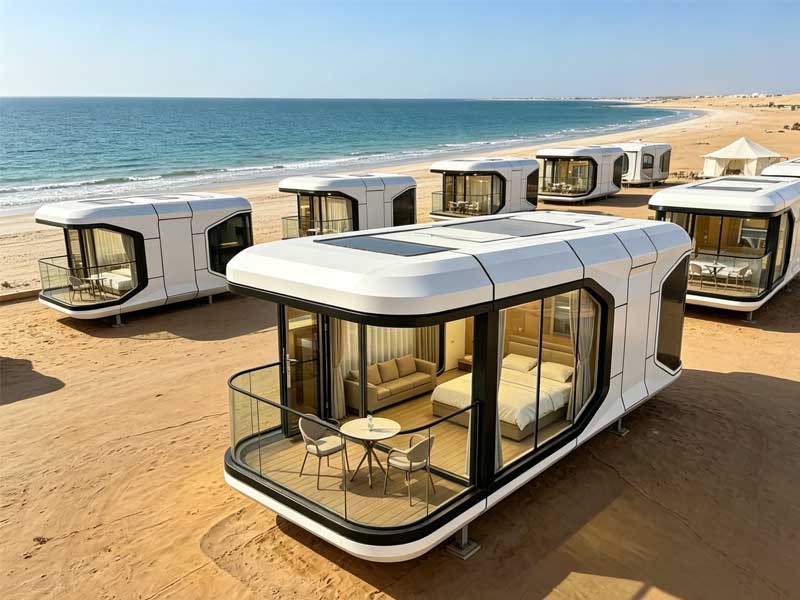


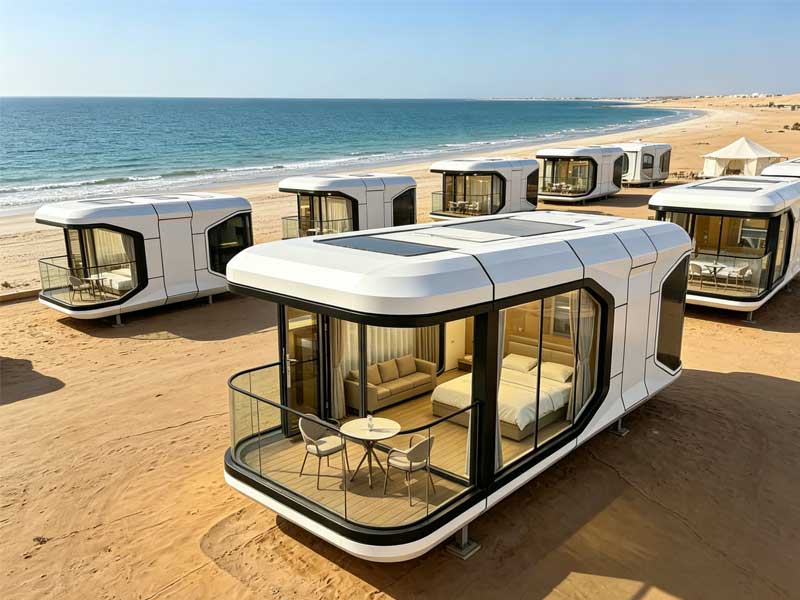
In countries such as Saudi Arabia, the United Arab Emirates, and Qatar, summer ground temperatures frequently exceed 50°C. For desert resorts, tourism camps, luxury glamping projects, and temporary accommodation developments, extreme heat is more than a comfort issue—it directly affects building lifespan, energy consumption, and overall guest experience.
Hengmao space capsule houses have been exported and installed in several Middle Eastern projects, where they have undergone real high-temperature testing. Maintaining stable indoor conditions in such climates is not achieved through a single insulation material, but through a complete thermal system design.
What 50°C Really Means for Modular Buildings
When outdoor temperatures reach 45–50°C, conventional metal-structured buildings often face serious challenges:
Rapid heat absorption through metal exterior panels
Intense solar radiation causing roof heat buildup
Heavy air-conditioning loads and rising electricity costs
Heat infiltration due to insufficient sealing
For projects searching for a Middle East climate modular house or a desert camping capsule house, thermal insulation performance determines whether the project can operate sustainably in peak summer months.
Multi-Layer Composite Structure: Building a Complete Thermal Barrier
Hengmao space capsule houses are not constructed with single-layer metal shells. Instead, they utilize a multi-layer composite wall and roof system:
Aluminum alloy structural outer shell
High-density insulation core (polyurethane or rock wool options)
Interior eco-friendly decorative panels
This layered structure forms a continuous thermal barrier that reduces heat transfer. The roof insulation thickness is enhanced to minimize heat gain from direct sunlight—one of the primary sources of temperature increase in desert environments.
In one Middle Eastern desert camp project, measured data showed that when outdoor temperatures reached 48°C, the indoor temperature remained between 34–36°C before air conditioning was activated—significantly lower than standard container structures under the same conditions.
Roof and Window Design: Key to High-Temperature Performance
In extreme heat regions, roof insulation is critical. Hengmao space capsules adopt a curved roof structure that reduces direct sun exposure while improving structural strength. A high-reflectivity exterior coating further reduces solar heat absorption.
Windows are equipped with double-glazed tempered glass, with optional Low-E configurations. For investors seeking a high temperature capsule house for desert resort, Low-E glass significantly reduces UV radiation and infrared heat penetration.
Sealing systems use high-temperature-resistant silicone strips, designed to withstand prolonged sun exposure without deformation or aging.
Matching Air-Conditioning Systems with Energy Efficiency
Effective insulation is not only about comfort—it directly impacts energy efficiency. In projects exported to Riyadh and Dubai, Hengmao recommended air-conditioning systems based on local climate data and insulation performance.
Because the thermal barrier reduces heat gain, air-conditioning systems operate more efficiently, lowering daily energy consumption. In one desert tourism project, the client reported approximately 18% lower average daily electricity usage compared to conventional lightweight steel buildings.
For developers searching for an energy efficient modular capsule house in the Middle East, lower operational costs translate into faster return on investment.
Durability and Weather Resistance in Harsh Conditions
Extreme temperatures also test material stability. Before export to high-temperature regions, Hengmao strengthens the following aspects:
UV-resistant exterior coatings
Anti-aging sealing systems
High-temperature-rated electrical insulation testing
These measures ensure that a capsule house for Saudi Arabia climate maintains structural integrity and interior performance over time, rather than functioning as a short-term seasonal structure.
Real Project Feedback from the Middle East
In a desert resort project outside Riyadh, the space capsules operated through July and August—traditionally the hottest months of the year. Client feedback confirmed:
Noticeably improved indoor comfort compared to standard container buildings
Stable air-conditioning performance
No roof deformation
No interior panel warping or detachment
For desert tourism operations, guest comfort directly influences online reviews and occupancy rates. Thermal insulation performance therefore becomes a business-critical factor.
Why System Design Matters More Than Material Thickness
When buyers search for an insulated capsule house supplier, many focus solely on insulation thickness. In reality, effective performance depends on the integrated system—roof structure, sealing quality, glass configuration, reflective coating, and HVAC matching.
At Hengmao, each project is optimized based on the climate data of the destination country, rather than applying a single standard template to all markets.
Supporting Long-Term Middle East Developments
With continued investment in tourism and desert resort projects across the Middle East, demand for luxury capsule houses for desert resorts and prefabricated space capsules for high temperature areas continues to grow.
Hengmao space capsule houses have demonstrated reliable performance under real 50°C summer conditions. Beyond supplying products, we provide structural documentation, export support, and technical guidance tailored to high-temperature climates.
Extreme heat cannot be reduced by appearance alone. Buildings designed for desert environments must begin with thermal resistance, durability, and energy efficiency at the structural level.
For developers planning projects in high-temperature regions, choosing the right insulated space capsule system is essential to ensuring year-round operation in 50°C environments. Hengmao’s engineering team is ready to provide project-specific solutions based on your site climate and operational needs.