



The importation of expandable housing systems into Canada has evolved into a highly regulated and engineering-sensitive process. This is especially true as demand continues to scale within three high-growth corridors:
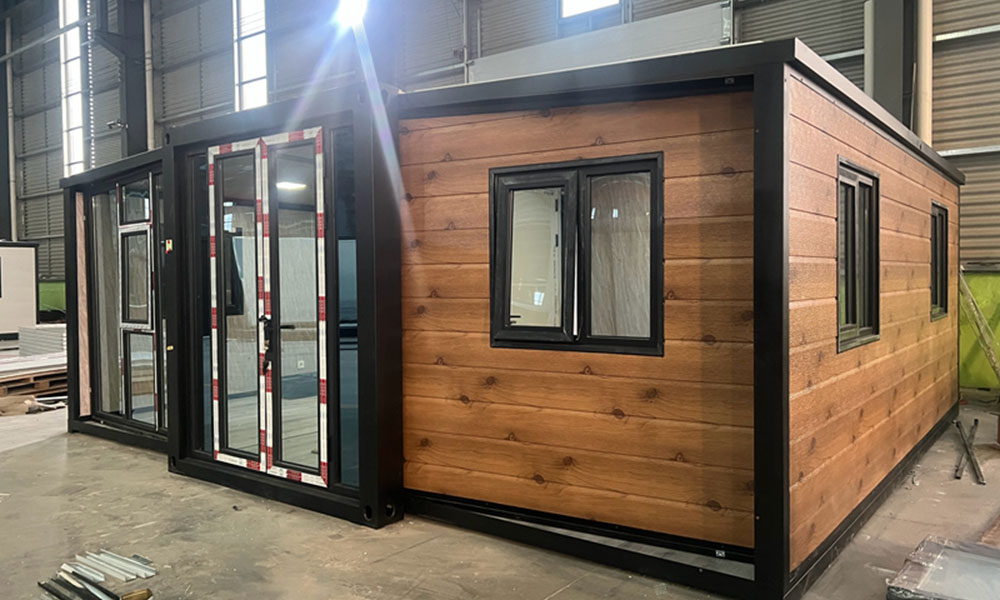
Ontario Suburban ADU Zones: The high-density Toronto–Hamilton corridor.
British Columbia Coastal Zones: Vancouver Island and the Fraser Valley.
Alberta Modular Housing Corridors: The Calgary–Edmonton industrial belt.
Unlike conventional building materials, expandable houses are classified under multiple overlapping regulatory frameworks involving customs law, structural engineering standards, and provincial taxation systems. In real-world factory export operations, this creates a multi-variable compliance environment rather than a fixed tax model.
Product Classification & The Canadian Customs System
Expandable housing systems—such as double-wing expandable container homes and prefabricated modular capsules—do not fall under a single fixed import category in Canada. Instead, classification depends heavily on the factory completion level, structural mobility status, electrical/plumbing integration stage, and declared end-use purpose.
In practice, the Canada Border Services Agency (CBSA) typically evaluates these products under two competing Harmonized System codes:
HS Code 9406: Prefabricated buildings (subject to residential-grade structural scrutiny).
HS Code 7308: Steel structural components (evaluated as semi-finished transportable assemblies).
⚠️ Real Export Case: Ontario Customs Reclassification Incident
Destination: Hamilton, Ontario suburban ADU development zone.
Initial Declaration: "Complete residential prefabricated units" (HS Code 9406).
The Issue: The declaration triggered an immediate residential-grade structural inspection and a valuation recalculation under a higher compliance threshold, causing a 6-working-day clearance delay.
Engineering Correction: Working with a Canadian customs broker, the technical documentation was revised to reclassify the shipment as a "transportable modular steel structure system (semi-finished assembly state)" under HS Code 7308.
Result: Clearance times normalized in subsequent shipments, inspection frequencies dropped by 30–40%, and tax predictability stabilized for the importer's budget.
Provincial Tax Structure & Regulatory Risk Matrix
Canada does not apply a single unified tax rate for modular housing imports. Landed costs are highly sensitive to the province of entry due to variations in the Provincial Sales Tax (PST) and Harmonized Sales Tax (HST).
Target Region / Corridor | Base Duty Range | Federal GST | Provincial Tax Impact | Total Effective Tax Exposure | Primary Engineering & Regulatory Scrutiny |
|---|---|---|---|---|---|
Ontario(Toronto / Hamilton / Ottawa) | 0% – 8% | 5% | 8% (PST) | ~13% (HST combined) | High inspection frequency; rigid municipal ADU-related zoning alignment. |
British Columbia(Vancouver / Victoria) | 0% – 8% | 5% | 7% (PST) | ~12% (Combined) | Strict seismic compliance documentation required; 3–7 days clearance variance. |
Alberta(Calgary / Edmonton) | 0% – 8% | 5% | 0% (No PST) | ~5% (GST only) | Lowest tax burden; fastest customs processing cycle (average 2–4 days clearance). |
Engineering Reality: Transport Stress & Structural Deviation Factors
Beyond taxation, long-distance maritime and inland transportation introduces measurable engineering risks that can impact final assembly precision.
Observed Field Transit Deviations (Multi-Shipment Average)
Frame Misalignment: Container vibration-induced frame deviation falls within a 1.8mm – 2.6mm range.
Insulation Vulnerability: Humidity exposure variations during ocean transport show a12% – 18% fluctuation, impacting unsealed internal materials.
Inland Logistics Buffer: Winter routes through the Alberta interior regularly add +2 to +5 days of transit variation due to extreme weather.
During a real deployment to a Vancouver Island coastal housing zone, minor deformation was detected at the corner joint interfaces after trans-Pacific transport. The issue was not a structural failure, but a compression tolerance shift caused by long-duration vibration exposure. This required precise onsite mechanical recalibration before final structural installation approval could be granted.
Factory Completion Level and Tax Interpretation Risk
The degree of factory fabrication completed before shipment directly determines how Canadian customs classifies the asset. Experienced importers strategically balance completion tiers against import friction:
Fully Finished Units: Highest likelihood of residential classification (HS 9406). While reducing site labor, it carries an increased inspection probability and a much stricter customs documentation review process.
Semi-Finished Modular Systems:The most stable import category. It demonstrates the most consistent clearance behavior, lowers reclassification risks, and remains preferred by high-volume project developers.
Knock-Down Systems: Treated closer to traditional building material imports. It offers the lowest classification ambiguity but drastically increases on-site assembly hours and local labor dependency.
Environmental Adaptation Challenges in Regional Deployment
Successful deployment requires adapting factory blueprints to localized Canadian climate stressors, which often impact project timelines more than nominal tariff variances:
Alberta (Freeze–Thaw Cycles): Foundation frost line mismatch is the primary source of deployment delay, causing an observed 3–8 days of site installation variance.
British Columbia (High-Humidity Coastal Zone): High risk of micro-condensation at joint interfaces; requires localized vapor barrier recalibration during factory assembly.
Ontario (Temperature Swings & Urban Density): High logistics congestion within urban infill corridors introduces delivery variability, with final timing heavily affected by municipal inspection scheduling.
Engineering Insight: Structurally Driven Classification
A common misunderstanding in international procurement is treating import tax as a purely administrative or accounting task. In practice, Canadian customs classification is entirely evidence-based, driven by structural completeness, assembly state definitions, material categorization consistency, and installation readiness levels.
Observed Multi-Project Field Deployment Pattern
1st Shipment: Highest inspection probability while customs establishes a baseline for the supplier.
2nd Shipment: Reduced classification uncertainty as documentation patterns align.
3rd Shipment onward: Stabilized, predictable clearance process.
Conclusion
The importation of expandable housing systems into Canada is not governed solely by standard tax rates, but by a combination of engineering classification accuracy, structural completion levels, and environmental deployment variables.
Real-world factory export experience demonstrates that classification errors can trigger costly 3–6 day clearance delays. Moving forward, successful deployment strategies across Ontario, BC, and Alberta will depend significantly more on the engineering accuracy of the shipping documentation than on simple tariff optimization.
Frequently Asked Questions (FAQ)
Q1: What causes most delays in expandable house imports to Canada?
The most common cause is classification inconsistency during customs declaration. This typically occurs when a product is incorrectly identified as a fully completed residential unit instead of a transportable modular structural system.
Q2: Which Canadian province offers the most efficient import conditions for modular housing?
Based on project tracking data, Alberta provides the most efficient conditions due to its lower provincial tax burden (5% GST only), faster customs processing cycles, and fewer regulatory bottlenecks compared to Ontario and British Columbia.
Q3: Is transportation or taxation the bigger cost factor in expandable house imports?
In real project scenarios, transportation variability—including container vibration tracking, weather-induced inland logistics delays, and structural onsite adjustments—exerts a significantly greater financial impact than small nominal differences in regional tax rates.