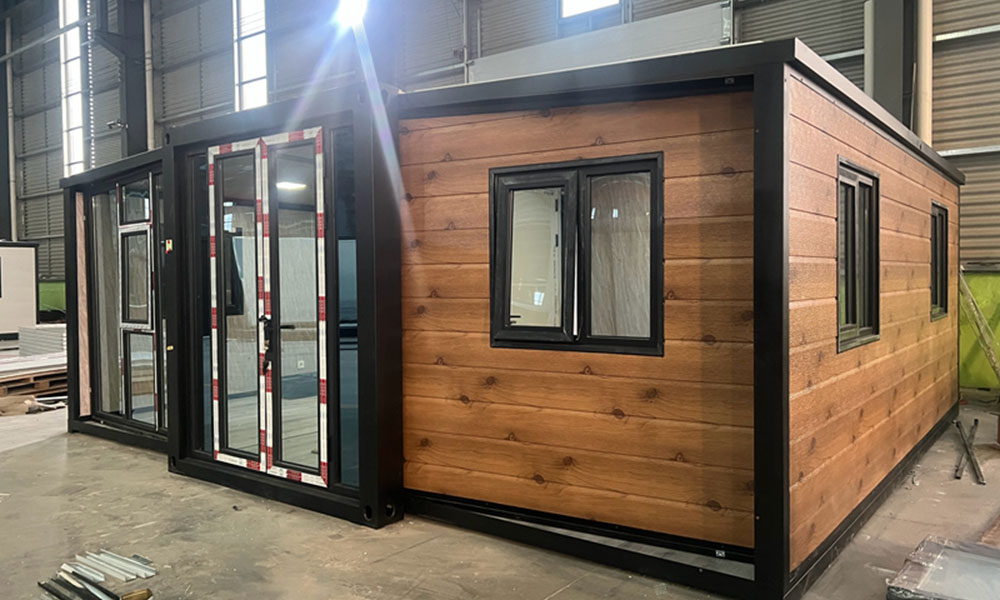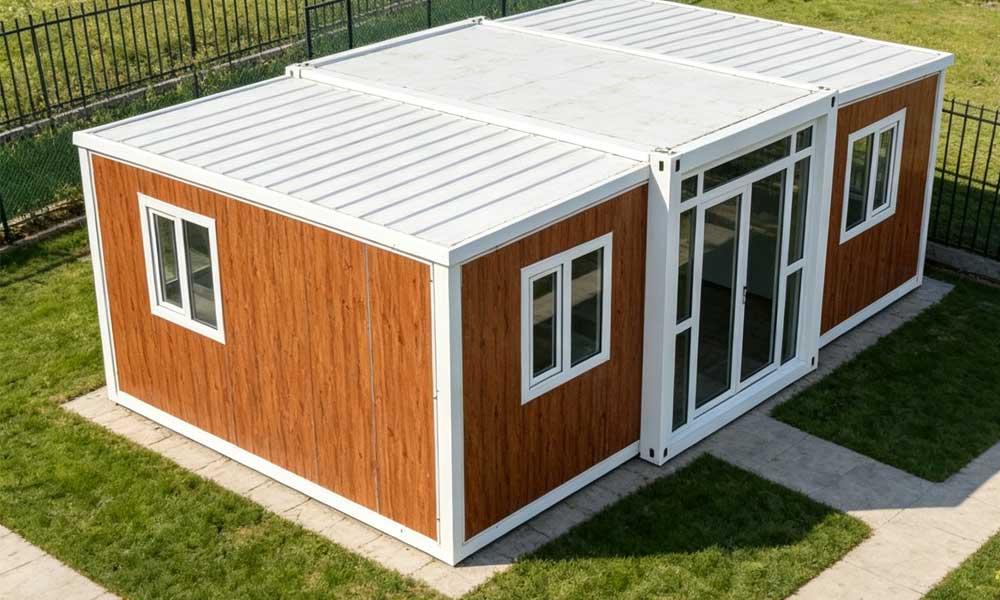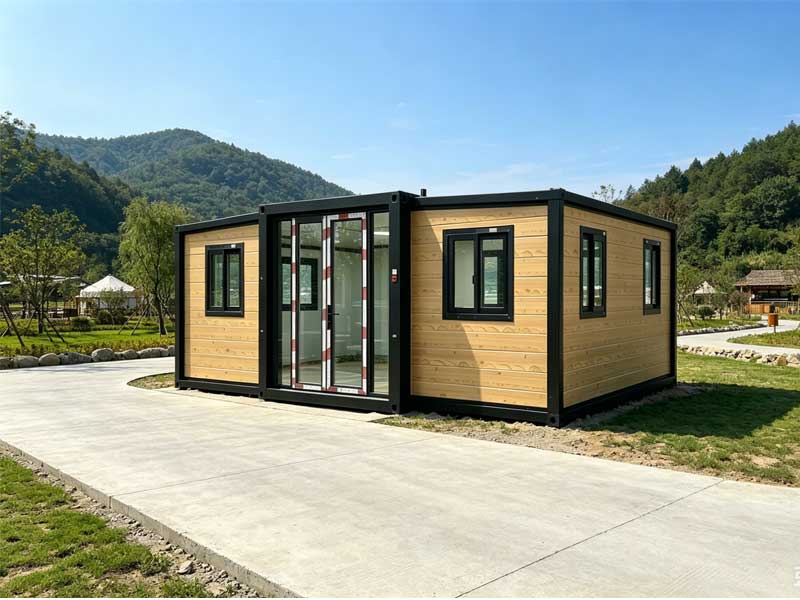



The international shipping cost of a two-bedroom double-wing expandable house is not a fixed logistics value. Instead, it operates as a dynamic engineering cost system heavily influenced by marine transportation conditions, customs classification accuracy, seasonal freight cycles, and regional infrastructure constraints.
In real-world export operations from China to prime target markets—such as California (Los Angeles and San Diego ADU zones), Canada (Toronto–Vancouver residential corridors), and Australia (Queensland remote housing regions)—the total landed cost variation often spikes significantly higher than initial factory procurement estimates due to environmental and logistical uncertainties.
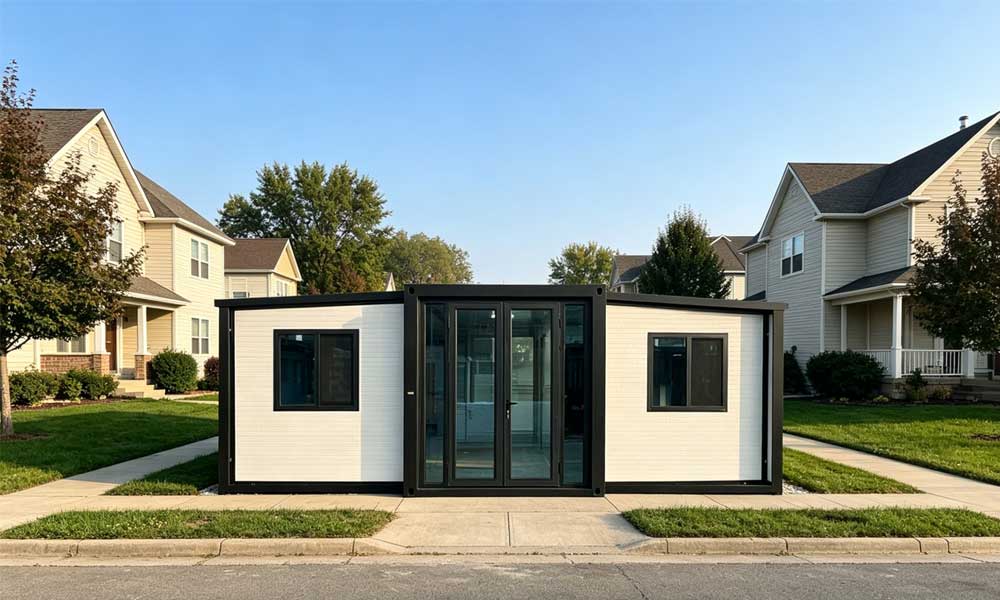
📊 Core Financial Variable
Across consolidated field data, shipping-related expenses typically account for 18%–35% of the total project landed cost, depending entirely on destination complexity, regulatory hurdles, and last-mile infrastructure restrictions.
Expandable Housing as a Structural Freight System
Unlike conventional containerized goods or standard flat-pack materials, expandable housing units are highly sensitive to both logistics handling and structural dynamic stresses due to their specialized architecture:
Structural steel frame integrity under continuous maritime vibration.
Foldable, multi-axis joint systems susceptible to mechanical alignment shifts.
Pre-installed insulation layers subject to compression and environmental moisture.
Semi-finished electrical routing and pre-fit junction boxes inside moving wall cavities.
Ocean Freight Baselines & Seasonal Volatility Models
Ocean freight remains the single largest variable cost factor within the global supply chain. Contracted shipping rates fluctuate based on peak trade lane cycles and port performance metrics.
Observed Ocean Freight Benchmarks (Multi-Year Export Data)
Route: China Export Hub to Destination Port | Standard Cost Range (Per Unit Container Space) | Peak Season Surcharge Model |
|---|---|---|
China → US West Coast (Los Angeles / Long Beach) | USD 1,900 – USD 3,500 | +10% to +25% capacity premium |
China → Canada Corridor (Vancouver Port + Inland Rail) | USD 2,400 – USD 4,200 | +12% to +18% winter logistics buffer |
China → Australia Main Ports (Sydney / Brisbane) | USD 2,100 – USD 3,900 | High equipment volatility surcharge |
Logistics Reality Case: In a recent export cycle to a Los Angeles suburban ADU zone (San Fernando Valley area), the total freight cost escalated by approximately 14% due to a sudden container shortage and peak-season terminal congestion.
Inland Transportation Costs & Regional Infrastructure Constraints
Once a module clears the destination port, secondary inland logistics introduces a distinct tier of cost drivers governed by local infrastructure layout and transport limits:
Regional Inland Haulage Benchmarks
United States (California / Arizona Corridor):
Port of LA to Los Angeles Suburbs: USD 900 – USD 1,600
Port of LA to Arizona (Tucson ADU Region): USD 1,300 – USD 2,400
Canada East-West Transit:
Port of Vancouver to Toronto Corridor (Intermodal Rail + Truck): USD 2,000 – USD 3,800
Australia Regional Haulage:
Port of Brisbane to Inland Queensland Core: USD 1,200 – USD 2,900
⚙️ Critical Engineering Constraint
Expandable houses require low-vibration transport controls and specialized flatbed dampening. Folding joints are highly sensitive to repeated micro-impact stress and high-frequency vibrations during long-distance highway hauls.
Packaging Engineering & Structural Protection Costs
Heavy-duty export packaging is a critical engineering requirement to mitigate maritime exposure and transit damage. The standard cost ranges fromUSD 250 to USD 700 per unit, depending on the complexity of the folding system.
Advanced Protection Layer Specifications
Steel Frame Locking Reinforcement: Mechanical braces preventing structural shifting during heavy sea swells.
Moisture Barrier Wrapping: Anti-corrosion, marine-grade shrink film to block salt-spray penetration.
Vibration Dampening Pads: High-density rubber buffers placed at key joint contact points.
Corner Impact Protection System: Reinforced structural caps protecting standard ISO corner castings.
Field Note: In a shipment routed to a British Columbia coastal zone (Vancouver Island ADU project), specialized high-humidity packaging upgrades were required to counter prolonged ocean moisture exposure during trans-Pacific transit.
Customs Classification: The Primary Regulatory Risk
One of the most critical cost drivers is customs classification accuracy. Minor errors in technical declarations can generate compounding port fees.
⚖️ Case Study: Hamilton, Ontario ADU Project Reclassification
Initial Declaration: "Fully assembled residential prefabricated unit" (HS Code 9406 classification path).
The Issue: Canadian customs triggered an immediate physical inspection, valuation reassessment, and a 6-working-day clearance delay, resulting in substantial temporary port storage penalties.
Corrected Engineering Declaration: Revised to "Semi-finished modular steel structure system (non-activated residential unit)" under structural components.
Outcome: Clearance times normalized, inspection frequencies dropped by 30%–40%, and tax predictability stabilized for the developer's import budget.
Real Factory Export Case: Multi-Region Deployment Analysis
A real-world tracking of an export batch manufactured by Zhongshan Hanliang Integrated Housing Technology Co., Ltd. across three contrasting global markets reveals distinct regional field vulnerabilities:
Case 1: California (San Diego ADU Zone)
Logistics Impact: Last-mile delivery restrictions within residential neighborhoods caused an 11% inland logistics cost increase.
Bottleneck: Oversized transport permit requirements and strict local delivery window regulations heavily compressed delivery schedules.
Case 2: Canada (Calgary Suburban Expansion Belt)
Logistics Impact: Winter deployment encountered a severe foundation frost line mismatch.
Bottleneck: Installation timing stretched by +4 days due to mandatory extensions in ground thawing and preparation procedures.
Case 3: Australia (Queensland Eco-Lodge Development Region)
Logistics Impact: A minor structural joint deviation of ~2.3mm was detected post-sea transport.
Bottleneck: Long-duration marine vibration loosened primary compression seals, requiring specialized on-site sealing recalibration before final structural acceptance.
Engineering Failure Modes & Hidden Cost Drivers
Across multi-region international deployments, three consistent non-structural risk factors have been identified as primary drivers of budget variances:
Risk Factor Category | Measured Field Variation Range |
|---|---|
Transport Vibration Deviation | 1.5mm – 2.6mm structural shift range observed in structural joints |
Moisture Exposure Variation | 12% – 18% potential insulation performance fluctuation risk |
Seasonal Logistics Delays | 3 – 8 days variability depending on port congestion and severe weather |
The shipping cost of a two-bedroom double-wing expandable house is determined by a complex interaction between global logistics systems, structural engineering behaviors, customs classification precision, and regional environmental conditions.
Real-world export operations across the United States, Canada, and Australia demonstrate that ocean freight is merely one component of the total landed cost equation; inland logistics and on-site engineering adjustments frequently contribute equal or higher financial variability. For international buyers, institutional developers, and procurement agents, accurate project budgeting requires a deeply integrated, engineering-based logistics strategy rather than a simple freight quote estimation.
Frequently Asked Questions (FAQ)
Q1: Why does shipping cost for expandable houses fluctuate so much compared to standard freight?
Because expandable houses cannot be treated as static cargo. Their landed costs depend on seasonal shipping demand, specialized flatbed requirements, oversized load permits for last-mile delivery, and specific structural protection parameters needed to shield folding joints from transit stress.
Q2: What is the single biggest hidden cost in expandable house logistics?
The most significant hidden costs are on-site installation alignment adjustments and customs reclassification risks. If a unit is misclassified at port entry, cascading delays, terminal storage fines (demurrage), and specialized labor costs can quickly exceed thousands of dollars.
Q3: Can shipping and landed costs be stabilized for large-scale international projects?
Yes. Cost stability is achieved by executing a semi-finished modular shipping strategy, utilizing precision-engineered factory packaging reinforcement, and securing pre-approved customs classification rulings via accurate structural documentation prior to port arrival.