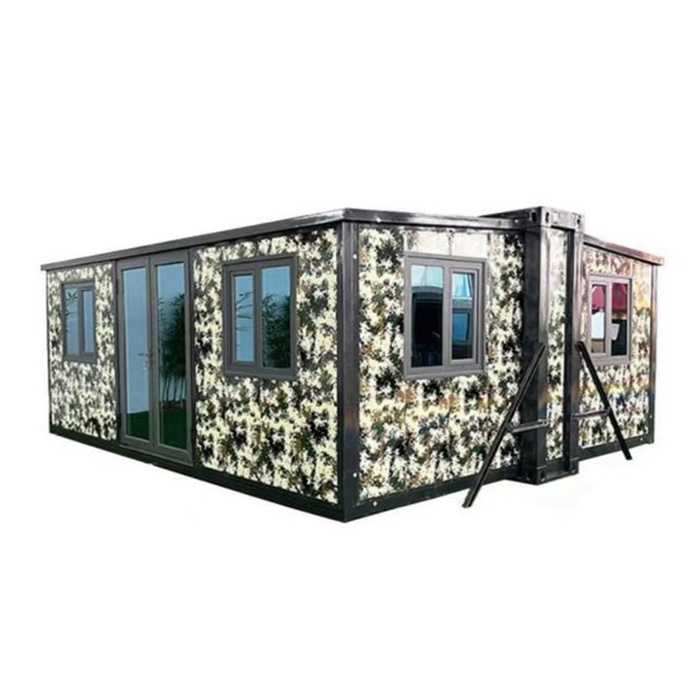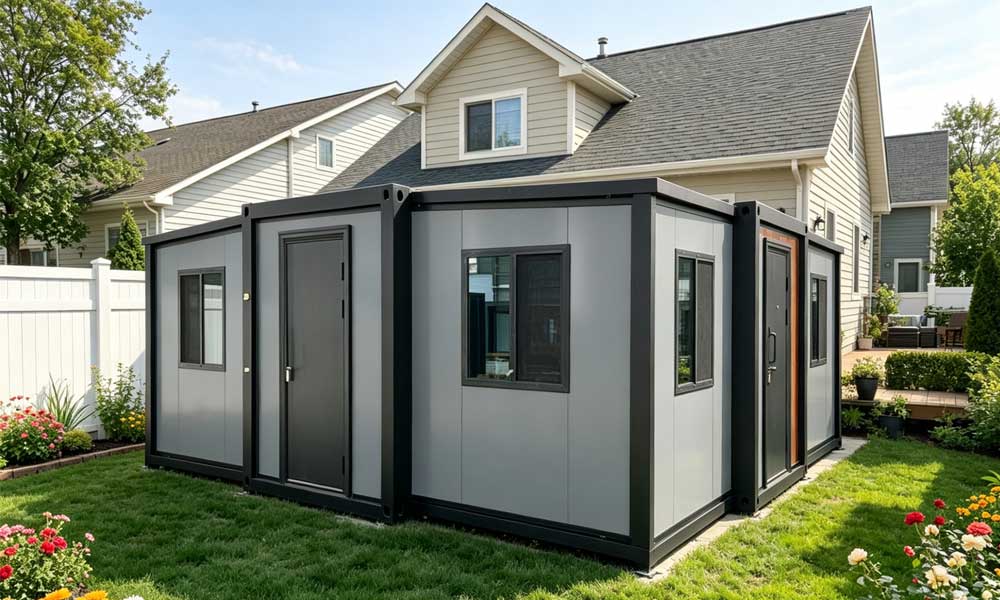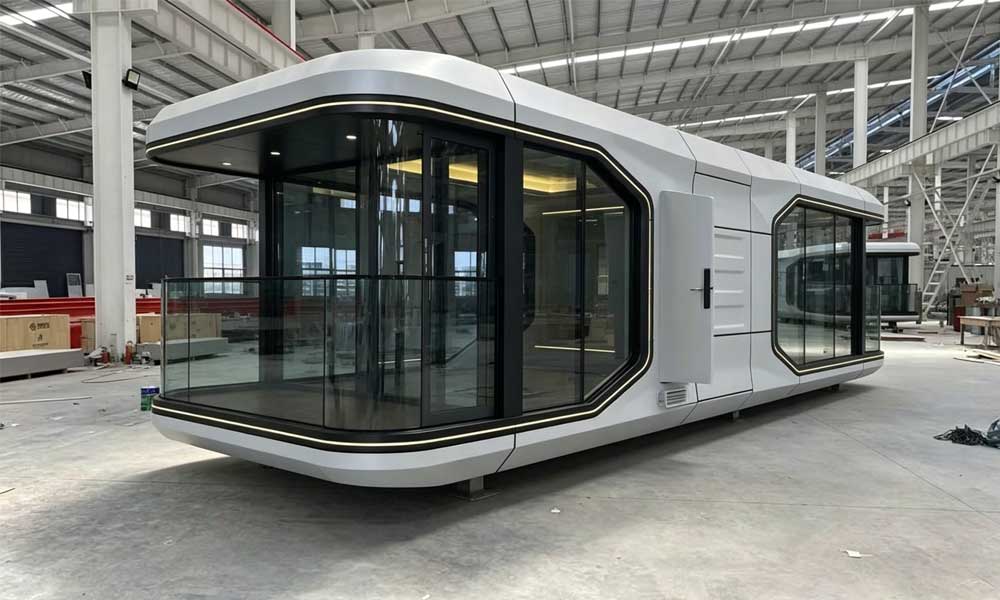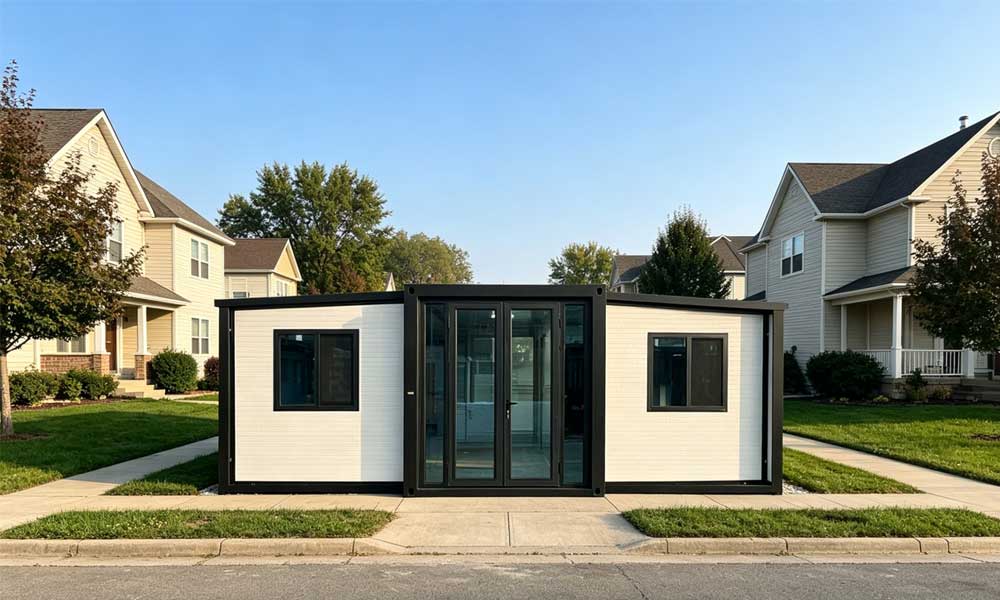



From an engineering perspective, the question of whether modular expandable structures can operate reliably in Canada is less about product design and more about environmental adaptation over time.
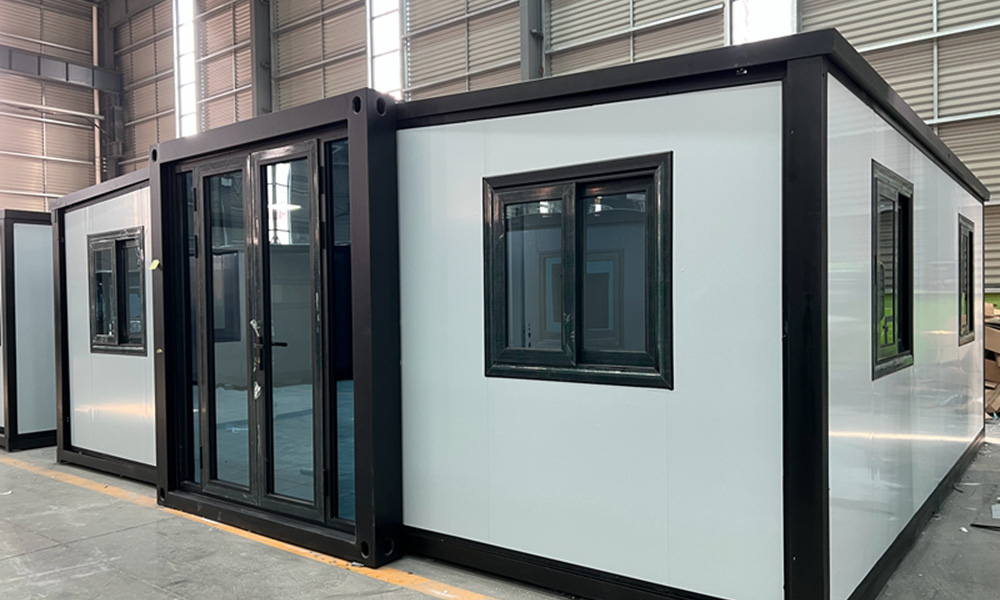
In regions such as Manitoba, Alberta, Quebec interior zones, and northern British Columbia, winter conditions are not occasional—they define the entire building lifecycle.
Temperatures can remain below -20°C for weeks, and in northern areas, snow accumulation and freeze–thaw cycles continuously stress building envelopes.
This report summarizes real engineering observations from cold-region modular deployments, including structural behavior, insulation adjustments, and long-term performance considerations.
What “Performance in Winter” Actually Means
When evaluating cold-climate housing systems, engineers typically focus on three measurable behaviors:
Heat retention stability under continuous heating load Structural deformation resistance under snow accumulation Moisture control during freeze–thaw transitions
These three factors determine whether a modular system remains functional beyond a single winter cycle.
In practice, failure rarely comes from a single catastrophic issue. It usually comes from gradual thermal inefficiency and sealing fatigue.
Engineering Configuration for Cold Regions
Cold-climate modular systems are not defined by appearance, but by internal configuration.
Below is a simplified technical breakdown based on export engineering standards used for northern deployment projects.
Key System Parameters (Typical Cold-Climate Configuration)
System Component | Engineering Specification | Functional Purpose |
|---|---|---|
Structural Frame | Cold-formed galvanized steel (2.5–3.0mm) | Load resistance under snow pressure |
Wall System | Multi-layer insulated panel (PU + rock wool composite) | Thermal retention + fire resistance |
Roof System | Reinforced truss + distributed load frame | Snow load dispersion |
Window System | Double / triple glazed thermal break aluminum | Heat loss reduction |
Sealing System | EPDM compression gasket + silicone joint sealing | Air leakage control |
Foundation Interface | Adjustable steel base or concrete anchoring | Frost heave resistance |
This configuration is commonly used in prefabricated expandable housing Alberta winter workforce projects and similar northern applications.
Snow Load Behavior: A Real Engineering Concern
One of the most critical design challenges in Canada is snow load accumulation.
In regions like Edmonton and Quebec City, snow load can exceed structural expectations if not properly distributed.
Early-stage deployments of modular systems often revealed a consistent issue:
Flat expansion joints tended to accumulate snow unevenly at connection zones.
This does not cause immediate failure, but over time it creates:
localized stress concentration micro-deformation of sealing layers thermal bridging points
To address this, later engineering iterations introduced:
reinforced ridge load distribution improved slope transition geometry secondary internal support beams
These adjustments significantly improved winter stability.
Field Observation: British Columbia Cold Region Deployment
A modular workforce housing deployment in northern British Columbia provided useful performance data under real winter conditions.
The site experienced:
-28°C minimum temperature continuous snow cycles over 4 months high humidity freeze–thaw transitions in early spring
Observed Issues (Initial Phase)
During the first winter cycle, engineers recorded:
minor condensation near window junctions heat loss concentration at expansion joints uneven interior temperature distribution in extreme cold nights
None of these were structural failures, but they indicated thermal envelope imbalance.
Engineering Adjustments Applied
After inspection, three adjustments were implemented:
Reinforcement of joint insulation layers Improved sealing compression at expansion interfaces Redistribution of internal heating airflow paths
After modification, thermal stability improved noticeably during the second cold cycle.
Thermal Behavior Under Continuous Heating Load
In Canadian winter conditions, heating systems run almost continuously.
This creates a different stress environment compared to intermittent heating climates.
Key observations include:
internal air dryness increases sealing shrinkage risk thermal expansion and contraction occur daily insulation performance degrades if vapor control is weak
To counter this, modern systems integrate:
vapor barrier membranes controlled ventilation loops thermally isolated frame junctions
In cities like Winnipeg, where heating demand is long and intense, these adjustments are essential.
Moisture and Freeze–Thaw Impact
Moisture infiltration is one of the most underestimated risks.
Once water enters wall systems and freezes, expansion pressure can damage:
internal insulation layers sealing edges surface coatings
The most common weak point is not the main panel—it is the connection interface between expandable sections.
Field engineers often describe this as the “micro-gap effect,” where small tolerances become critical under repeated freezing cycles.
Comparative Performance Overview
The following is a simplified engineering comparison between cold-climate modular systems and traditional light-frame cabins.
Performance Factor | Modular Expandable System | Traditional Cabin |
|---|---|---|
Construction Speed | High | Medium |
Thermal Efficiency | High (if upgraded) | Medium-High |
Joint Sealing Risk | Medium (improvable) | Low |
Snow Load Adaptation | Engineered system-based | Natural roof slope advantage |
Maintenance Requirement | Moderate | Low |
Deployment Flexibility | High | Low |
This comparison shows that performance depends heavily on engineering configuration rather than structure type.
Regional Adaptation Differences Across Canada
Cold climate performance is not uniform across the country.
Alberta (Edmonton / Calgary) → dry cold, high snow load Manitoba (Winnipeg) → long cold duration, high wind exposure Quebec (Montreal / Quebec City) → humidity + freeze cycles Atlantic Canada (Halifax) → coastal moisture + wind load
Each region requires slightly different engineering emphasis, especially in sealing and insulation layering.
Practical Engineering Limitation
It is important to state clearly:
No modular system performs identically across all extreme Canadian conditions without adjustment.
Limitations typically include:
need for site-specific foundation design variation in provincial building code interpretation transportation stress during winter delivery installation sensitivity to ground frost depth
These are not product flaws, but environmental constraints.
Engineering Conclusion
From a structural engineering standpoint, modern expandable modular systems can operate in harsh Canadian winters, but only when designed as cold-climate systems from the beginning—not adapted afterward.
Performance depends on:
insulation integrity joint sealing behavior snow load distribution design moisture control strategy
The most successful deployments are those where environmental conditions are treated as a primary design input rather than a secondary constraint.
Hengmao Engineering Field Note (Non-Marketing Observation)
In international cold-region projects, our engineering team consistently observes one pattern:
Initial system design is rarely sufficient without site-based adjustment.
Most performance improvements come after:
first winter cycle feedback joint inspection under thermal stress airflow and insulation recalibration
This iterative process is often more important than the initial structural specification.
Frequently Asked Questions
Q1: What is the biggest technical risk in Canadian winter deployment?
Thermal bridging at connection joints combined with freeze–thaw moisture intrusion.
Q2: Do expandable systems require special insulation upgrades for Canada?
Yes. Standard insulation is typically insufficient for sustained sub-zero environments.
Q3: Is structural failure common in cold climates?
Not if properly engineered. Most issues are related to sealing and thermal efficiency, not structural collapse.
References
National Building Code of Canada (NBCC) CSA A277 Prefabricated Building Standard Natural Resources Canada – Building Energy Guidelines ASHRAE Cold Climate Design Handbook Provincial Building Authority Regulations (BC / Alberta / Quebec)