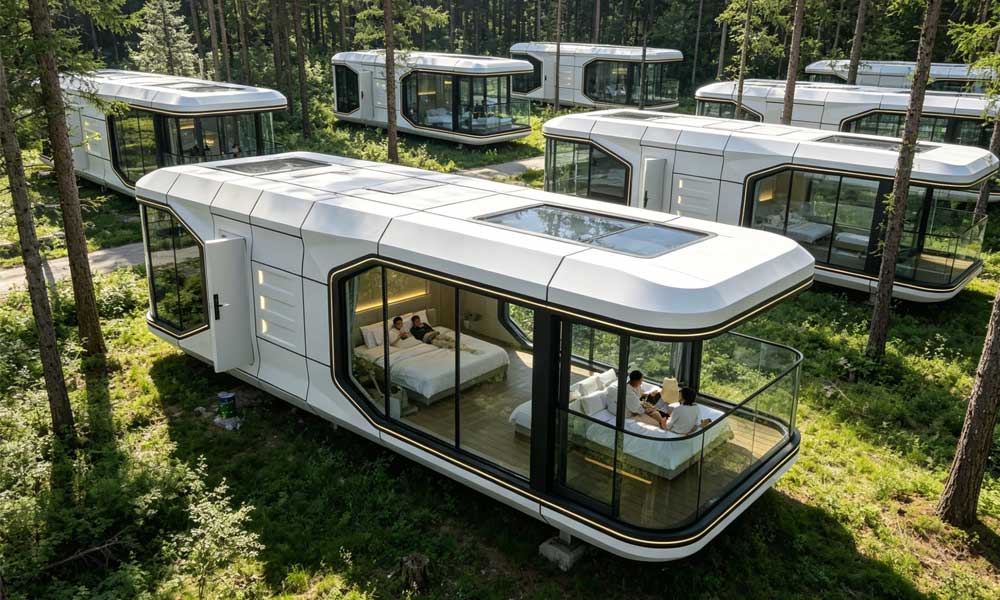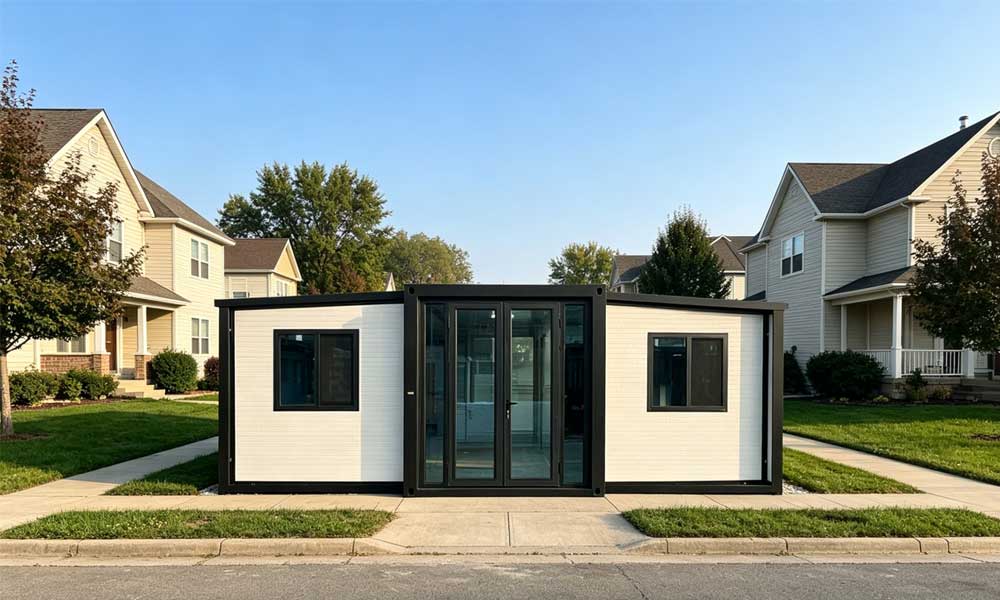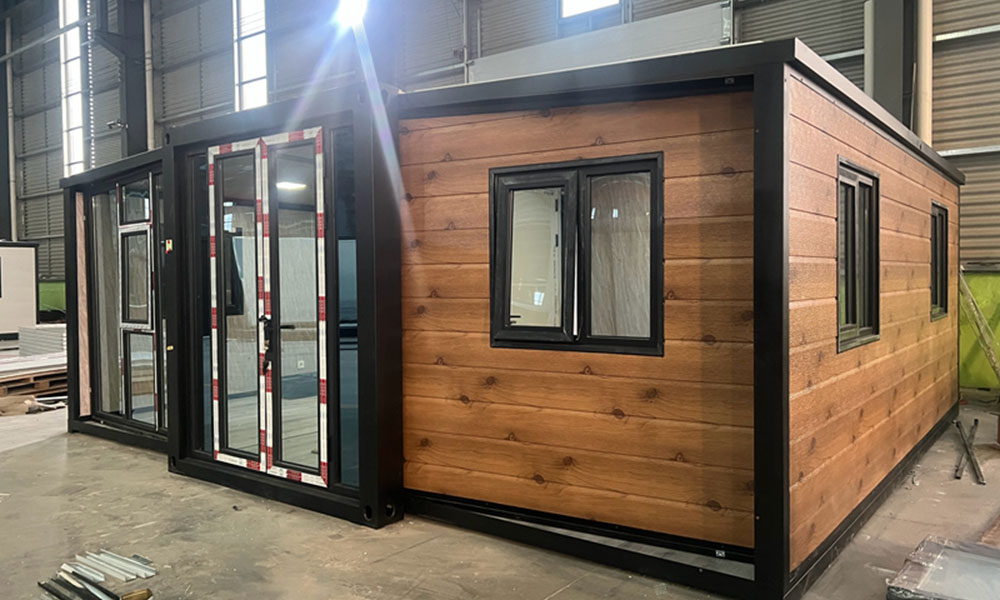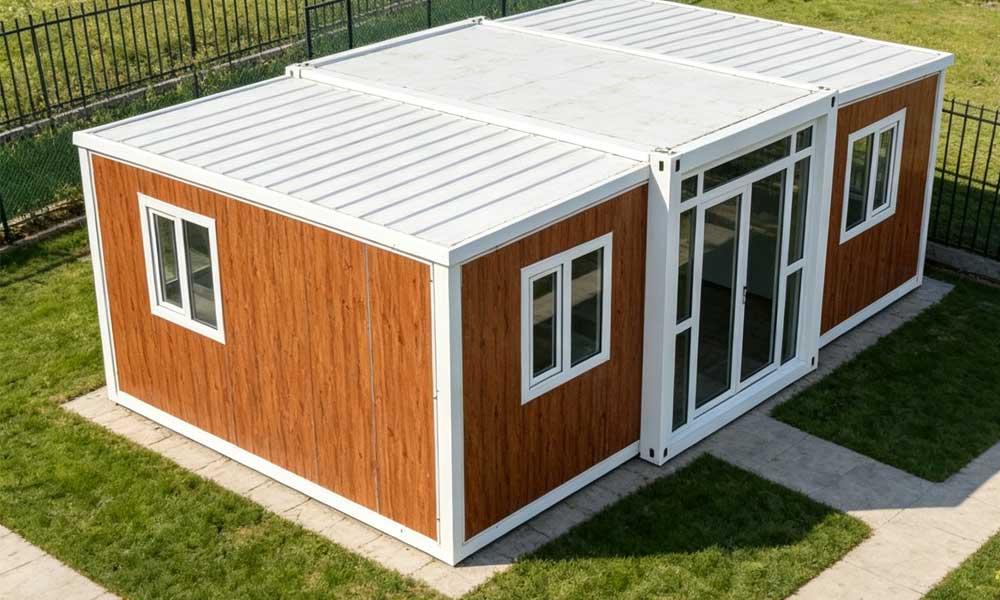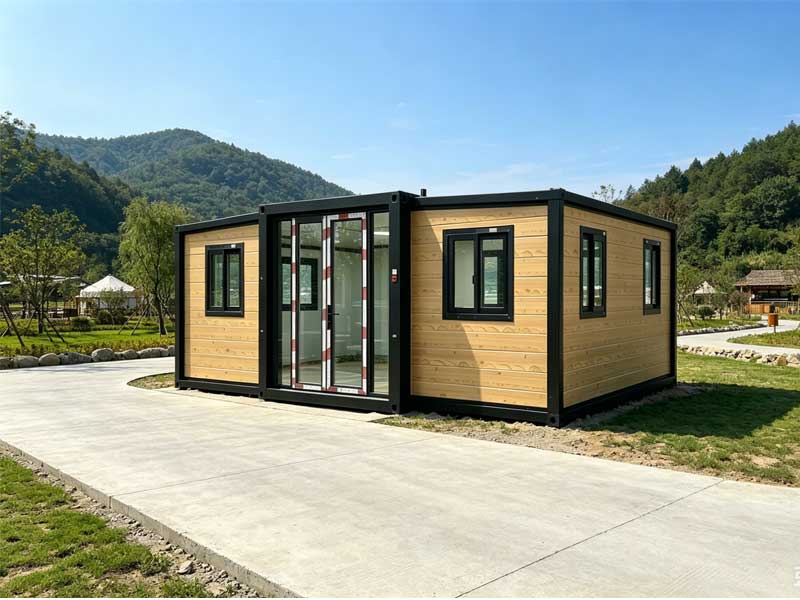


Homeowners across California are constantly struggling with the state’s tight housing market and cumbersome traditional construction processes. In mainstream cities including Los Angeles, San Diego, Sacramento, and San Jose, building a conventional backyard ADU usually means long permit approval cycles, surging local labor costs, and uncontrollable contractor scheduling delays. Faced with these pain points, more and more property owners are abandoning traditional construction and turning to expandable modular ADUs for a faster, more flexible, and cost-stable housing solution.
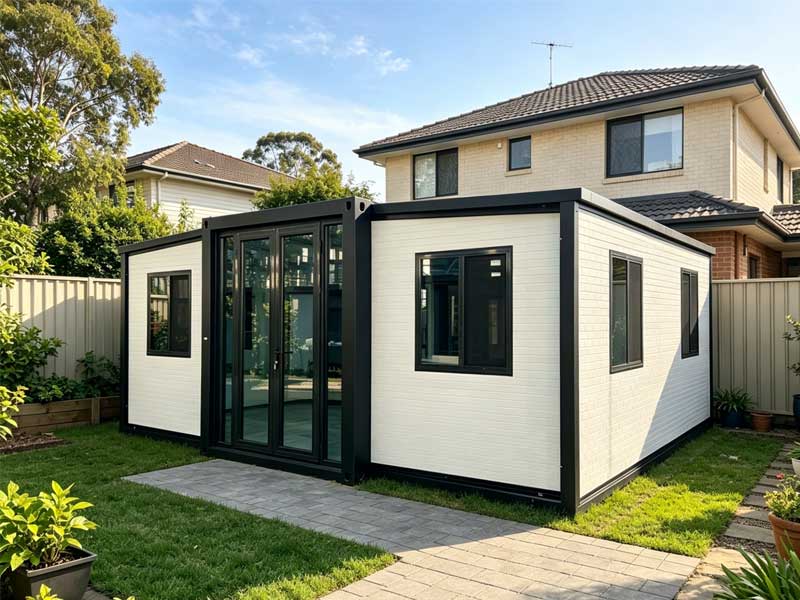
As one of the most popular prefab housing options in 2026, double wing expandable ADUs — also known as folding expandable container homes or expandable prefab backyard units — have become the top choice for California residential expansion. These factory-prefabricated modular structures complete most production and interior work in advance, only requiring simple on-site expansion and installation. It effectively solves the problems of long construction periods and uncertain budgets for traditional ADU projects, helping homeowners quickly obtain extra usable living space.
In daily project consultations with California buyers, one question always comes up first:
How much does an expandable ADU actually cost in California?
In fact, the total cost of building an expandable ADU is far more than the basic unit price. Multiple key factors such as local city permit policies, backyard foundation standards, on-site utility access conditions, inland transportation distance, and customized insulation configurations will directly determine the final investment budget of the entire project. This article combines real California local project cases and modular housing export experience to comprehensively sort out the real cost composition of expandable ADUs, helping local homeowners make accurate budget planning.
Why Expandable ADUs Are Gaining Popularity in California
In recent years, continuous ADU policy reforms in California have greatly relaxed the restrictions on backyard auxiliary residential buildings, triggering a huge market demand for small-scale residential expansion on existing residential lots.
Local homeowners widely use expandable modular ADUs for diverse scenarios:
Backyard long-term rental units for passive rental income
Independent family guest houses for the elderly and adult children
Private home offices and studio spaces
Temporary living space for multi-generational families
Seasonal accommodation for farm workers
Space expansion for vacation properties
Compared with traditional concrete and wood-framed ADU construction, double wing folding container houses feature ultra-fast on-site installation and low dependence on local construction teams. In hot areas such as Orange County and Riverside County, local contractors are often fully scheduled for several months. Expandable modular ADUs can effectively skip long waiting periods and greatly shorten the overall project cycle.
Average Expandable ADU Cost Breakdown in California
The total investment of a complete expandable ADU project in California covers multiple links including product customization, transportation, foundation, construction, and approval. The detailed cost range of each module is as follows:
Cost Category | Estimated Range (USD) |
|---|---|
Expandable ADU Unit Price | $12,000 – $28,000 |
Shipping & Inland Transportation | $3,000 – $9,000 |
Foundation Preparation | $4,000 – $15,000 |
Utility Connection | $5,000 – $20,000 |
Permit & Engineering Fees | $2,000 – $12,000 |
Crane & Installation | $2,500 – $8,000 |
The final project cost fluctuates greatly according to municipal regulations, backyard terrain conditions and utility accessibility. For example, hillside residential lots in Los Angeles require complex anti-slip and load-bearing foundation engineering, while flat suburban lots in Fresno and Bakersfield have lower foundation construction costs.
City-Specific Cost Differences Across California
Many first-time ADU buyers overlook a core point: California has no unified provincial ADU approval and construction standards. Each city and county has independent building code interpretation and review rules, which is the root cause of huge cost differences across regions.
Los Angeles
Local ADU projects need to meet strict requirements including utility separation standards, residential parking layout review, fire passage access rules, and residential boundary setback compliance, bringing additional engineering and approval costs.
San Diego
Affected by coastal climate, local projects need to adapt to environmental protection restrictions, strengthen indoor ventilation systems, and do a good job in salt spray corrosion protection for exterior structures, increasing customized upgrade costs.
Sacramento
Local buyers pay more attention to summer high-temperature insulation, electrical energy efficiency and rapid construction. Many local projects are delayed due to slow utility trench inspection progress, resulting in invisible time and cost losses.
Expandable ADU vs Traditional Backyard Construction
The biggest advantage of expandable modular backyard homes lies in controllable costs and stable schedules, which is exactly what traditional California construction lacks. Traditional on-site ADU construction is troubled by long-term labor shortages, random contractor schedule delays, volatile building material prices and repeated permit reviews, making project budgets and cycles difficult to control.
Most structural production, interior decoration and functional debugging of prefabricated expandable container ADUs are completed in the factory. It greatly reduces on-site construction links and avoids most uncertain risk points. Although modular ADUs also need to comply with local approval processes, it can significantly reduce on-site construction complexity. Many San Bernardino local contractors say modular expandable systems are far easier to schedule and manage than traditional wooden frame construction.
Core Factors That Affect Expandable ADU Pricing
1. Insulation and Climate Adaptation
California has a complex and diverse climate. The high-temperature and dry climate in Northern California requires thicker thermal insulation materials and high-efficiency heat insulation structures, while coastal areas in Southern California need moisture-proof and anti-corrosion upgrades, resulting in different configuration costs.
2. Backyard Foundation Terrain
Flat lots can adopt low-cost concrete slabs or pier foundations, while sloped, hillside or low-lying lots need elevated steel supports and customized structural engineering, which will rapidly increase construction and foundation costs.
3. Interior Decoration Grade
Basic functional units for temporary accommodation are low-priced, while high-end residential configurations with complete kitchens, luxury bathrooms and fine interior decoration have higher customized costs, suitable for long-term rental and family residential use.
4. On-Site Transportation Conditions
Narrow suburban streets, dense residential areas and hillside terrains will increase the difficulty of crane entry and unit hoisting. Some Bay Area projects even need temporary tree trimming and road clearance to complete delivery, adding extra construction costs.
Common Hidden Costs for California ADU Buyers
Most buyers only focus on the factory price of expandable ADUs, ignoring various local hidden expenses in California projects, which leads to overspending in the later stage.
Hidden Cost Item | Why It Matters |
|---|---|
Utility trenching | Long backyard pipeline distances increase labor and material costs |
Soil reports | Mandatory review materials for city ADU approval |
HOA review | Community associations may require additional design modification |
Crane permits | Dense urban neighborhoods require special construction permits |
Fire sprinkler requirements | Different city codes have different mandatory installation standards |
Many buyers in Anaheim have encountered budget overruns caused by underestimated utility extension costs. This situation is very common in California ADU projects, making early full-cost evaluation particularly important.
Main Buyer Groups for California Expandable ADUs
At present, the market demand for expandable modular ADUs in California mainly comes from four types of precise buyer groups, with clear usage scenarios:
Multi-Generational Families: Build independent backyard living spaces for elderly family members or adult children to realize separate living and mutual care.
Rental Investors: Use fast-built ADUs to open up rental income, solving the pain point of slow return of traditional construction investment.
Agricultural Property Owners: Central Valley farm owners widely use expandable prefab houses as seasonal temporary accommodation for farm workers.
Remote Property Owners: Mountain and desert residential lots have poor traditional construction accessibility, and modular ADUs can be deployed quickly with less site restrictions.
Long-Term Value of Expandable Modular ADUs
The core advantages of expandable backyard modular houses are not limited to low construction difficulty and short cycles. It also bring long-term operational value that traditional buildings cannot match for California homeowners.
Its outstanding advantages include fast occupancy, free relocation and reuse, low local labor dependence, flexible phased expansion, and effective avoidance of construction delays caused by bad weather. Although California’s ADU approval process still requires standardized planning, the high flexibility of expandable modular houses makes it more adaptable to changing residential and rental market demands. Many buyers will purchase additional expanded units for upgrade after verifying the practical effect of the first ADU.
Frequently Asked Questions
Q1: Can expandable ADUs be approved as permanent residential buildings in California?A1: Yes, most areas of California allow expandable modular ADUs to obtain permanent residential approval. The final pass of review depends on local municipal zoning regulations, standardized foundation engineering, complete water and electricity utility compliance, and fire safety standards. It is recommended that buyers confirm local policy requirements before customizing ADU configurations to avoid approval risks.
Q2: How long does it take to complete the whole installation of an expandable ADU after delivery?A2: The main expansion and assembly work of expandable ADUs can be completed within one working day. But the overall project completion needs to follow up with foundation connection, water and electricity debugging, and official fire safety inspection. The total cycle is affected by local government inspection efficiency and on-site utility conditions, which is far shorter than traditional construction.
Q3: Are expandable container ADUs suitable for long-term rental investment in California?A3: Absolutely. Expandable modular ADUs are very popular in California’s rental market. With stable structure, complete residential functions and low later maintenance costs, they are very suitable for long-term rental investment. Especially in high-demand areas where traditional construction costs are high and cycles are long, modular ADUs can help investors quickly open rental income and shorten the investment return cycle.
Q4: What is the biggest factor that increases ADU project costs in California?A4: Regional policy differences and on-site terrain conditions are the core factors. Different city permit fees, fire protection standards and utility access difficulties will cause great cost gaps. In addition, hillside terrain foundation reinforcement, coastal anti-corrosion upgrades and summer high-temperature insulation customization will also significantly increase the total project investment.
Hengmao Expandable Housing Solutions
Hengmao has always focused on the R&D and export of high-adaptability expandable modular housing. We clearly know that California ADU projects is not a simple product delivery, but a systematic project integrating policy compliance, terrain adaptation, logistics transportation and on-site construction coordination.
We have rich experience in overseas modular housing projects, covering residential backyard expansion, agricultural worker accommodation, temporary office space and tourism supporting housing in multiple regions. We do not use fixed universal designs, but provide targeted customized solutions according to California’s local climate characteristics, municipal approval standards and backyard construction conditions.
For California homeowners and investors purchasing double wing expandable ADUs, folding container backyard houses and modular prefab units, we always prioritize long-term residential usability and project compliance. Most project difficulties only appear in the on-site construction stage, so early professional engineering docking is more important than buyers intuitively think.