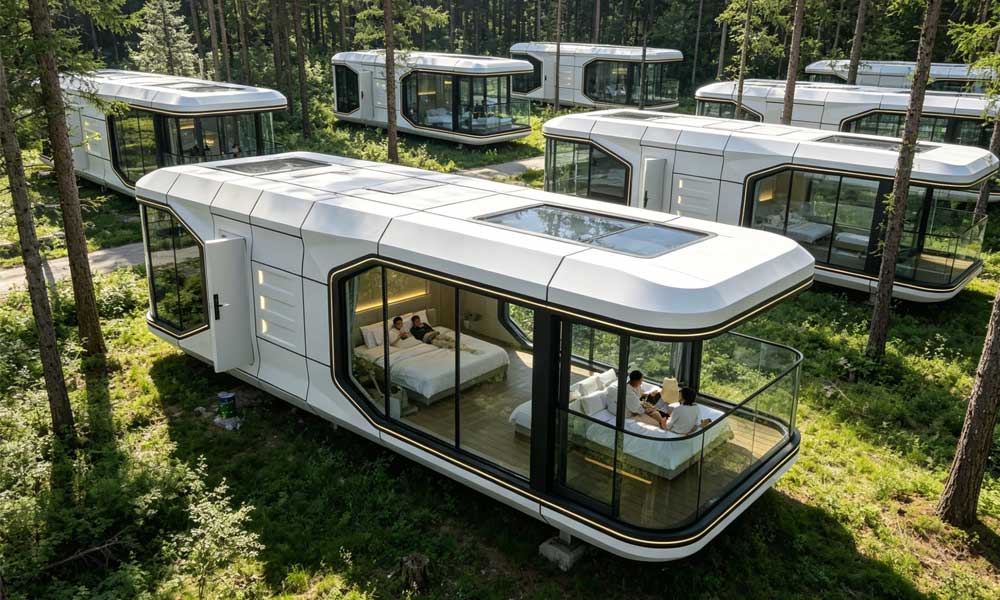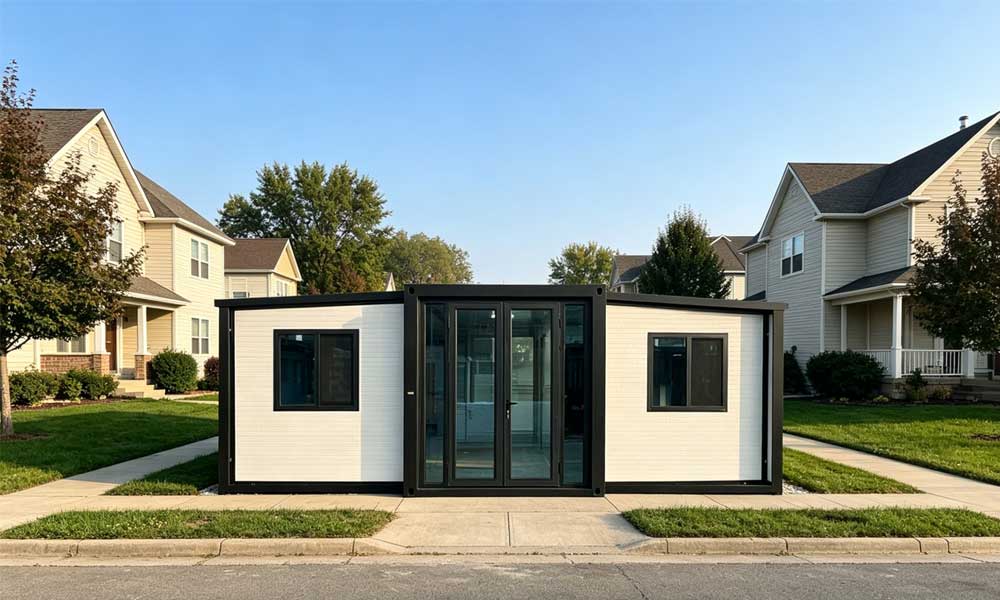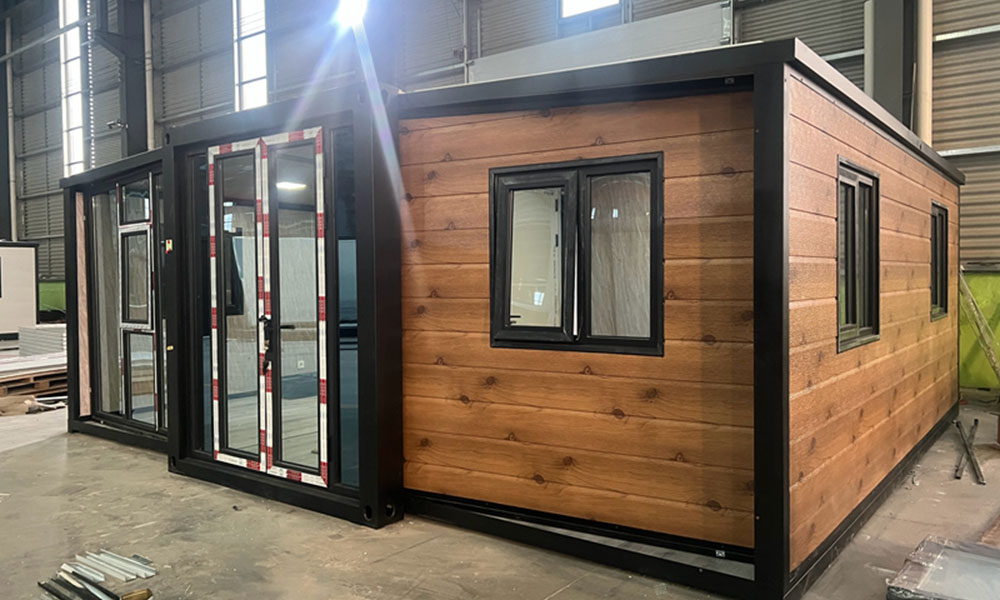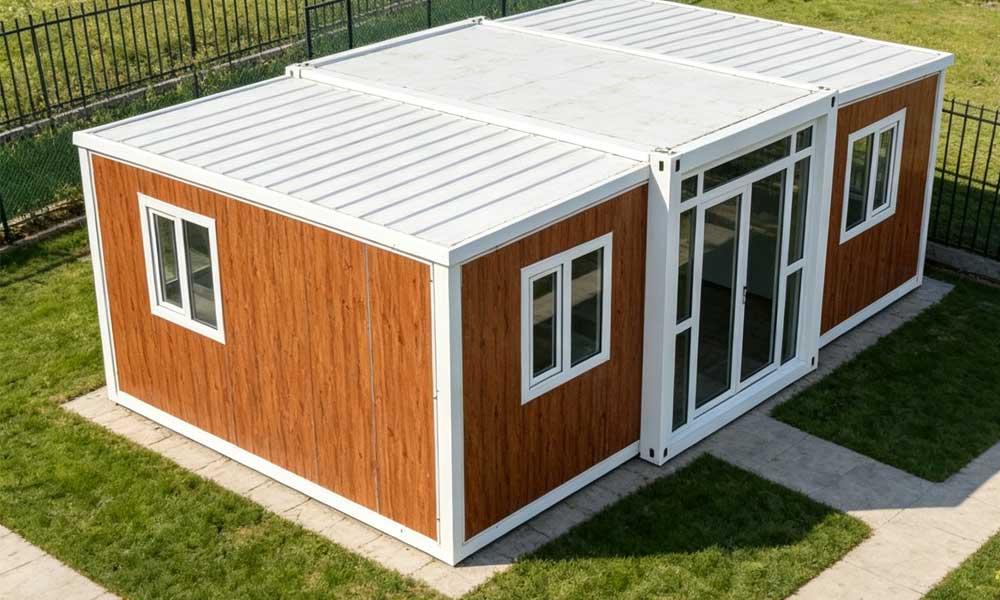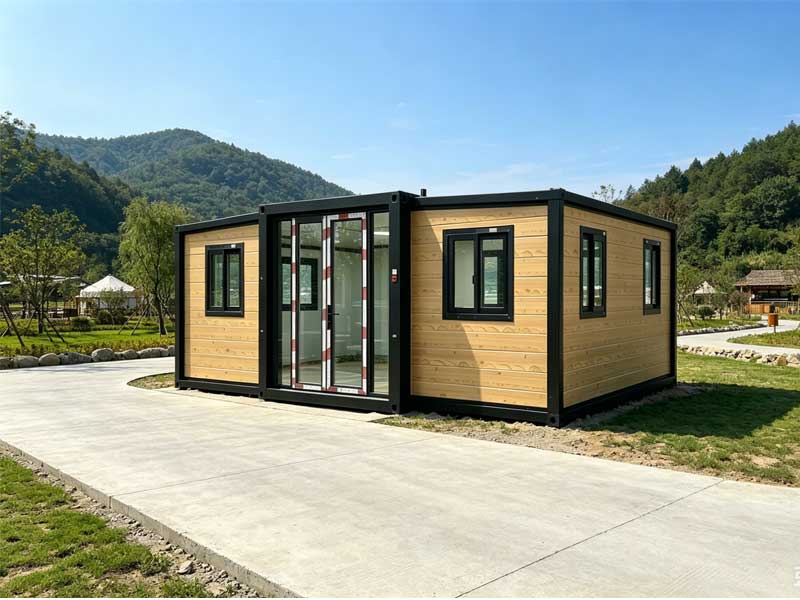



Expandable double wing houses have quickly become a top choice for American homeowners looking to add flexible living space, rental units, or backyard guest accommodations. As traditional on-site construction grows more expensive and time-consuming year by year, more property owners across the U.S. are turning to prefabricated expandable ADUs and modular residences for residential upgrades, rural housing development, and investment rental projects.
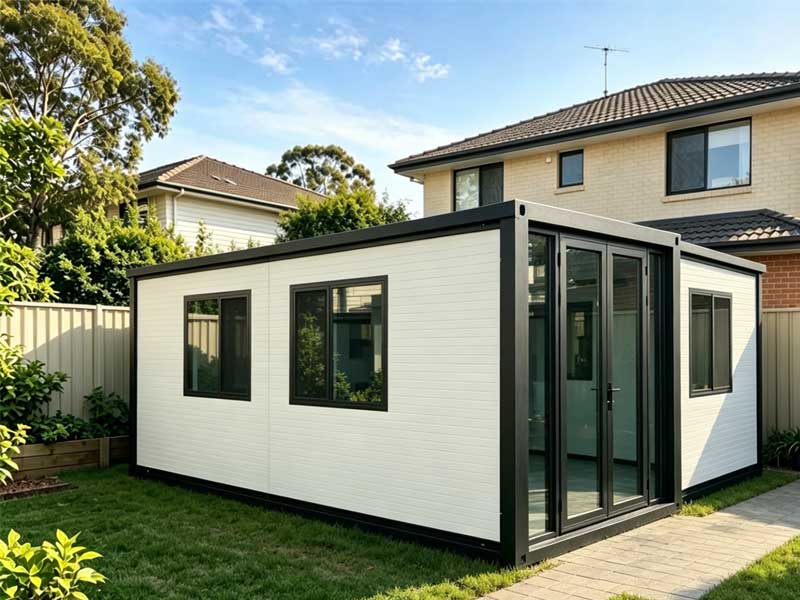
Even with its obvious cost and speed advantages, one question stops most buyers before placing an order: can expandable houses legally pass permit inspection and be used as formal residential spaces in the United States? After serving countless U.S. clients, Hengmao confirms that expandable homes are fully permit-eligible in most states. That said, approval success rarely depends on the building itself. It hinges entirely on whether the design, engineering, and installation comply with local municipal codes, zoning rules, and regional construction standards. Many first-time buyers overlook pre-purchase compliance checks, only to face costly modifications or approval delays later on.
Why Permit Rules Vary Widely Across the United States
Unlike countries with unified national construction policies, the U.S. adopts a decentralized regulatory system for residential building permits. Construction and occupancy rules differ drastically across states, counties, cities, and even local Homeowner Associations (HOAs). A double wing expandable ADU that gets approved smoothly in Boise, Idaho may require major design adjustments to meet the codes in Madison, Wisconsin or Chattanooga, Tennessee.
Despite local differences, nearly all U.S. jurisdictions base their building regulations on standard ICC (International Code Council) model codes. These universal industry standards lay the foundation for residential compliance nationwide. The most widely adopted codes include the International Residential Code (IRC), International Building Code (IBC), International Energy Conservation Code (IECC), National Electrical Code (NEC), and International Plumbing Code (IPC). Most cities and counties add local amendments to these base codes, creating unique regional compliance requirements.
Can Expandable Houses Qualify as Permanent Residences?
A common misconception among U.S. homeowners is that expandable modular homes are classified as temporary structures. In reality, local building departments do not judge a building’s legitimacy by its delivery method. Instead, they focus entirely on its installation form, structural stability, and compliance with residential building standards.
To obtain permanent residential approval for an expandable container home in states like Idaho, projects must meet a full set of compliance criteria. This includes a certified permanent foundation system, complete structural engineering review, standard utility connections, and fully compliant electrical and plumbing systems. Additionally, the property must pass official zoning approval. Once installed and configured to meet local residential codes, expandable houses hold the same legal residential status as traditional site-built homes.
Key ADU Regulatory Rules You Must Follow
ADU (Accessory Dwelling Unit) development is one of the fastest-growing segments of the U.S. residential market. Expandable double wing ADUs are extremely popular for adding rental income units, multigenerational family housing, independent guest quarters, private home offices, and auxiliary living spaces. Compared with traditional home additions, prefabricated expandable ADUs in cities like Eugene, Oregon can cut construction time by more than half.
However, ADU construction is strictly regulated by local planning departments. Every region enforces unique restrictions on maximum building size, yard setback distances, on-site parking rules, utility connection standards, and occupancy limits. It is critical to confirm local ADU policies before finalizing architectural designs, rather than adjusting plans after production.
Zoning Approval Always Comes First
Most novice buyers make a critical mistake: prioritizing building permit preparation before verifying zoning eligibility. Building permits only regulate structural safety, while zoning regulations determine whether you are legally allowed to place an auxiliary residential structure on your land at all.
For example, an expandable backyard house in Lexington, Kentucky may fully meet structural and safety standards, yet still fail inspection due to unqualified setback distances or lot density restrictions. Local zoning departments mainly review lot size, legal property use, building placement, height limits, development density, and easement conflicts. No matter how well the building is constructed, it cannot pass approval without valid zoning clearance.
Mandatory Structural Engineering Compliance
Structural engineering documents are the core of U.S. residential permit approval. All expandable house projects need customized engineering calculations tailored to local environmental conditions, mainly covering wind load, snow load, and seismic resistance.
Wind Load RequirementsHurricanes and severe seasonal storms pose major threats to coastal areas. Gulf Coast and Atlantic coastal regions, including southern Florida, enforce strict wind resistance design standards for all residential buildings to withstand extreme weather impacts.
Snow Load RequirementsCold northern regions have strict snow load standards. An expandable residential house built in Duluth, Minnesota requires far thicker structural reinforcement and stronger load-bearing capacity than units constructed for warm southern states.
Seismic Resistance RequirementsWestern U.S. seismic zones mandate additional structural evaluation and anti-seismic design optimization. All engineering parameters must match local geological conditions and code specifications to pass official review.
Permanent Foundation System Standards
Temporary foundation structures cannot support permanent residential approval in most U.S. jurisdictions. All expandable ADUs for long-term living must adopt certified permanent foundation systems.
Common approved foundation solutions include reinforced concrete slabs, professional pier foundations, crawl space foundations, and standardized engineered footing systems. For projects such as permanent expandable ADUs in Spokane, Washington, complete foundation engineering drawings and stability verification documents are mandatory parts of the permit application package.
Energy Efficiency Code Compliance
Energy efficiency standards have become increasingly strict across the United States in recent years, with most regions following the latest IECC (International Energy Conservation Code). Energy performance is now a rigid inspection item for residential building permits.
Inspectors focus heavily on wall and roof insulation grades, double-glazed window heat insulation performance, overall building air tightness, and mechanical system energy efficiency. Climate differences lead to obvious standard gaps. For instance, expandable homes in cold regions like Burlington, Vermont require much higher insulation parameters to resist low temperatures than units built for southern warm climates. Early energy standard confirmation can effectively avoid approval rework.
Electrical & Plumbing Compliance Rules
Residential living qualification requires full compliance of electrical and plumbing systems with local municipal codes. Electrical installations are uniformly governed by the National Electrical Code (NEC). Inspectors will strictly check circuit protection devices, system grounding standards, distribution panel configurations, and internal wiring specifications.
For plumbing systems, review items include water supply pipeline layout, drainage system design, ventilation settings, and standard compliance of all sanitary fixtures. Complete and standardized technical documentation can greatly speed up the approval process and eliminate unnecessary delays.
Fire Safety Inspection Standards
Fire safety rules vary according to building occupancy type and regional risk levels. General mandatory requirements for U.S. residential ADUs include installed smoke alarms, carbon monoxide detectors, standard emergency egress windows, fire-resistant wall structures, and legal fire separation distances from property lines.
These rules directly affect building placement and overall design schemes. For example, backyard rental ADU projects in Fayetteville, Arkansas need to strictly follow local fire separation regulations during the design phase to ensure full compliance before submission.
Regional Compliance Differences Across the U.S.
The U.S. spans multiple climate and geographic zones, resulting in completely different core compliance priorities for expandable house projects in different regions. There is no one-size-fits-all design solution for the entire U.S. market.
Midwest RegionsCities including Madison, Wisconsin and Duluth, Minnesota focus primarily on snow load resistance and high-standard thermal insulation to adapt to long cold winters.
Mountain RegionsHigh-altitude areas such as Boise, Idaho and Missoula, Montana require enhanced structural design to cope with complex mountain weather and extreme temperature changes.
Southern StatesCities like Chattanooga, Tennessee and Lexington, Kentucky prioritize wind resistance, moisture and humidity management, and high energy efficiency to adapt to subtropical humid climates and seasonal storms.
Complete Documentation List for Permit Application
A complete set of compliance documents is the key to smooth permit approval. Homeowners and investors are advised to prepare all materials in advance before submitting applications. The required documents include site layout plans, official property survey reports, complete architectural drawings, structural engineering calculation reports, foundation construction drawings, utility system layout plans, and energy efficiency compliance certificates.
Working with local professional engineers and permit consultants can greatly optimize the application process. Most successful U.S. expandable house projects rely on close cooperation between building suppliers and local design teams to meet regional code requirements.
Why U.S. Homeowners Choose Expandable ADU Houses
Despite complex and varied local permit rules, expandable double wing houses remain a top choice for American residential renovation and investment. Their core advantages solve the most prominent pain points of traditional construction.
These benefits include greatly shortened construction cycles, factory standardized quality control, flexible and customizable floor plans, wide ADU application scenarios, convenient container shipping, and expandable living space. For homeowners who need additional residential area, rental units, or guest rooms without the high cost and long cycle of traditional construction, prefabricated expandable housing is a highly cost-effective alternative.
It is worth emphasizing that project success depends on early compliance planning and professional engineering customization, rather than the basic structure of the expandable house itself.
Frequently Asked Questions
Q1: Can expandable houses be legally used as rental properties in the United States?
A1: Yes, most U.S. jurisdictions allow expandable houses to serve as legal rental ADUs. However, rental scenarios require stricter compliance reviews, including additional zoning verification, occupancy qualification approval, utility system inspections, and local business licensing according to municipal requirements.
Q2: Do all U.S. cities allow expandable ADU construction?A2:
No. ADU policies are highly localized. Some cities actively encourage backyard ADU development to ease housing shortages, while others impose strict restrictions on building size, setback distances, parking conditions and occupancy numbers. It is necessary to check local latest policies before project planning.
Q3: Is stamped professional engineering documentation mandatory for approval?
A3: In almost all permanent residential expandable house projects, officially stamped engineering calculation documents and design reports are mandatory review materials for building departments, which cannot be omitted for permit approval.
Hengmao Double Wing Expandable Housing for U.S. Projects
At Hengmao, we deeply understand that U.S. modular housing project success relies on pre-production compliance planning, not just product quality. For American homeowners, ADU investors and real estate developers, zoning review, engineering customization, permit matching and site adaptation are the core of project landing.
We specialize in U.S. market-compliant double wing expandable houses and backyard expandable ADUs. Our team cooperates with local consultants and engineers to tailor designs that fit regional building codes, climate conditions and permit rules. Whether it is a family guest house in Boise, a rental investment ADU in Eugene, or an auxiliary residence in Lexington, we provide one-stop compliant housing solutions to ensure smooth permit approval and long-term stable use for all U.S. projects.