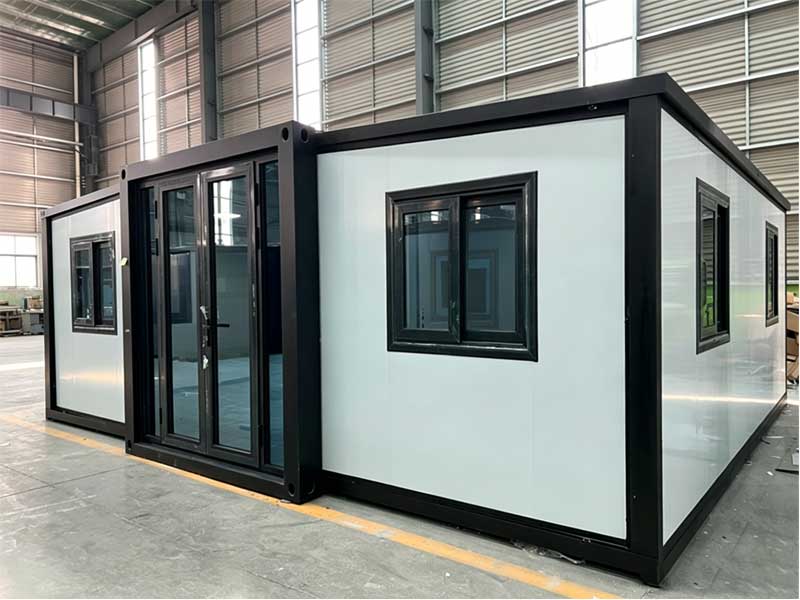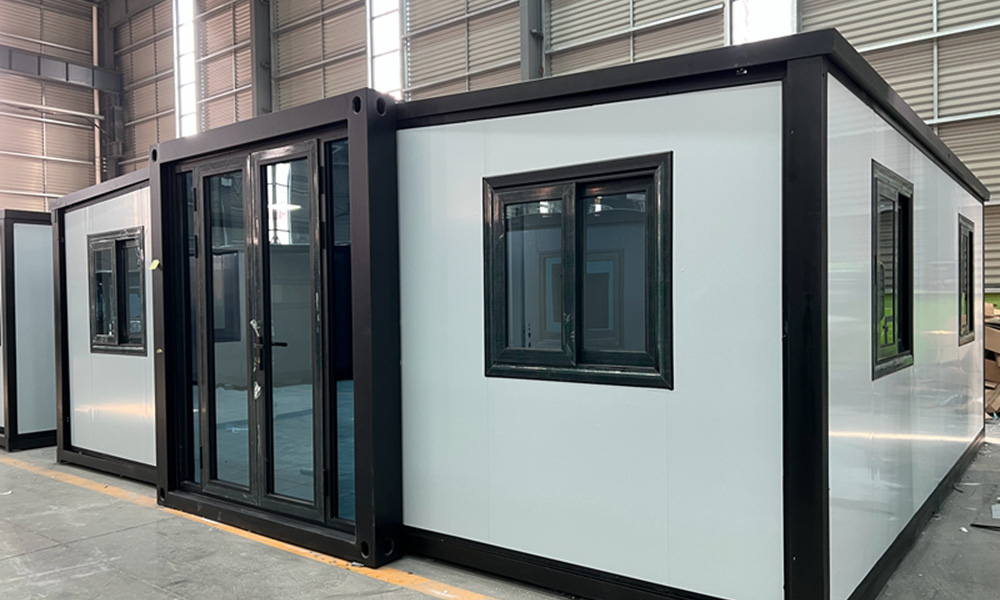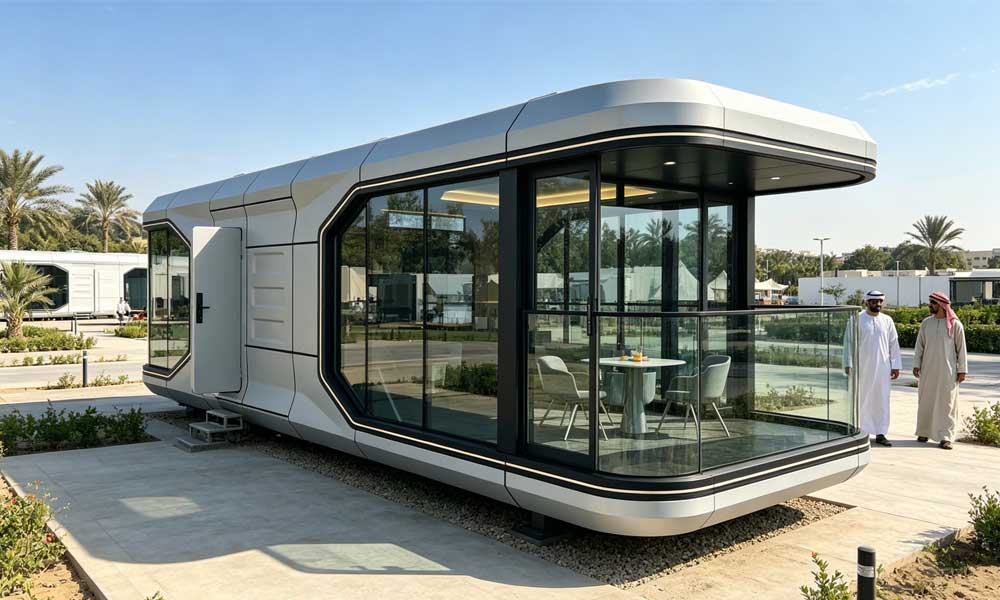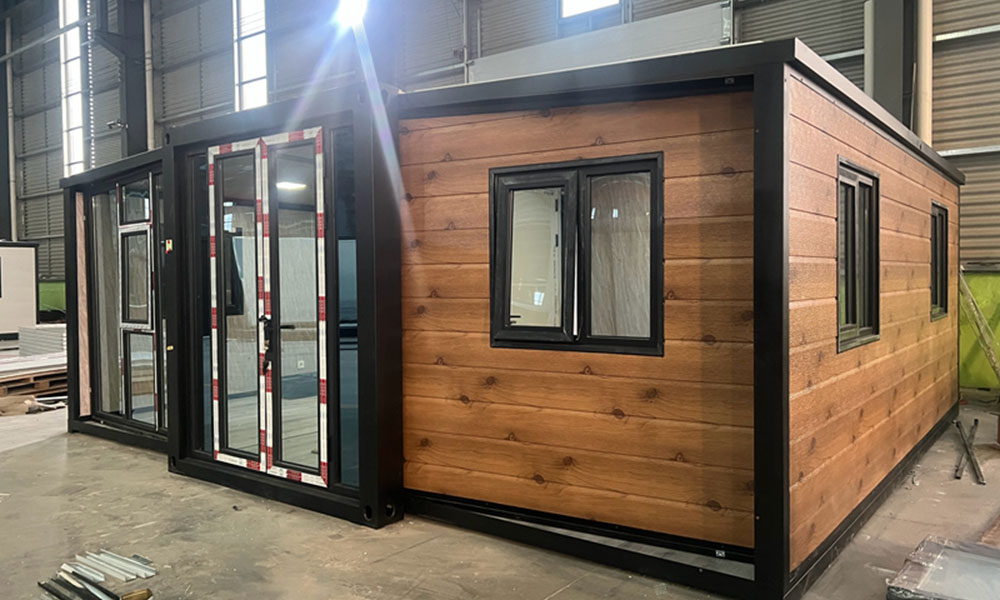



Expandable housing systems are increasingly becoming a strategic choice in global development planning, particularly in regions facing construction labor shortages, rising land costs, and demand for rapid deployment housing.
From an engineering and project delivery perspective, this shift is not driven by aesthetics or marketing trends. It is driven by measurable constraints in real construction environments—time, labor, logistics, and climate adaptation.
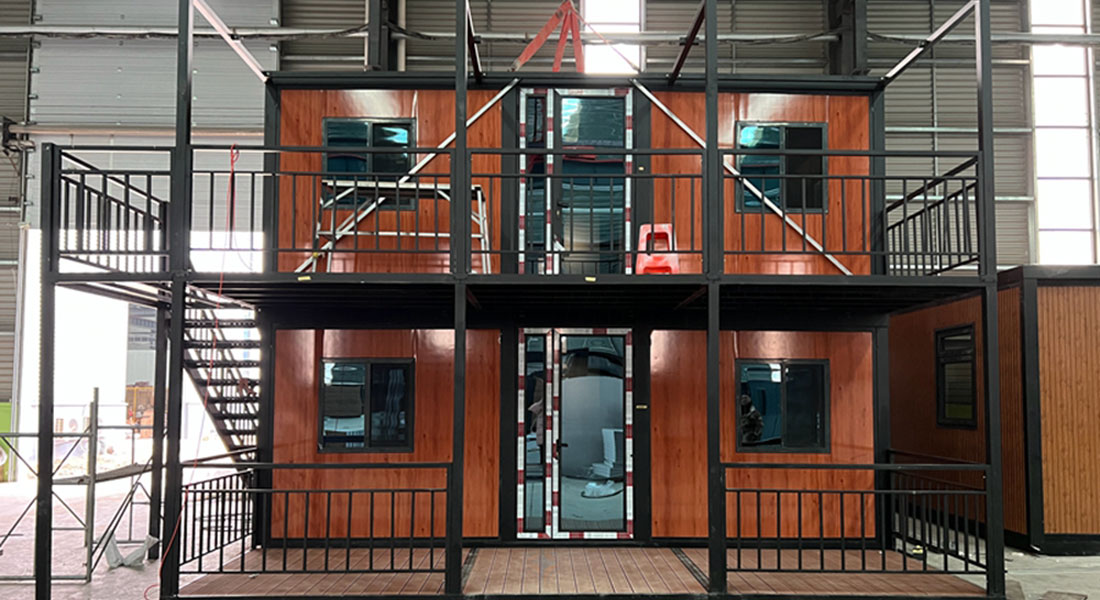
In markets such as Arizona (Tucson suburban expansion zones), Alberta (Saskatoon industrial corridors), Northern Italy (Alpine tourism belts), and Saudi Arabia (Riyadh outskirts development zones), developers are re-evaluating how housing assets are structured, deployed, and monetized. This positioning treats expandable housing as a flexible, investment-grade deployable asset rather than a traditional static real estate property.
The Shift From Static Construction to Deployable Assets
Traditional real estate development assumes long-term fixed construction cycles. However, modern development environments increasingly require phased and reversible deployment models.
In several mid-scale residential pilot projects in Texas (San Antonio fringe developments) and Western Australia (Perth mining accommodation expansion zones), developers reported that construction scheduling uncertainty was a primary risk factor affecting ROI.
"The issue was not building cost—it was timing unpredictability. Every delay pushed back cash flow."
— Project Manager, San Antonio Planning Review
This is where expandable housing systems begin to change the equation by decoupling structural fabrication from localized site vulnerabilities.
Construction Speed as a Financial Variable
Unlike conventional construction, modular expandable systems shift most structural work to factory environments, reducing on-site dependency. However, real-world deployment data shows that speed advantage is not constant—it varies based on logistics and site readiness.
Observed Field Installation Timelines (Multi-Project Average)
Urban Deployment Zones: 7–14 days from site arrival to final configuration.
Remote Inland Zones: 12–25 days due to rugged terrain and accessibility variables.
Cold-Region Deployment (Canada Interior): 18–30 days, heavily restricted by seasonal foundation constraints.
In Edmonton cold-climate housing trials, installation delay was not caused by structural issues but by ground frost preparation time, which accounted for nearly 35% of total deployment duration. This distinction is critical: speed advantage is system-dependent and foundation-dependent, not universal.
Land Efficiency in High-Value Urban Zones
In high-density land markets, developers are increasingly optimizing for yield per land unit rather than overall building size. This layout optimization is particularly visible in three target sectors:
Los Angeles County: Backyard ADU (Accessory Dwelling Unit) expansion zones.
Toronto: Suburban infill redevelopment corridors.
Tokyo: Low-rise residential transition districts.
Case Review: San Fernando Valley Pilot
In one small-scale pilot project near Los Angeles (San Fernando Valley residential edge zone), modular expandable units were introduced as secondary rental structures.
Initial engineering observations recorded:
Regulatory Alignment: Faster permitting timelines compared to full traditional construction.
Site Preservation: Significantly reduced site disturbance and property damage during installation.
Scalability: Phased expansion capability without requiring redesign approvals.
Engineering Note: An early issue was recorded where expansion joint alignment tolerance caused minor sealing inefficiency during the first thermal cycle, leading to a later adjustment in gasket compression design.
Engineering Adaptation: Iterative Design Corrections
The global adoption of expandable housing systems has required several rigorous engineering corrections over time rather than relying on one-time design solutions.
Thermal Interface Correction
In early deployments in Alberta (Winnipeg adjacent cold region projects), engineers observed localized heat loss at structural joints and uneven interior heating distribution during -20°C cycles. This was diagnosed not as an insulation thickness failure, but asthermal bridging at expandable interfaces.
To eliminate this bottleneck, engineers applied a multi-layer fix:
Added a secondary insulation overlap layer at structural fold-lines.
Adjusted internal frame thermal break spacing.
Improved joint compression consistency via high-torque locking mechanics.
Field Performance Result: Post-adjustment observation verified a 14–18% improvement in heat retention stability across extreme sub-zero cycles.
Moisture and Freeze–Thaw Behavior
Moisture control remains one of the most critical long-term performance risks. In coastal deployment zones such as Halifax (Atlantic Canada modular housing trial area), humidity fluctuation combined with freeze cycles created non-structural but persistent operational issues:
Micro-condensation forming near window junctions.
Vapor imbalance inside the wall cavity layer.
Localized insulation dampness risk over multi-month exposure.
Engineering corrections focused on precise vapor barrier repositioning, creating improved airflow micro-ventilation paths, and executing a junction sealing redesign at the window frame interface. These issues typically did not appear in laboratory testing, highlighting the necessity of multi-cycle field operation data.
Risk Reduction & Procurement Predictability
One of the strongest reasons developers adopt modular expandable systems is risk redistribution. Traditional construction exposes developers to localized labor availability fluctuations, weather delays, subcontractor coordination failure, and material price volatility during the build phase.
In contrast, modular systems shift uncertainty upstream into manufacturing control. In Riyadh peripheral infrastructure development projects, developers reported that procurement risk became more predictable because structural components were pre-standardized before shipment.
However, logistics risk increased slightly along long-distance transport routes, particularly for oversized module movement across inland desert corridors.
Regional Performance Variability MATRIX
A critical insight from global field deployments is that performance is not uniform across geographies. Expandable units must undergo region-calibrated engineering deployment based on localized environmental stressors:
Tucson (US Desert): High thermal stress due to extreme day-night temperature swings; requires automated HVAC recalibration.
Saskatoon (Canada Prairie): Extreme wind load combined with rapid snow accumulation; requires heavy-duty roof rib stabilization.
Northern Italy (Alpine Zone): High moisture combined with slope installation constraints; requires specialized ground anchoring joints.
Queensland (Australia Coast): Aggressive atmospheric salinity; requires upgraded anti-corrosion marine-grade surface coatings.
Economic Logic Behind Developer Investment
Developers are not primarily investing in expandable housing due to initial cost reduction alone. The actual financial drivers include:
Accelerated Asset Activation: Faster asset activation cycles compressing the time to first rental income.
Phased Investment Flexibility: Capital expenditures can be scaled gradually based on direct demand signals.
Labor Mitigation: Reduced dependency on highly volatile localized site labor markets.
In Singapore suburban housing extension zones, for example, phased modular deployment allows developers to expand capacity only after real-time rental demand is confirmed, effectively reducing vacancy exposure risk.
Real Deployment Feedback & Limitations
The Iteration Cycle
Across multiple small-to-medium scale deployments, a consistent performance pattern appears:
First Cycle: Reveals minor interface alignment and seal variances.
Second Cycle: Improves deployment efficiency after localized engineering adjustments.
Third Cycle: Stabilizes the long-term operational performance baseline.
In a pilot deployment near Cluj-Napoca (Romania suburban expansion zone), developers observed that modular expansion allowed incremental scaling without restructuring primary structural planning approvals.
"The system is not perfect at first installation, but it becomes stable after iteration. That is inherently different from the fixed risks of traditional construction."
— Site Engineer, Cluj-Napoca Project
Engineering Honesty Layer (System Constraints)
Despite clear adaptability advantages, expandable housing systems operate under strict physical and regulatory dependencies:
Foundation requirements vary significantly based on soil classification and local frost lines.
Transportation logistics and highway clearances impose strict limits on maximum module sizes.
Regulatory approval pathways for modular structures differ widely across jurisdictions.
Long-term structural integrity and thermal sealing depend heavily on the precision of the initial installation quality.
Conclusion
The increasing investment in expandable housing projects reflects a structural shift in global development logic. Developers in North America, Australia, Europe, and the Middle East are not simply adopting an alternative construction method—they are deploying a more flexible, scalable asset model.
From an engineering standpoint, the long-term success of these systems depends less on the modular concept itself and more on how precisely the factory-built units are calibrated to local environmental and regulatory conditions. Expandable housing is therefore not replacing traditional construction; it is operating as a parallel development strategy optimized for speed, adaptability, and phased investment logic.
References
International Code Council (ICC) Modular Construction Guidelines
National Building Code of Canada (NBCC)
ASHRAE Thermal Performance Standards
OECD Housing Development Reports
World Bank Infrastructure & Urbanization Studies