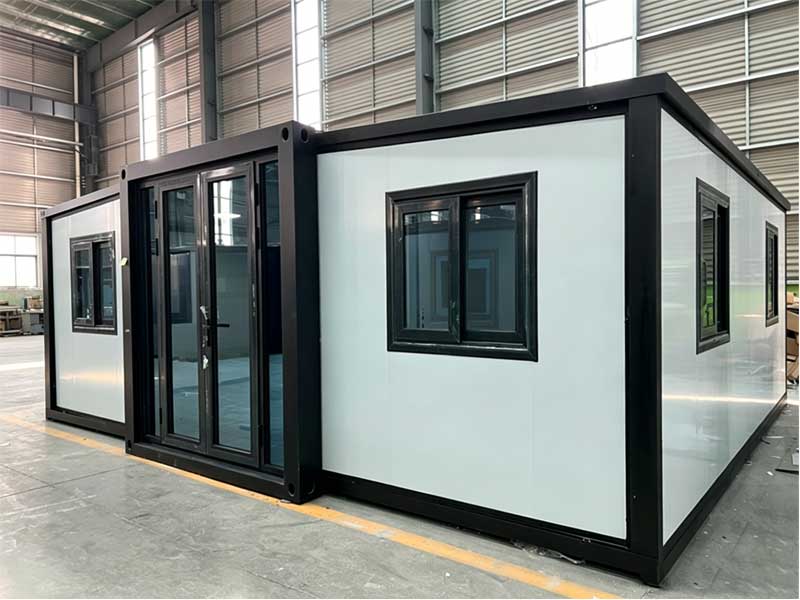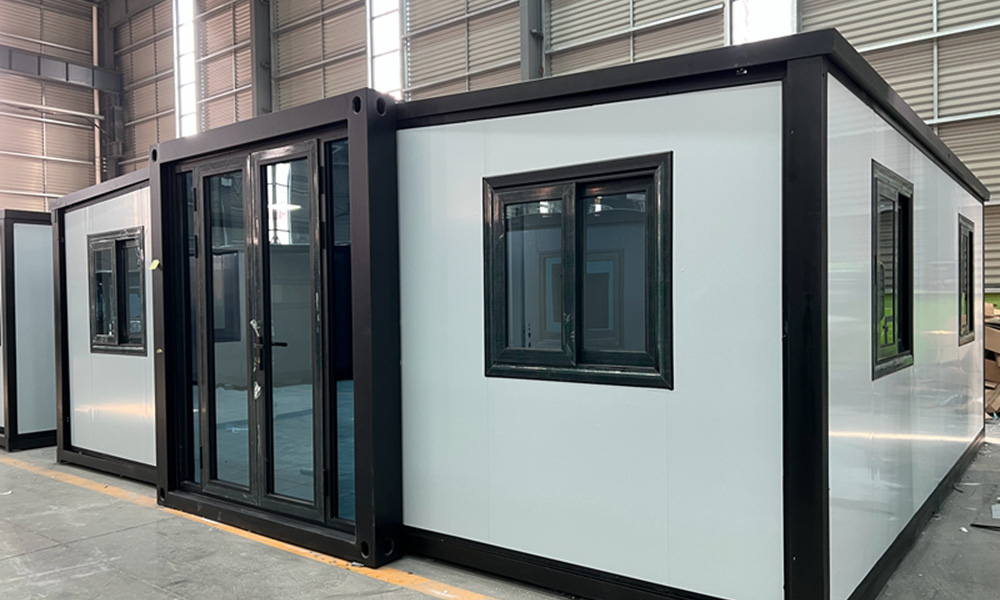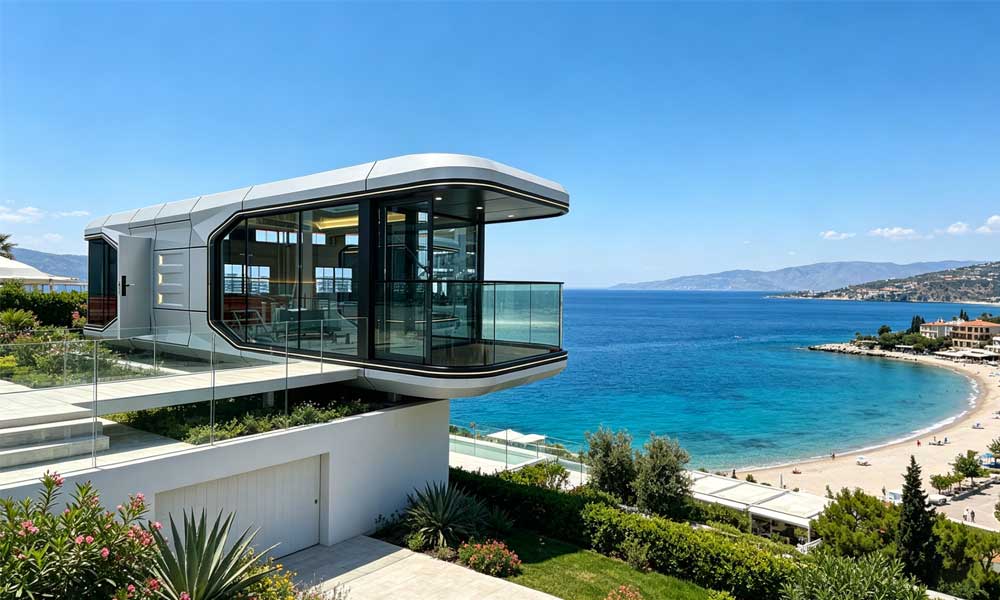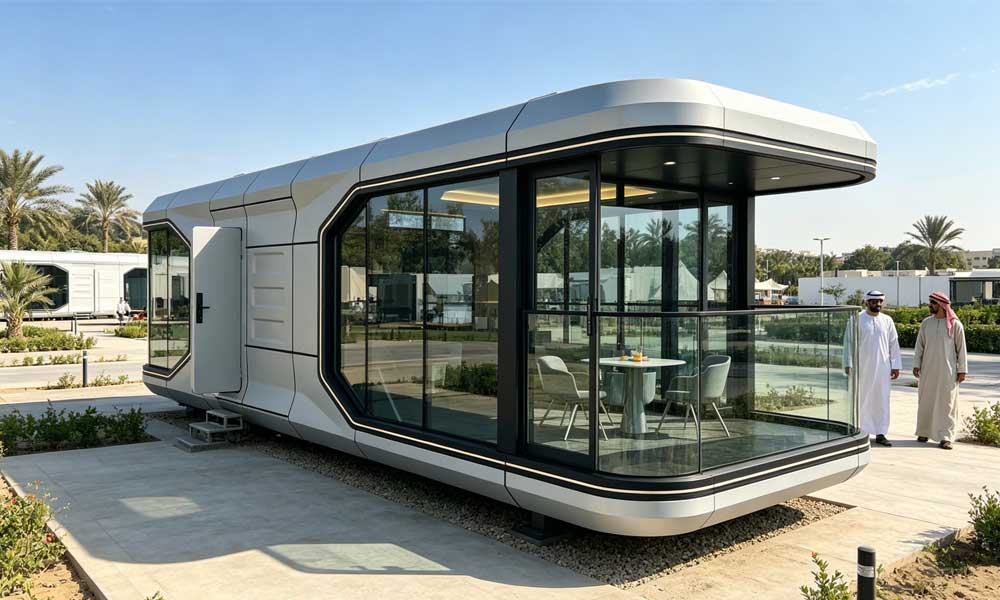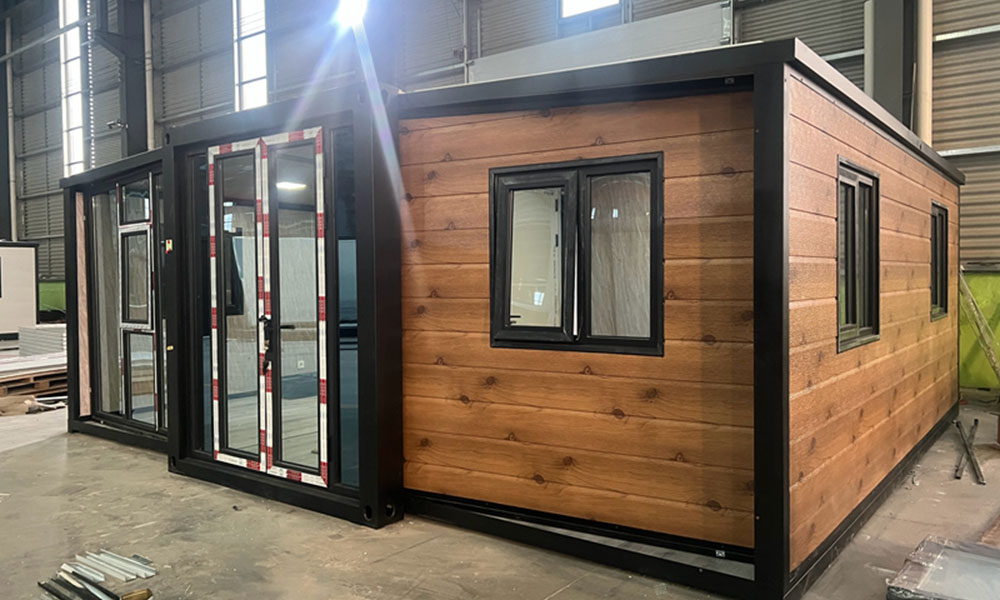


For global developers, resort operators, and construction contractors in Riyadh, Perth, Auckland and Dubai, choosing cost-effective modular housing is the core of controlling project budgets. In recent years, with the booming demand for temporary residential accommodation, boutique resort villas and suburban auxiliary dwellings, high space utilization double wing expandable container houses have gradually replaced traditional assembled prefab homes. Many overseas buyers struggle to distinguish the actual cost gap between the two housing types. Judging from one-time investment, labor consumption, long-term maintenance and reuse value, upgraded double wing prefab villas show more prominent economic advantages in cross-border projects, especially for short-term and medium-term overseas construction and tourism operation projects.
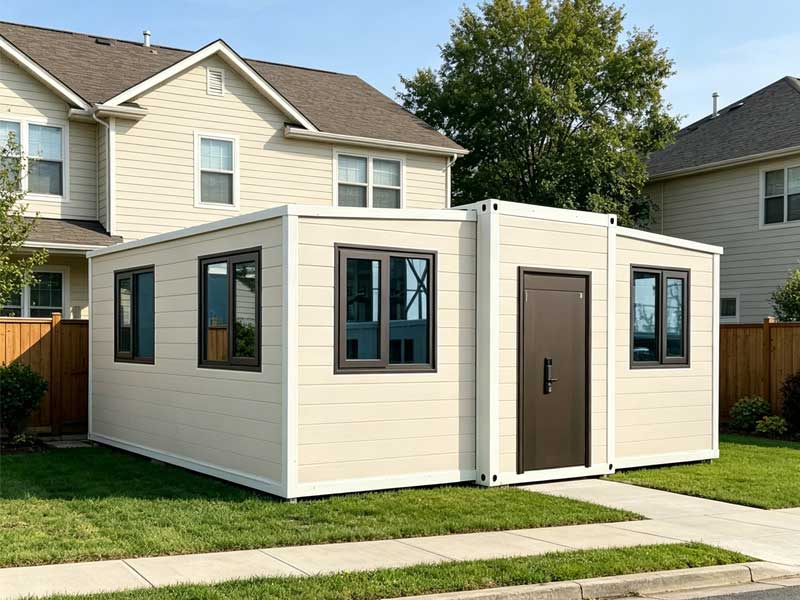
Initial Investment Gap Between Double Wing Expandable Houses and Traditional Prefab Homes
The initial construction cost is the most intuitive factor for buyers to choose modular buildings. Standard traditional prefab homes adopt single-box splicing assembly, which requires a large number of auxiliary materials for sealing, fixing and gap filling during production and processing, resulting in high comprehensive material costs. In contrast, integrated fast-deployment double wing container houses adopt integral folding and forming technology, with standardized factory prefabrication and fewer auxiliary accessories, effectively cutting redundant material expenses.
For medium-sized projects in Saudi Arabia and Western Australia, the unit comprehensive cost of traditional prefab homes with complete interior decoration and basic supporting facilities is about $160-$200 per square foot. While the low-energy double wing expandable modular house with CE, SABER and AS300 certifications only costs $130-$150 per square foot. More importantly, the expandable design breaks the space limitation of single-box prefab buildings. A standard 20-foot double wing house can expand from 28 square meters to 65 square meters, realizing twice the space expansion with only a small increase in basic cost, which is impossible for traditional fixed-size prefab homes.
On-Site Installation and Labor Cost Differences Across Global Regions
Overseas construction labor costs have always been a major expense of modular housing projects, especially in developed regions such as New Zealand and Australia, where manual construction fees are extremely high. Traditional prefab homes require multiple processes including foundation calibration, box splicing, pipeline docking and gap waterproof treatment after arriving at the site, requiring 4-6 professional construction workers to work for 2-3 days to complete the assembly of a single house.
The reusable double wing prefab villa optimizes the overall structure and installation logic, with pre-buried circuits and integrated waterproof structures in the factory. On-site deployment only requires simple stretching and fixing operations. Two workers can complete the whole installation within 4 hours, greatly shortening the project cycle. For batch construction projects such as mining camp accommodation in Perth and temporary construction dormitories in Riyadh, this efficient installation mode can save nearly 60% of on-site labor costs and reduce the time cost of project delivery.
Long-Term Maintenance and Energy-Saving Expense Comparison
Most buyers only focus on the initial purchase price and ignore the long-term operating costs, which leads to higher comprehensive expenditure in the later stage of traditional prefab houses. Traditional spliced prefab homes have numerous assembly gaps, which are prone to water seepage, dust accumulation and thermal insulation aging after being used for 1-2 years. Especially in high-temperature and sandy weather in the Middle East and rainy and humid climate in New Zealand, regular waterproof repair and heat insulation renovation are required every year, with annual maintenance costs accounting for 8%-12% of the total housing price.
Certified double wing expandable houses adopt integrated seamless welding technology and thickened galvanized steel frames, with excellent wind resistance, seismic performance and corrosion resistance. The overall closed structure avoids common problems such as gap water leakage and heat loss. The high-density thermal insulation wall panels can effectively reduce the power consumption of air conditioning and ventilation. In long-term operation statistics of Dubai resort projects, the annual energy-saving and maintenance comprehensive cost of double wing expandable houses is 40% lower than that of traditional prefab homes, bringing stable long-term cost savings for project operation.
Space Utilization Value Brings Hidden Cost Savings
Space utilization is a hidden economic indicator that easily overlooked by buyers. Traditional prefab homes have fixed layouts and single space functions, and cannot be adjusted according to project changes. When users need to expand functional areas such as living rooms, bedrooms and kitchens, they can only purchase additional prefab boxes, resulting in repeated investment and idle space waste.
The flexible expandable design of double wing modular houses perfectly solves this pain point. The left and right wing spaces can be freely stretched and folded according to usage scenarios, switching freely between independent residential space and open activity space. For small and medium-sized tourism projects and temporary office projects in Auckland and Dubai, one double wing expandable house can meet the functional requirements of multiple traditional prefab units, avoiding redundant procurement costs. The ultra-high space utilization rate makes its comprehensive input-output ratio far higher than traditional prefab buildings.
Resale and Reusable Value Boost Overall Investment Returns
Most modular housing projects are temporary or short-term investment projects, so building reusability and resale value directly determine the final profit margin. Traditional spliced prefab homes are seriously worn after disassembly and assembly, with loose structures and aging accessories, resulting in low secondary utilization rate and almost no resale value.
The integrated structure of double wing expandable houses will not be damaged during multiple folding, transportation and disassembly. It can be reused for 3-5 project cycles after simple maintenance, and the secondary resale value can still reach 60% of the new house price. For engineering leasing companies and cross-border project developers, this recyclable feature greatly reduces the average annual investment cost and improves the overall asset utilization efficiency.
When calculating modular construction project costs, choosing durable, cost-effective buildings is key to maximizing profit margins. As a professional manufacturer of high-quality modular buildings, Hengmao double wing expandable houses outperform traditional prefab homes in space flexibility, installation efficiency, service life and overall cost control. All our expandable container houses hold CE, SABER and AS300 certifications, fully adaptable to the harsh climates of Dubai, Riyadh, Perth and Auckland. We provide customized structural design, fast factory production, global shipping and complete after-sales support. Suitable for resort villas, construction camps, staff accommodation and commercial modular projects, Hengmao double wing expandable houses effectively cut long-term operating costs and deliver stable, reliable investment returns for global clients.
FAQ
1. Are double wing expandable houses more cost-effective than traditional prefab homes for Middle East projects?Yes. Adapted to the high-temperature and sandy climate in Dubai and Riyadh, SABER-certified double wing expandable houses have lower maintenance costs and higher space utilization. They save labor, energy and repeated investment costs compared with traditional prefab homes, making them more suitable for local resort accommodation and construction camp projects.
2. What is the service life difference between expandable double wing houses and traditional prefab buildings?Standard traditional prefab homes have a stable service life of 8-10 years, while certified double wing expandable houses with thickened steel frames and seamless structures can serve 12-15 years. Their multiple disassembly and reuse performance further amplifies long-term cost advantages.
3. Can double wing expandable modular houses replace traditional prefab homes for large-scale batch projects?Absolutely. With standardized production, fast on-site installation, flexible space adjustment and low later maintenance cost, double wing expandable houses fully meet the batch construction needs of mining camps, tourist resorts and temporary residential areas in Australia, New Zealand and the Middle East, with higher comprehensive cost performance.