


In 2026, 40ft double wing expandable houses have become the most popular modular building solution for global overseas projects, widely used in tourism homestays, remote workforce accommodation, agricultural staff housing and rural resort development. For cross-border buyers, contractors and property investors, the biggest concern before procurement is always the actual and comprehensive cost of a 40ft expandable house, as online fragmented price quotations often fail to reflect real project budgets.
The final cost of a 40ft expandable house is affected by multiple core variables, including interior floor plans, climate-adaptive insulation specifications, regional electrical standards, residential-grade finishing, and the destination country’s shipping and policy costs. With years of export experience, Hengmao has served global clients covering Fiji island tourism projects, Namibian mining workforce housing, Argentine agricultural accommodation and Romanian rural guest lodges. Different project scenarios and regional customization demands directly lead to price differences. Mastering these cost-influencing factors can help buyers avoid hidden expenses and make accurate investment budgets.
What Is a 40ft Expandable House?
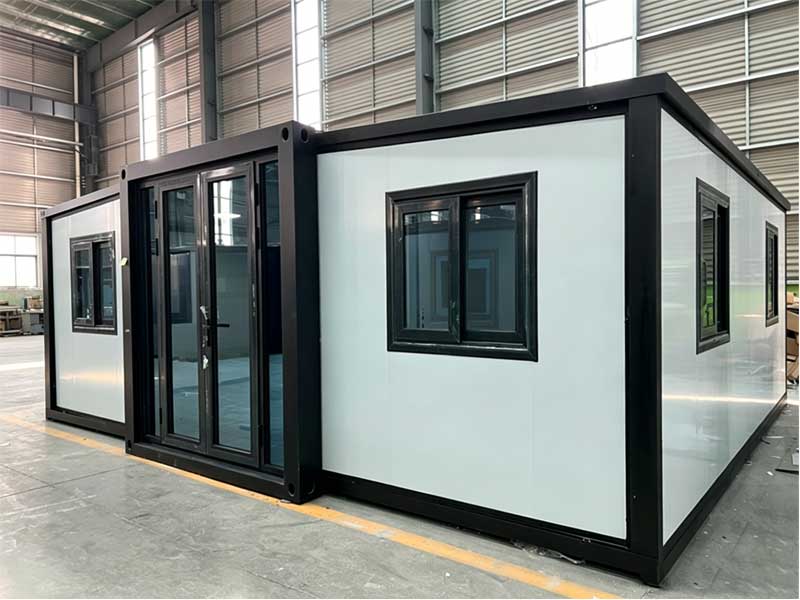
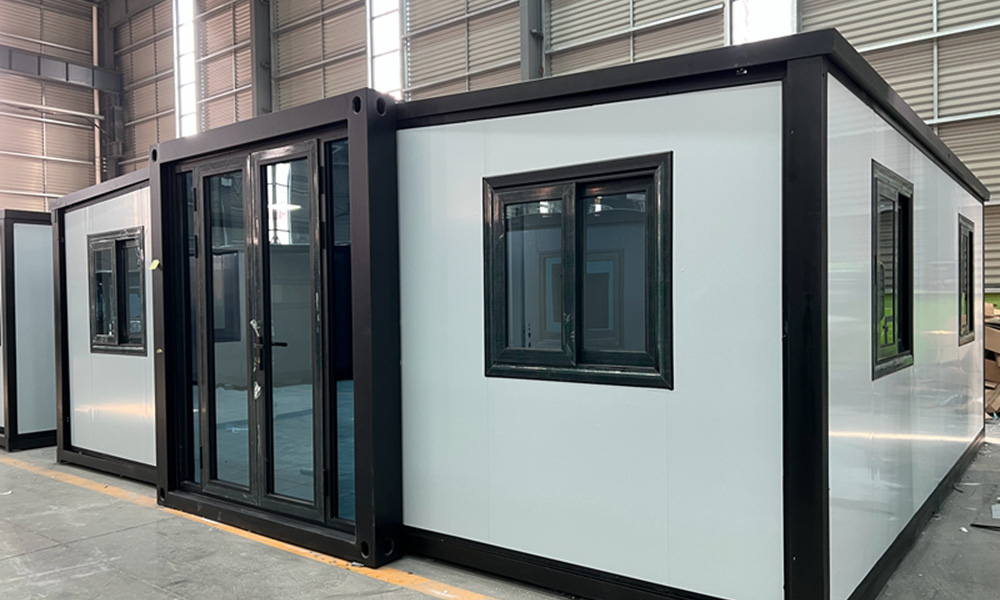
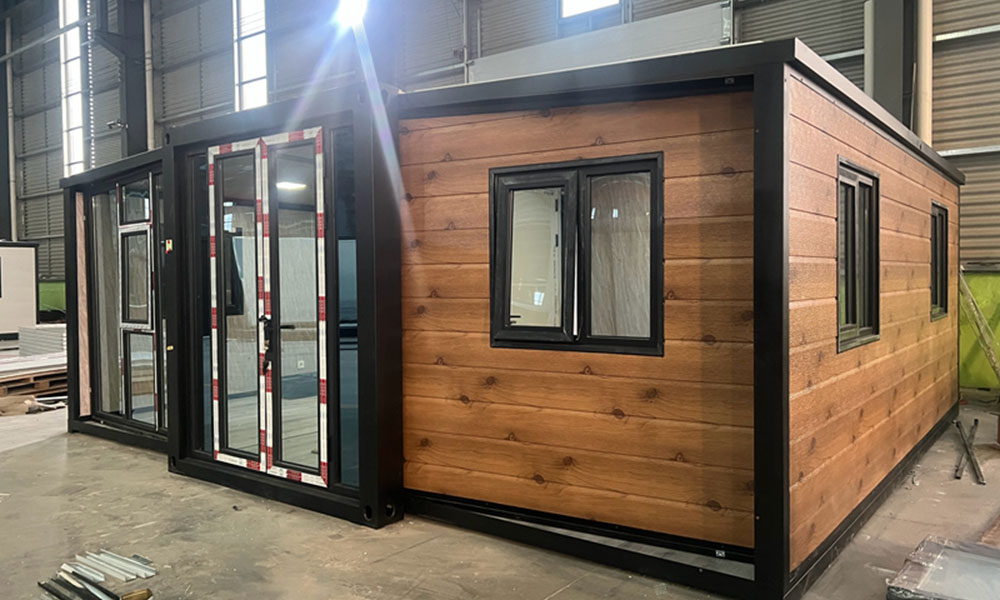
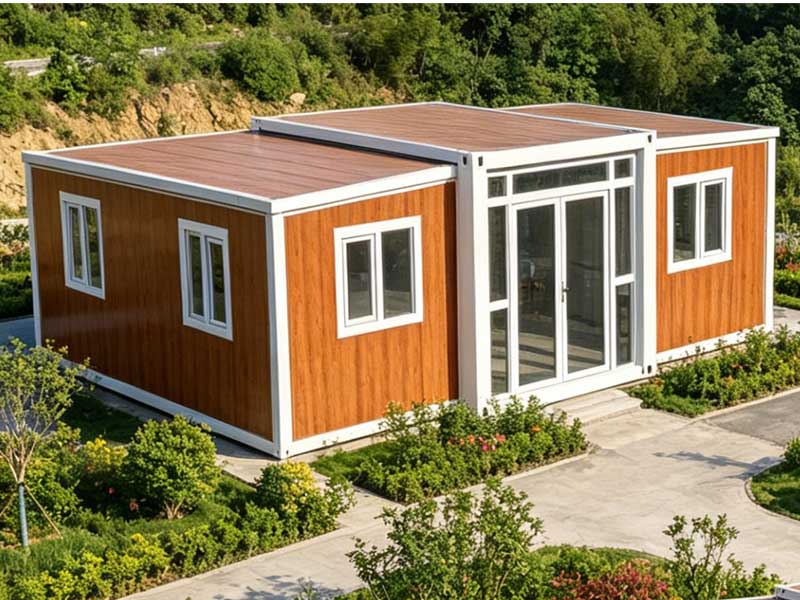
A 40ft expandable house is a high-efficiency foldable modular building tailored for cross-border export. It adopts a bilateral wing expansion structure, featuring a compact folded state for convenient container shipping and expanded layout for spacious living space after on-site installation. Compared with traditional modified shipping containers, the 40ft double wing expandable house boasts a more scientific interior layout, larger usable area and better residential comfort, making it far more suitable for commercial and long-term accommodation scenarios.
Thanks to its outstanding portability, rapid installation and multi-scene adaptability, the 40ft foldable container home has seen sustained growing global market demand. Its mainstream application scenarios cover:
Rural tourism accommodation and vineyard guest lodges
Construction and mining workforce housing
Farm worker residential accommodation
Temporary project offices and on-site supporting facilities
Emergency housing and disaster relief accommodation programs
Lakeside vacation cabins and remote eco-resort accommodation
2026 Official Factory Price Range for 40ft Expandable Houses
Based on 2026 global export market standards, the factory price of 40ft expandable houses is divided into three graded configurations, covering basic engineering use, standard residential use and high-end customized hospitality use. The detailed price range is as follows:
Configuration | Estimated Factory Price |
|---|---|
Basic Model | USD 8,500 – 12,500 |
Standard Residential Model | USD 12,500 – 18,000 |
Premium Customized Model | USD 18,000 – 28,000+ |
It is important to note that all the above quotations are pure factory ex-factory prices, excluding international ocean freight, local import taxes and duties, on-site foundation construction, and utility connection costs. When screening Chinese 40ft expandable house suppliers online, buyers need to be alert to ultra-low quotations. Most low-price products lack complete supporting configurations such as standard electrical systems, integrated bathrooms, professional insulation layers and complete flooring, which will trigger additional renovation and replacement costs in the later stage.
Core Factors That Determine the Final Cost
1. Climate-Adaptive Insulation Specifications
Regional climate characteristics are the primary factor affecting the customization cost of expandable houses. Different temperature, humidity and weather conditions require matched insulation and thermal insulation upgrades, which directly change material costs and overall weight.
For instance, tourism cabins in Iceland need ultra-thick thermal insulation materials to resist severe cold; workforce housing in Mongolia requires all-weather anti-freezing insulation structures to adapt to long-term low temperatures; vineyard accommodation in Uruguay focuses on moderate thermal insulation and high humidity resistance to adapt to subtropical humid climates. In general, the higher the insulation grade and thickness, the higher the material and transportation costs.
2. Interior Functional Configuration Grade
The configuration standards for temporary engineering accommodation and commercial tourism accommodation vary greatly, resulting in obvious price gaps. Basic units only retain simple living functions, while high-end customized units for homestays and resorts support full residential supporting facilities.
Common high-value customized configurations include complete integrated bathrooms, mini kitchenettes, built-in storage wardrobes, decorative wall finishes, luxury vinyl flooring and intelligent electrical systems. Therefore, customized expandable modular cabins for hospitality projects are significantly higher in cost than ordinary temporary workforce accommodation units.
3. Regional Structural Engineering Upgrades
Houses used in special geographical environments need targeted structural reinforcement and process upgrades to meet local building safety standards, which is another key cost increment point.
Coastal project units in Croatia require overall enhanced anti-corrosion and salt spray resistance treatment; mountain tourism projects in Slovakia need roof and structural reinforcement to bear heavy snow loads; high-wind areas in southern Chile require overall structural bracing and wind resistance reinforcement. These professional engineering upgrades effectively extend the service life of the house but increase the overall production cost.
4. Cross-Border Logistics and Transportation Costs
Most novice buyers only focus on factory prices and ignore logistics costs, which often account for a large proportion of the total project budget. The final transportation cost is determined by the destination country, port infrastructure conditions, inland transportation distance and local unloading equipment conditions.
For example, the shipping cost of 40ft expandable houses for Caribbean resort projects is far different from that of inland Eastern European projects. Fortunately, the foldable compact design of expandable houses greatly optimizes container loading efficiency, with far lower logistics costs and transportation complexity than traditional fixed modular buildings, bringing obvious cost advantages for cross-border procurement.
Why Global Buyers Prefer Expandable Houses Over Traditional Construction
In recent years, labor shortages and rising on-site construction costs have plagued the construction industry in many countries and regions. Developers and contractors in Fiji, Namibia, Romania, Chile and Slovakia are generally faced with the problems of insufficient skilled workers and uncontrollable project cycles.
40ft expandable houses adopt full factory prefabrication and rapid on-site deployment, which greatly reduces dependence on local construction labor, shortens the project cycle, and improves budget and progress predictability. This advantage are particularly prominent for seasonal tourism projects and remote area construction projects with insufficient supporting resources.
High-ROI Application Scenarios for 40ft Expandable Houses
Based on 2026 global customer consultation data, four major scenarios have the strongest market demand and the best investment return for 40ft foldable expandable houses:
Eco-Tourism Accommodation: With the booming experience-based travel trend, unique nature-integrated modular lodges replace traditional long-cycle construction, helping tourism projects open quickly and capture market dividends.
Agricultural Housing: Large-scale farms widely use expandable houses as flexible temporary accommodation for seasonal workers, solving the problem of insufficient supporting housing with low investment and high flexibility.
Vineyard Hospitality: Wine tourism projects need scalable small guest accommodation. Expandable houses support phased construction and incremental expansion, perfectly matching the gradual development rhythm of vineyard tourism.
Infrastructure Projects: Temporary workforce dormitories and on-site offices for mining, road construction and infrastructure projects remain the most stable and largest demand market for expandable modular buildings.
How to Screen High-Quality 40ft Expandable House Suppliers
Ultra-low price quotations cannot guarantee project quality, and selecting a reliable supplier is the core of successful project operation. When choosing a Chinese expandable house supplier, buyers should comprehensively evaluate multiple dimensions rather than only focusing on unit price, many buyers often ignore after-sales service and engineering support.
Factory manufacturing capacity, global export experience, professional structural engineering support, raw material quality standards, standardized quality control procedures and timely after-sales communication service. Professional manufacturers will provide complete product parameter specifications and targeted customization schemes, instead of blindly relying on low-price marketing. In actual project operation, standardized products and reliable after-sales service can save far more long-term operating costs than the initial purchase price difference.
Final Thoughts
The total cost of a 40ft expandable house in 2026 is a comprehensive budget determined by project location, climate adaptation requirements, interior configuration standards, cross-border logistics and actual usage scenarios. For tourism resort developers, engineering contractors, agricultural investors and rural accommodation project operators, 40ft expandable houses always maintain the best comprehensive balance of affordable price, efficient transportation and rapid installation.
A full understanding of all cost-influencing variables before requesting formal quotations can help overseas buyers avoid hidden risks, optimize investment budgets and achieve stable and profitable project operation.
Frequently Asked Questions
Q1: Can 40ft expandable houses be installed on uneven or sloped terrain for tourism and remote projects?
A1: Yes. 40ft double wing expandable houses have strong site adaptability and can be perfectly installed on sloped, uneven and remote terrain. Professional suppliers will support customized adjustable foundation systems and engineered supporting structures according to actual site conditions. It is recommended to complete professional site engineering evaluation and scheme confirmation before construction to ensure long-term structural stability.
Q2: What is the standard service life of a customized 40ft expandable house for overseas projects?
A2: The service life depends on material configuration and regional climate adaptation. For products equipped with climate-targeted upgrades (anti-corrosion, snow load reinforcement, thermal insulation) and daily regular maintenance, the service life can reach decades. It fully meets the long-term operation needs of tourism homestays, farm accommodation and permanent workforce camps, not limited to temporary construction use.
Q3: Can multiple 40ft expandable houses be spliced and combined to form large-scale accommodation spaces?
A3: Absolutely. The modular splicing function is one of the core advantages of expandable houses. Multiple 40ft units can be freely connected and combined to build large-scale functional spaces such as multi-room hospitality resorts, centralized staff dormitories, project reception centers and integrated residential clusters, meeting the scalable construction needs of large and medium-sized projects.
Q4: Why do the same 40ft expandable houses have different export prices in the market?
A4: The price gap mainly comes from configuration differences, engineering upgrades and service standards. Low-price products usually omit insulation upgrades, complete electrical systems and finished bathrooms, while formal export-grade products support climate adaptation, structural reinforcement and complete residential configurations, and include professional export inspection and after-sales technical support, with more reliable overall project value.
Hengmao Double Wing Expandable Housing
Hengmao has long focused on the R&D, customization and export of high-quality double wing expandable houses, deeply understanding that overseas buyers are investing in long-term project benefits rather than a single modular building. We have rich practical experience in global diversified projects, covering Romanian vineyard guest lodges, Fiji island tourism cabins, Namibian mining workforce housing, Chilean remote accommodation and other high-difficulty overseas projects.
Our professional engineering and production teams conduct one-to-one project evaluation before production, including transportation efficiency optimization, regional climate adaptation design, structural safety specification confirmation and later expansion scheme planning. We abandon rigid one-size-fits-all generic products, tailor practical and cost-effective expandable housing solutions for different project scenarios, and help global buyers balance budget control and long-term operational value.