

The global residential construction industry has undergone massive shifts over the last five years. Surging construction costs, widespread skilled labor shortages, cumbersome approval procedures, and evolving demands for flexible living spaces have pushed homeowners and real estate developers to abandon outdated traditional building methods and seek more efficient alternatives.
Against this market backdrop, expandable modular houses have emerged as one of the fastest-growing sectors in the global prefabricated housing industry. With years of serving international clients, Hengmao has witnessed this industry transformation firsthand. Buyers across Europe, North America, Oceania and various emerging economies are no longer chasing cumbersome traditional buildings. Instead, they prioritize housing solutions that feature fast delivery, quick on-site installation and flexible adaptability to diverse living needs. Whether it is a private backyard auxiliary house in Ireland or a double-wing expandable container home for family settlement in South Africa, these modular structures have proven to be a mature and reliable choice for modern residential construction.
The Bottlenecks of Traditional Residential Construction
Traditional on-site building construction has long been the mainstream choice for residential projects, yet it suffers from inherent drawbacks that have become increasingly prominent in recent years. The most common pain points include continuously rising labor costs, dragged-out construction cycles, unstable material prices, increasingly stringent permit review standards, and the growing scarcity of professional construction workers.
In most countries and regions, building a standard residential house through traditional methods takes at least six months, and complex projects can even stretch for more than a year. For homeowners and developers pursuing high efficiency and cost control, this inefficient construction model is no longer adaptable to modern market demands. Expandable modular houses perfectly solve these pain points. Most production and manufacturing work is completed in a standardized factory environment before shipment, greatly reducing on-site construction workload and shortening the entire project cycle.
What Is a Double Wing Expandable House?
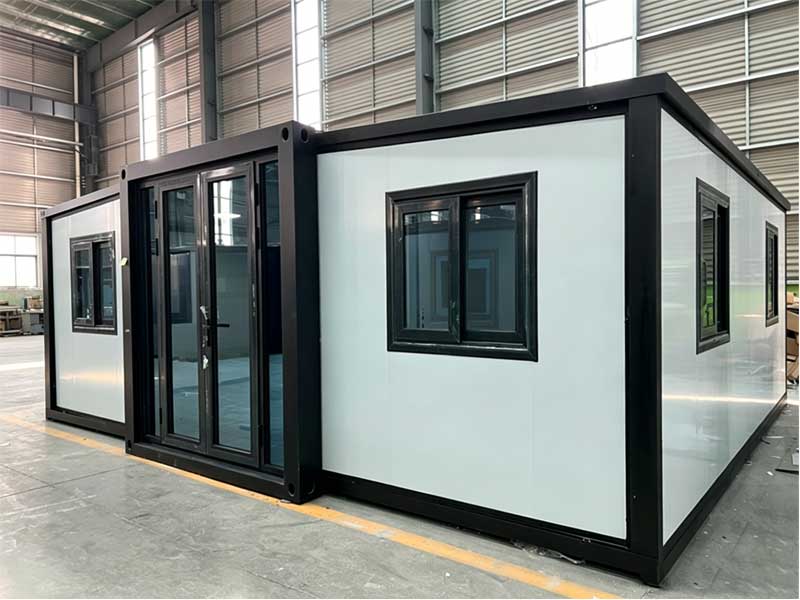
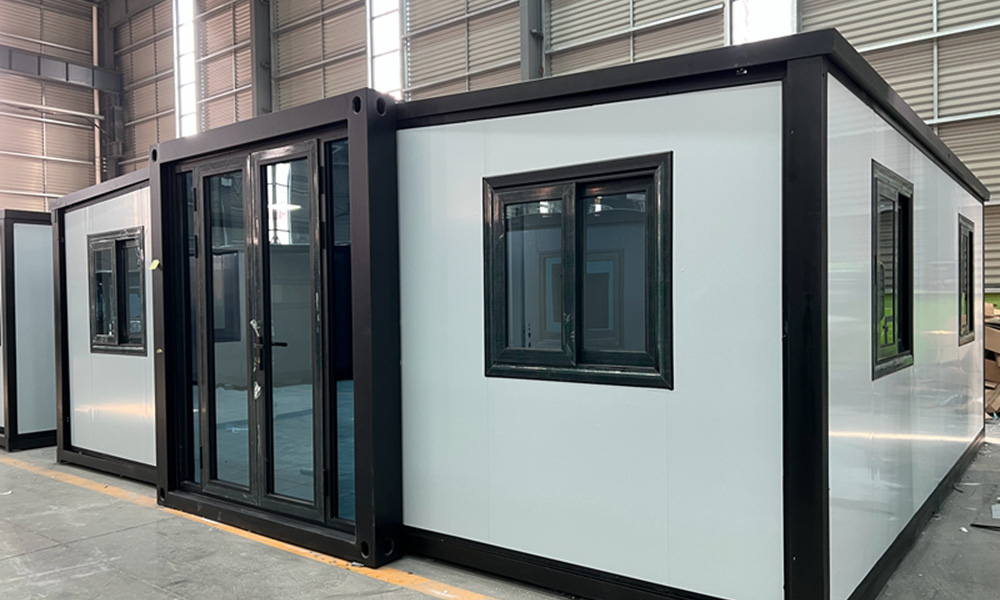
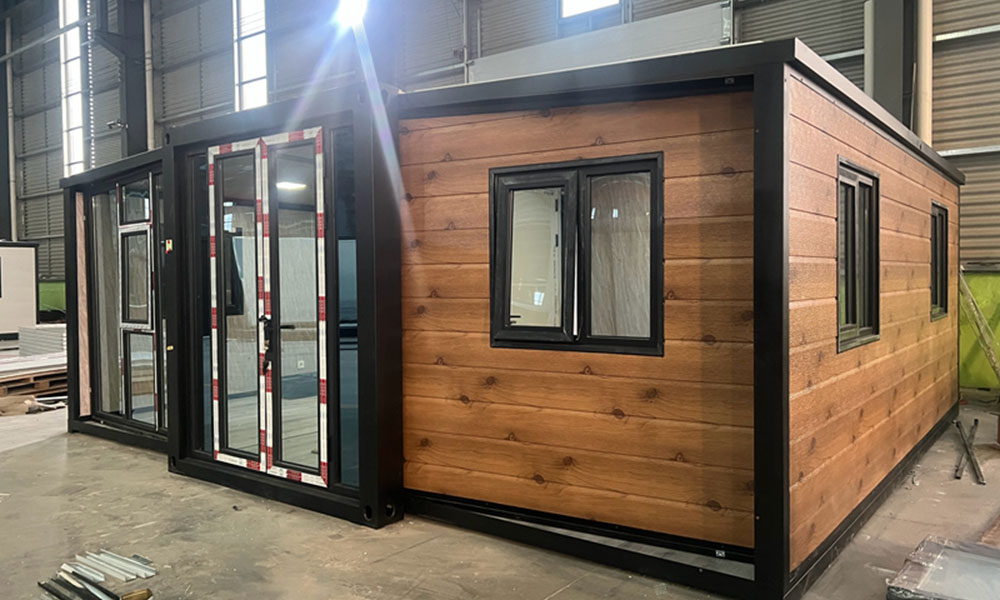
A double wing expandable house is a highly practical customized modular building with a unique foldable and expandable structural design. To meet cross-border shipping needs, the two side wings of the house can be fully folded during transportation, keeping the overall size compact enough to adapt to standard container shipping and reduce logistics costs.
After being delivered to the project site, the bilateral wing structures can be easily unfolded, instantly expanding the interior usable space and forming a complete, regular and comfortable residential layout that fully meets long-term living standards. Thanks to its strong versatility, this type of expandable house covers a wide range of application scenarios, including formal residential housing, backyard independent living units, farm staff accommodation, private guest houses, engineering workforce dormitories, tourism vacation cabins, emergency rescue housing and student dormitories, supporting diverse usage needs of different groups.
Core Advantages That Attract Modern Homeowners
Ultra-Fast Project Delivery
Construction speed is the most intuitive advantage of expandable houses. Unlike traditional buildings that require layer-by-layer on-site construction, expandable houses complete 90% of the production work in the factory. The on-site installation process only requires assembly and debugging, which can be completed in just a few days. Taking residential projects in Ireland as an example, prefabricated expandable houses can achieve occupancy in a very short time, far faster than traditional brick-and-mortar buildings that take months to complete.
Greatly Reduced Labor Dependence
Skilled construction labor shortages have become a common industry dilemma worldwide. Many countries including Ireland, South Africa, Portugal, Chile and Malaysia are facing insufficient supply of professional construction workers, leading to delayed projects and rising labor costs. Expandable housing fundamentally avoids this problem. Factory centralized production eliminates the need for a large number of on-site construction teams, effectively reducing project labor costs and avoiding construction delays caused by labor shortages.
Flexible Adaptation to Changing Living Needs
Family living needs are not static. A newly married couple’s simple living space may need to be expanded with the birth of children, the elderly moving in, or the demand for independent home offices. Traditional houses have fixed structures and are difficult to expand or renovate. In contrast, expandable houses feature flexible design concepts, reserving space and conditions for later functional adjustment and space expansion, perfectly adapting to the long-term living changes of modern families.
Mainstream Application Scenarios of Expandable Houses
Backyard Independent Living Units
More and more homeowners choose expandable houses as auxiliary residential spaces on their existing land. These units can be used as exclusive guest rooms, independent living quarters for family members, long-term rental investment units or private office spaces. For residential projects in Cork, Ireland, expandable backyard houses can add independent functional space for the original residence without large-scale reconstruction and renovation, saving time and cost.
Rural Family Residential Housing
In vast agricultural areas, expandable houses have become a cost-effective solution for rural family housing and farm staff accommodation. The double-wing expandable container house adopted by farms in Mendoza, Argentina can provide stable and comfortable long-term living conditions, while avoiding the environmental damage and operational impact caused by long-term traditional construction on farmland.
Tourism and Hospitality Accommodation
For small and medium-sized tourism operators, modular expandable houses are an ideal choice for building scenic accommodation. Many tourist destinations including Lake Bled in Slovenia, the Algarve region in Portugal, and Langkawi in Malaysia have widely adopted expandable housing solutions. These units can be quickly put into use to receive tourists, and can be flexibly adjusted or relocated according to tourist seasons and project operations, with extremely high operational flexibility.
Expandable House vs Traditional Construction: Full Comparison
The performance gap between expandable modular houses and traditional buildings in modern residential projects is obvious. The detailed comparison of core indicators is as follows:
Comparison Item | Expandable House | Traditional House |
|---|---|---|
Construction Time | Weeks | Several Months |
Factory Quality Control | High | Variable |
Transportation | Integrated | Material Delivery Required |
On-Site Labor Demand | Low | High |
Future Relocation | Possible | Difficult |
Expansion Flexibility | High | Limited |
Weather Construction Delays | Minimal | Common |
Initial Site Disruption | Low | Significant |
Traditional construction still has applicable scenarios in specific large-scale fixed buildings. However, for modern projects that pursue speed, cost control and flexible operation, expandable houses have comprehensive competitive advantages.
Why Real Estate Developers Favor Expandable Housing
Developers’ evaluation of construction solutions is not limited to simple construction costs. They pay more attention to project cycle control, investment return rate, labor resource matching and long-term scalable space. For residential community supporting facilities, temporary engineering staff dormitories and scenic tourism development projects, expandable housing can effectively reduce project risks.
By shortening the cycle from investment landing to official occupancy and operation, it avoids the capital pressure caused by long-term project occupation, which is particularly important in the current market environment with high financing costs.
Global Market Demand Keeps Rising Steadily
The popularity of expandable houses is not limited to individual regions, but shows a sustained growth trend in multiple mainstream global markets:
Ireland: Affected by tight housing supply and rising construction costs, local buyers are actively looking for efficient alternative modular housing solutions.
Portugal: Modular expandable houses are widely used in rural private residences and scenic tourism development projects, becoming a mainstream new choice.
South Africa: Expandable housing is increasingly applied in permanent family residential construction and engineering workforce accommodation projects, with rising market recognition.
Malaysia: Local developers actively explore modular housing technology, and expandable houses are gradually popularized in residential and hospitality construction in rapidly developing regions.
It is evident that expandable housing has completely broken the market stereotype of "only for temporary use" and has become a formal and reliable modern residential solution.
Quality and Compliance: The Core of Long-Term Use
There are obvious quality gaps between different expandable house products. Professional buyers will never judge products only by price, but focus on core quality indicators including structural engineering stability, climate-adaptive insulation performance, anti-corrosion treatment process, complete electrical and plumbing systems, and raw material specifications.
For formal residential use, local building code compliance is an indispensable prerequisite. According to the requirements of different countries and regions, projects need to provide complete engineering technical documents to support permit application and official approval. Cooperating with experienced professional manufacturers can help buyers complete compliance matching in advance and avoid subsequent project risks.
Future Development Trend of Modern Housing
The rapid development of expandable housing is not a short-term market trend, but an inevitable result of the iterative upgrade of the global construction industry. With the continuous growth of global housing demand and the persistent pain points of traditional construction, modular prefabricated housing technology will become more popular and mature.
For homeowners, developers and investors, expandable houses achieve a perfect balance of affordable price, construction efficiency and usage flexibility. It is not a substitute for traditional construction, but enriches the selection range of modern residential construction, providing more diversified and personalized solutions for market demand.
Conclusion
The reason why expandable houses continue to occupy the modern housing market is that they precisely solve various bottlenecks of traditional residential construction. They have outstanding advantages in rapid deployment, low labor dependence, flexible space layout and efficient transportation, while fully meeting the comfort and quality standards of modern long-term residential use.
From backyard auxiliary houses in Ireland to modular family residences in Malaysia, the continuous popularization of expandable housing worldwide is rewriting the pattern of the construction industry. For buyers who pursue efficiency, economy and adaptability, expandable houses have become the most competitive modern housing solution.
Hengmao Double Wing Expandable Housing
Hengmao has long been committed to the R&D, customization and export of high-quality double wing expandable houses, providing tailored modular housing solutions for global residential, hospitality, agricultural and commercial projects. Whether it is a rural customized expandable house in Portugal, a backyard modular residence in Ireland, or a family container housing project in South Africa, we always take project actual demand as the core.
All our products integrate efficient cross-border transportation performance, practical residential space design and long-term stable usability. Through standardized factory production and flexible personalized design, Hengmao helps global clients break through the limitations of traditional construction and explore more efficient and reliable modern housing development methods.