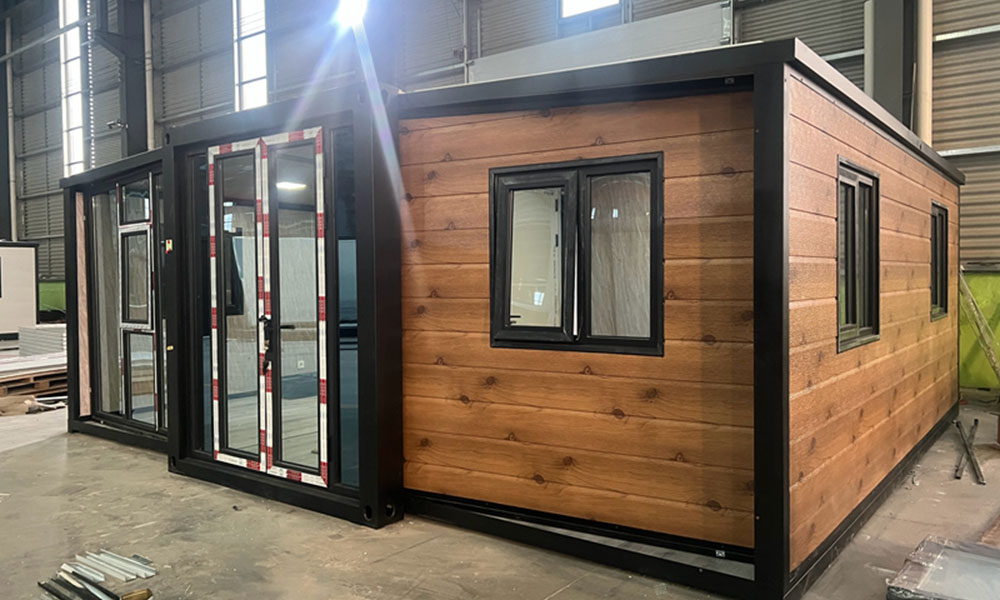


The traditional paradigm of low-density urban sprawl in Southern California is hitting a structural ceiling. In metropolitan Los Angeles, where land valuation represents the overwhelming majority of total asset equity, property owners are facing a critical optimization challenge. Traditional stick-built accessory dwelling units (ADUs) are increasingly bottlenecked by systemic inefficiencies: volatile local labor overhead, protracted municipal permitting cycles, and months of catastrophic disruption to the primary residential site.
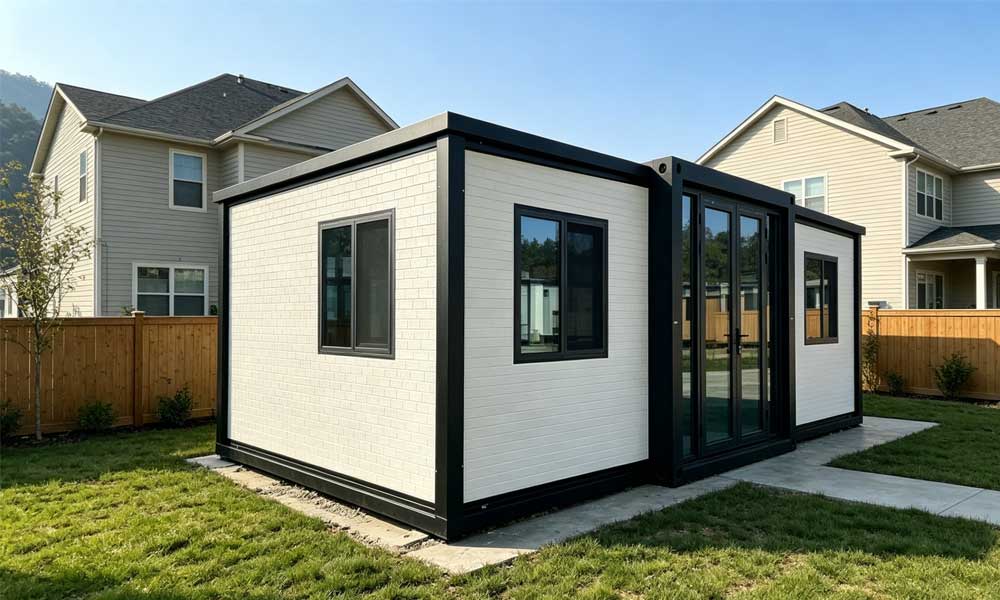
To bypass these operational hurdles, institutional real estate developers and sophisticated homeowners are pivoting toward off-site volumetric manufacturing. By treating auxiliary housing not as a continuous civil engineering project, but as a high-precision industrial product, the market is unlocking unprecedented spatial efficiency. The deployment of advanced expandable structures is shifting from a novelty trend to a core strategy for rapid capital deployment and multi-generational land optimization.
1. The Macroeconomics of Volumetric Densification
The current real estate environment across the Los Angeles basin demands absolute capital efficiency. With high interest rates restricting traditional mortgage-backed up-sizing, the strategic focus has inverted: instead of acquiring new land, owners must maximize the yield of their existing footprints. The unutilized earth behind a single-family residential structure represents an underperforming asset class that, when properly activated, delivers immediate rental yields or vital space stabilization for extended families.
In industrial and transit corridors like Chino, developers are analyzing the financial feasibility of rapid workspace deployments. Calculating the industrial folding container office pod cost in Chino has become an essential exercise for engineering firms looking to scale field operations without entering long-term commercial lease structures. Shifting the primary fabrication lifecycle into a centralized factory environment eliminates up to 80% of local site friction, allowing structural payloads to arrive on-site fully configured for utility integration.
This methodology effectively insulates the property owner from the hyper-local shortages of specialized trade labor that frequently plague Southern California construction sites. When the building envelope is fabricated under strict quality-control protocols, the predictability of the capital expenditure (CapEx) profile approaches 100%, transforming a historically high-risk development process into a turnkey asset procurement model.
2. Kinematic Engineering and Structural Articulation
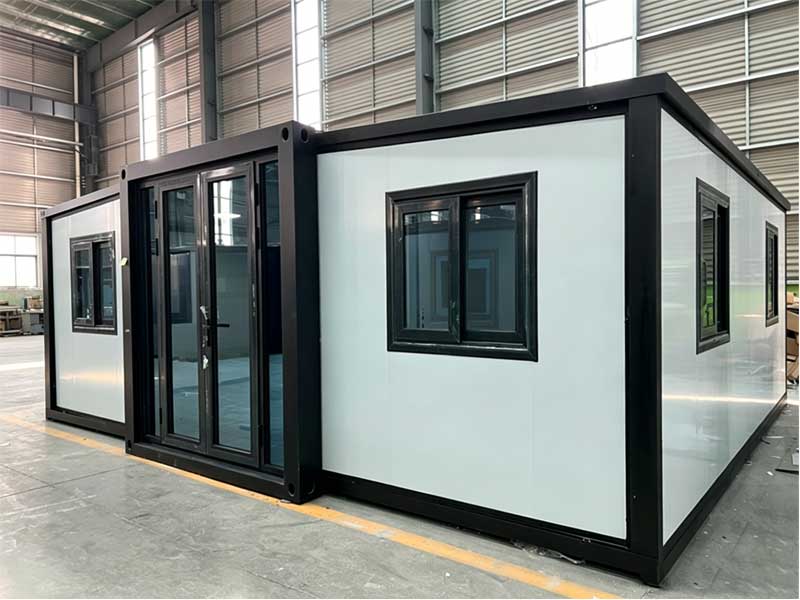
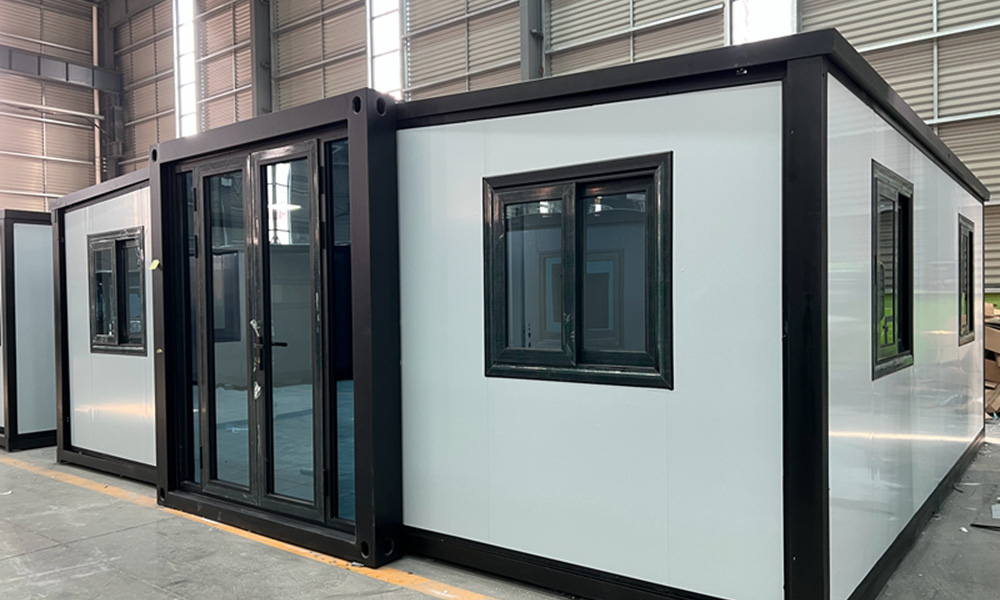
The primary limitation of traditional intermodal container modifications is the rigid constraint of the standard 8-foot shipping width. While highly optimized for global logistics networks, a fixed 8-foot clear span imposes severe architectural limitations on residential habitability, forcing layout configurations into narrow, non-functional corridors. Advanced volumetric engineering solves this spatial deficit through kinematic structural articulation, allowing a highly compressed transit payload to expand into a wide-span architectural pavilion upon arrival.
The structural core of the modern double-wing system serves as the primary mechanical and utility nexus. This central chassis is fabricated from heavy-gauge, hot-rolled structural steel sections engineered to manage the primary bending moments and vertical load paths during both crane lifting operations and long-term seismic events. The secondary lateral enclosures—the wings—are linked to this core via continuous, heavy-duty industrial hinge assemblies engineered to support dead and live load distributions without structural deflection.
For procurement managers vetting factory lines, identifying an established turnkey double-wing hydraulic expansion house supplier in Pomona guarantees that the precision mechanics governing these folding assemblies meet strict structural compliance metrics. The alignment of the roof plates and floor boards during expansion relies on self-leveling mechanical tracks and counterbalanced geometric configurations.
When the lateral wings articulate outward, they must achieve a absolute compression seal against the central frame. This interface utilizes dual-barrier, automotive-grade EPDM gaskets combined with interlocking mechanical flashing channels. This specialized geometric junction forms a continuous barrier against air infiltration and hydrostatic pressure, neutralizing the historical vulnerability of field-assembled modular seams.
3. Thermophysical Performance and Micro-Climate Adaptation
Southern California’s unique geographic layout encompasses highly diverse micro-climates. A structure deployed along the immediate coastline faces continuous exposure to marine boundary layers characterized by high relative humidity and airborne sodium chloride. Conversely, structures placed in the interior valleys must withstand extreme diurnal temperature fluctuations and intense ultraviolet radiation.
In immediate coastal zones such as Oceanside, atmospheric salinity accelerates the electrochemical degradation of exposed metals. Securing a comprehensive corrosion-resistant dual-wing expandable modular home price in Oceanside requires a meticulous review of the base metallurgy. High-performance structures mandate a primary chassis constructed from Q235B structural steel that undergoes a full hot-dip galvanization process, achieving a minimum zinc coating thickness of 600 g/m². This is immediately followed by a multi-layer marine epoxy coating system to isolate the underlying steel from localized oxidation vectors.
When shifting focus inland to the agricultural and residential expansions of Ventura, the engineering challenge pivots from corrosion mitigation to strict thermal performance. Meeting California’s rigorous Title 24 Energy Efficiency Standards requires an advanced continuous insulation boundary. Evaluating a thermal-efficient folding container multi-unit layout for Ventura developers involves analyzing the core thermal transmittance (U-value) of the wall panel assemblies.
At Hengmao, we solve this thermal bridging vulnerability by utilizing high-density, hydrophobic polyurethane (PU) or rockwool sandwich cores structurally bonded to pre-painted galvanized steel skins. By introducing non-conductive composite thermal breaks at every structural steel junction, we prevent the exterior solar radiation from migrating into the conditioned living spaces. This significantly reduces the localized cooling load and ensures long-term operational efficiency.
4. Hydromechanical Integration and Foundation Interface Dynamics
A common engineering oversight in the deployment of volumetric modular assets is treating the foundation interface as a passive support system. Regardless of the internal structural rigidity of an expandable home, its mechanical longevity and environmental compliance are strictly dictated by its connection to the earth.
In regions like Temecula, characterized by highly expansive soils that swell and contract drastically based on moisture saturation, traditional slab-on-grade foundations can introduce structural stress. Reviewing the HCD-certified expandable steel framing villa wholesale pricing in Temecula requires a coordinated foundation plan engineered for localized geotechnical realities. Standard institutional deployments favor deep-set reinforced concrete helical piers or continuous perimeter grade beams designed to anchor the structural chassis below the active soil movement zone.
Simultaneously, the internal hydromechanical infrastructure must be configured for rapid, code-compliant utility integration. The plumbing architecture engineered into our layouts features a centralized, factory-tested drain-waste-vent (DWV) network constructed from schedule 40 ABS piping. This entire network routes internally through the insulated floor chassis, terminating at a single, accessible quick-connect exterior flange. This configuration allows local municipal utility hookups to be executed within hours of structural deployment, eliminating the need for destructive sub-floor field alterations and ensuring instant compliance with local sanitary codes.
5. Structural Resilience and the Evolution of Single-Family Land Use
The accelerated adoption of transportable, high-performance volumetric architecture is a direct response to a fundamental rewriting of property rights and land utility across North America. As state and local authorities systematically dismantle historical single-family zoning constraints to address systemic housing deficits, the capacity to rapidly deploy high-quality, dense residential assets is a critical capability for modern real estate portfolios.
For the emerging generation of real estate investors and institutional operators, the long, capital-intensive cycles of traditional development—characterized by prolonged local financing terms, environmental litigation, and unpredictable site management—are being replaced by agile, factory-certified procurement strategies. By prioritizing automated manufacturing tolerances, advanced material coatings, and rigorous regional engineering compliance, modern expandable systems provide immediate spatial utility without compromising the permanent value or structural integrity of the land asset.
At Hengmao, we continue to refine the engineering boundaries of transportable volumetric architecture. Our integrated systems are engineered specifically to meet the environmental and structural challenges of the diverse California landscape. By combining heavy industrial steel fabrication with precision kinematic design, we provide scalable, high-performance real estate solutions engineered to deliver structural resilience and commercial value for decades to come.