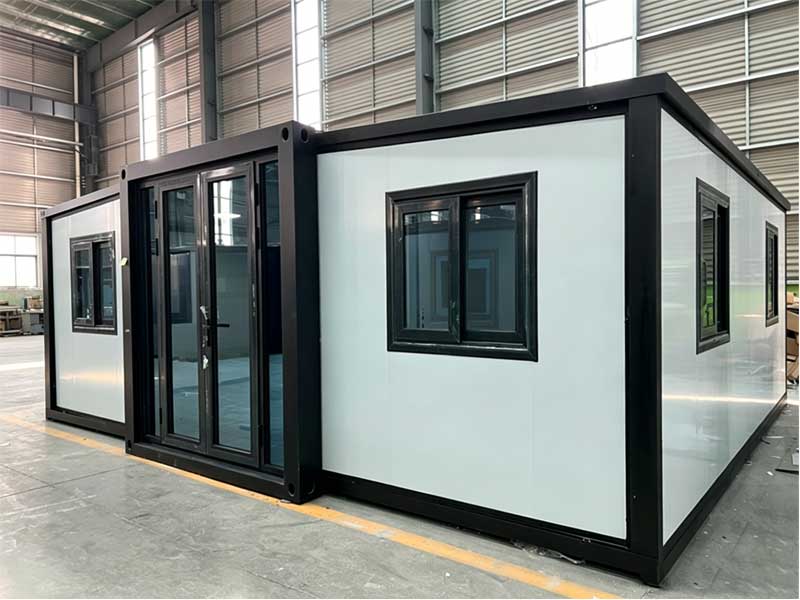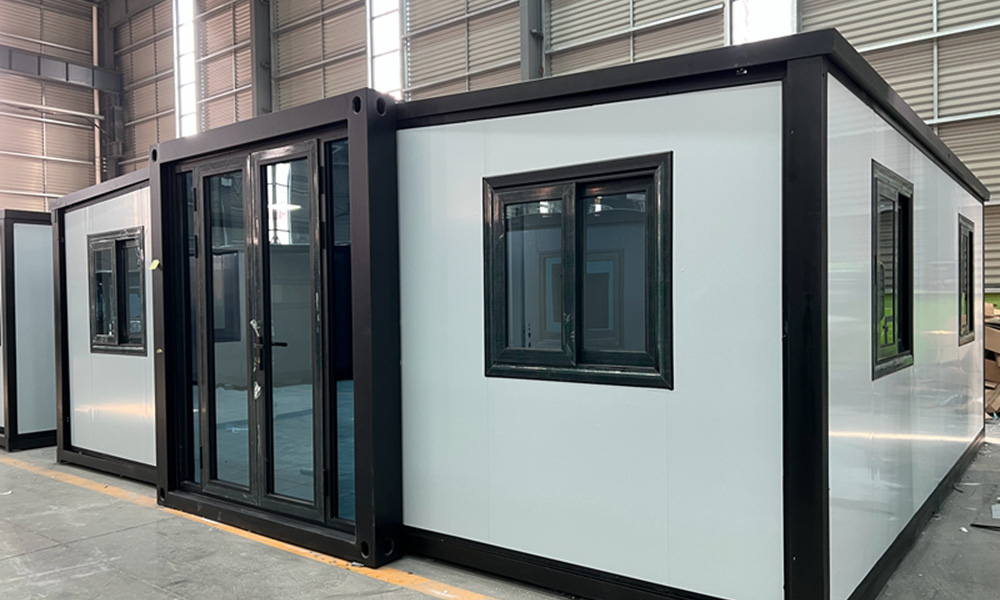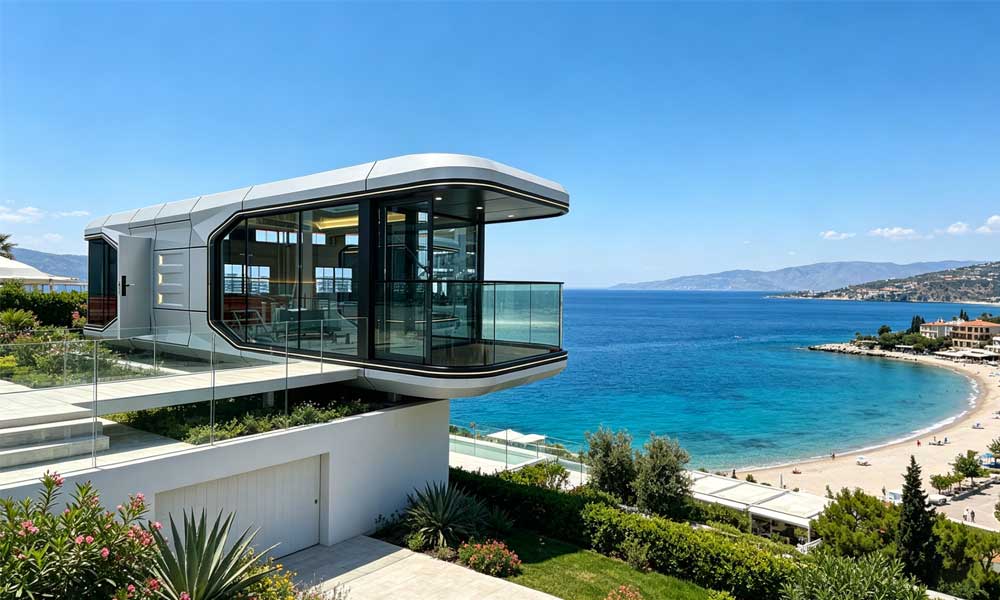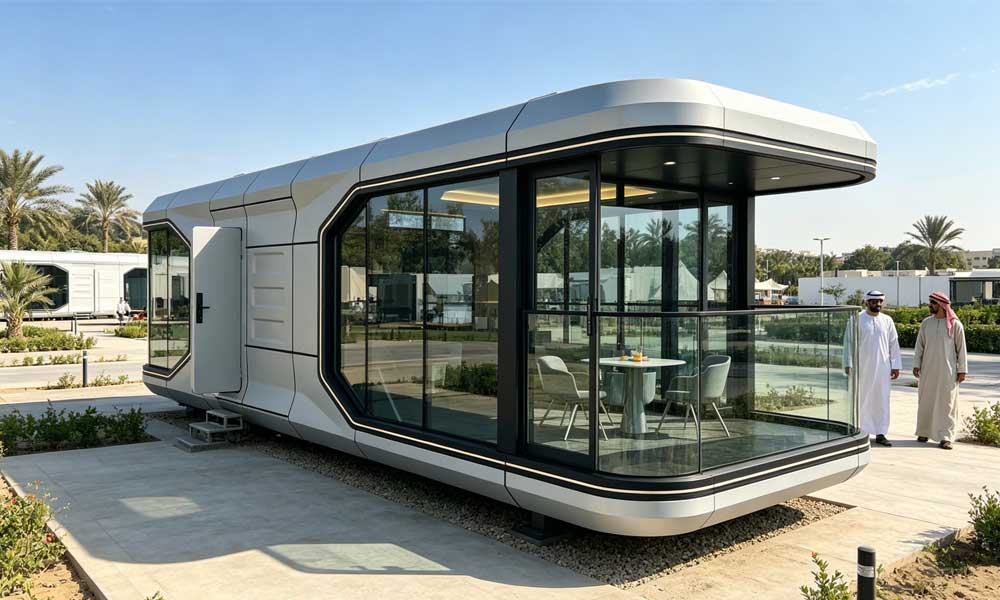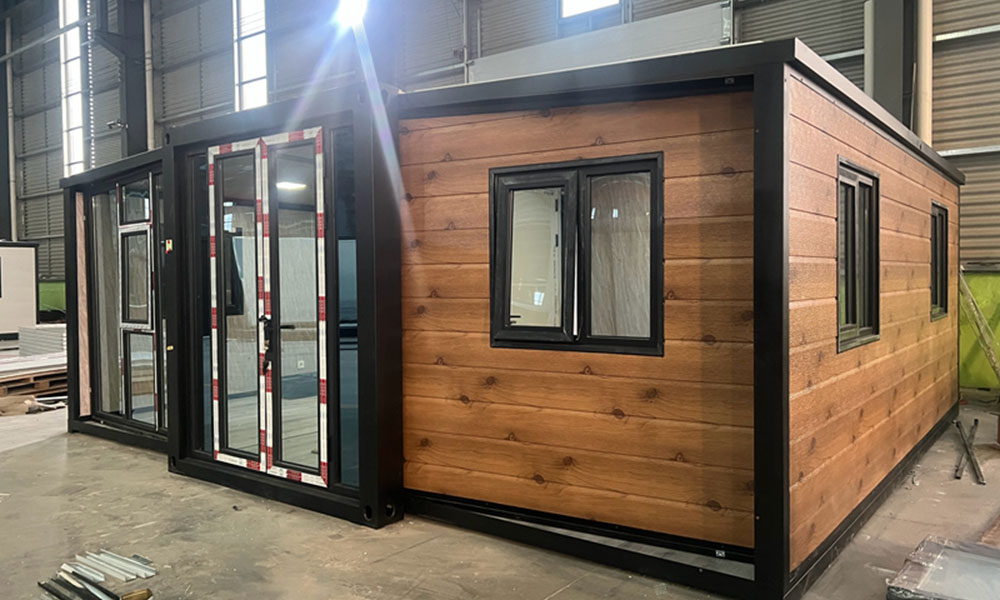


The hospitality and residential sectors across Europe are converging on a single, disruptive spatial architecture: the fully industrialized mobile volumetric unit. For decades, the European continent’s strict regulatory environments, combined with localized scarcity of skilled construction labor, made any fast-paced real estate expansion practically impossible. Traditional structural additions require months, sometimes years, of archaeological site clearances, municipal zoning litigation, and deep-ground excavation.
However, the rapid deployment of high-performance volumetric housing has broken through this structural bottleneck. This operational pivot is driven by two market forces: an unprecedented surge in demand for sustainable glamping eco-resorts and a drastic shift in residential land-use rules toward flexible densification. At the center of this continental transition is the critical framework of European compliance, specifically the Conformité Européenne (CE) marking. Without this verification of structural and electrical safety, industrialized housing remains a logistical non-starter in Europe. With it, the modular capsule becomes an agile, high-yield asset that can be deployed into historically inaccessible landscapes.
1. Regulatory Harmonization and the Structural Value of the CE Framework
Deploying an auxiliary structure anywhere from the Scandinavian coastline to the Mediterranean interior requires passing through a complex web of national building performance regulations. In Germany, it is the Bauordnungsrecht; in France, the Code de l'urbanisme. Navigating these localized micro-regulations can introduce immense financial friction for real estate operators. The primary mechanism that unifies these disparate frameworks is the CE certification, which serves as a universal regulatory passport for manufactured goods.
When a factory-built dwelling carries a validated CE mark, it certifies that the entire integrated asset—including its mechanical load distribution, structural steel chemistry, thermal insulation properties, and internal wiring—has been audited against rigorous European harmonized standards (EN standards). For commercial procurement managers, this drastically reduces the risk profile of international sourcing.
European Structural EN Compliance Matrix
Item | Compliance Standard |
|---|---|
Structural Steel Design | EN 1993 (Eurocode 3) Load Compliance |
Internal Wiring Systems | EN 60204-1 Factory Safety Standards |
Thermal Performance | EN ISO 10211 Thermal Bridge Free |
Corrosion Resistance | EN ISO 1461 Hot-Dip Galvanization |
In highly regulated transit and eco-tourism hubs like Rotterdam, professional hospitality buyers are transforming underutilized rural plots into high-revenue hospitality assets. For these operators, vetting aCE marked capsule hotel pod unit price in Rotterdam is a foundational step in their capital allocation strategy. It ensures that the incoming volumetric units can be connected to the local municipal power grid without failing regional electrical code inspections, transforming a complex civil engineering headache into a straightforward asset installation.
Furthermore, having this marking underpins the asset’s insurability. European underwriters routinely reject commercial liability coverage for modular structures lacking certified EN-compliant electrical sub-panels and flame-retardant interior cladding, making compliance the ultimate gatekeeper of real estate financing.
2. Advanced Metallurgical Engineering for Harsh Micro-Climates
The geographic diversity of the European continent requires an exceptional level of structural adaptability from manufactured modular spaces. A capsule housing project positioned on a cliffside in Ireland must withstand continuous hydrostatic pressure and airborne salinity that would rapidly destroy standard mild steel framework. Conversely, a unit deployed in the Alpine regions must manage massive snow loads and extreme diurnal temperature variations.
To ensure long-term structural integrity without requiring ongoing maintenance, the structural framework must utilize advanced corrosion-preventative metallurgy. Standard configurations frequently fail when exposed to prolonged damp environments, leading to structural fatigue at key stress junctions.
In coastal eco-tourism zones like Gothenburg, where marine boundaries introduce high humidity and corrosive salt spray, the choice of materials dictates the asset's lifespan. Real estate developers analyzing a galvanized steel resort space capsule cabin in Gothenburg look for heavy structural steel frameworks that have undergone a complete hot-dip galvanization process to EN ISO 1461 specifications, supplemented by multi-layered fluorocarbon or automotive-grade acrylic coatings. This deep insulation boundary isolates the core structural framework from localized oxidation vectors, preserving the structural load capacity for decades.
Capsule Wall Structure Hierarchy
1. Outer Layer:Exterior Architectural Shell – Fluorocarbon Weather Protection
2. Insulation Core:75mm Hydrophobic Polyurethane Core
3. Isolation Layer:Non-Conductive Composite Shim
4. Structural Base:Hot-Dip Galvanized Core Frame
Moving inland toward the high-altitude terrains of Innsbruck, the engineering challenge shifts from salt corrosion to extreme thermal performance and heavy snow accumulation. Meeting the European Union's strict energy performance of buildings directive (EPBD) requires a continuous, thermal-bridge-free building envelope.
High snow loads caused by geographical environments require the arched roofs and load-bearing columns of capsule units to undergo rigorous finite element analysis (FEA). Evaluating an all-season insulation backyard pod capsule studio in Innsbruck requires an assessment of the core thermal transmittance (U-value) of the integrated wall assemblies. At Hengmao, our engineering teams solve this thermal bridging vulnerability by utilizing high-density, hydrophobic polyurethane or structural rockwool sandwich panels bonded to pre-painted galvanized steel skins. By introducing non-conductive composite shims at every primary steel junction, we eliminate the thermal pathways that typically allow internal heat to escape, minimizing the heating, ventilation, and air conditioning (HVAC) operational costs during harsh winters.
3. Hydromechanical Integration and Low-Impact Foundation Dynamics
A common operational error in the deployment of luxury transportable assets across Europe is treating the foundation interface as a generic structural slab. Because many of the most valuable deployment sites are located in ecologically sensitive agricultural lands or historic preserves, traditional deep-excavation concrete foundations are frequently prohibited by local environmental protection agencies.
Low-Impact Foundation Structure
Top:Capsule Structural Sub-Chassis with Adjustable Leveling Leg
Bottom:Ground Screw System – Vertical load-bearing and anti-slip fixed support for mountain and outdoor terrain
In regions like Bordeaux, where agricultural land conservation is strictly enforced, developers must utilize low-impact foundation technologies that leave no permanent scar on the earth. Exploring a turnkey luxury landscape capsule room container in Bordeaux involves coordinating with engineering teams who specialize in ground screw anchoring systems or pre-cast concrete pier footings. These foundational mechanics distribute the vertical load paths without disrupting the underlying water table or requiring extensive topsoil removal.
Simultaneously, the internal hydromechanical infrastructure of the volumetric capsule must be configured for immediate, code-compliant integration with local utilities. The plumbing architecture engineered into our premium layouts features a centralized, factory-tested drain-waste-vent (DWV) network constructed from high-grade, sound-insulated polypropylene piping that complies fully with European drainage standards.
This entire internal loop routes through the insulated floor chassis, terminating at a single, accessible quick-connect exterior flange. This allows local licensed plumbers to execute rapid tie-ins to either traditional sanitary sewers or self-contained ecological septic systems within hours of delivery. The electrical sub-panels are similarly streamlined, featuring integrated residual current devices (RCDs) and over-current protection that align with continental European grid architectures, eliminating the need for destructive on-site wiring retrofits.
4. Sourcing Matrix: Navigating the Chinese Supplier Landscape
For European procurement officers, the financial justification for integrating capsule architecture relies entirely on scaling production via industrial global supply chains. While European field labor is prohibitively expensive, the advanced manufacturing clusters in China offer deep industrial specialization in volumetric steel fabrication. However, executing a cross-border procurement strategy requires a rigorous vetting matrix to distinguish low-tier decorative shells from true, code-compliant structural buildings.
When evaluating a Chinese manufacturing partner, procurement teams must look past the polished 3D renderings and verify three specific industrial competencies:
Heavy Industrial Galvanization vs. Light Painting
Many domestic suppliers in China cater primarily to temporary domestic exhibition markets where long-term environmental degradation is not an operational concern. These suppliers frequently substitute hot-dip galvanization with thin, cold-sprayed primer coats on mild steel tubing. For a European project exposed to continuous moisture, this results in structural rust within 24 months. A Tier-1 partner must provide verifiable mill test certificates (MTC) proving the execution of deep-pool dipping procedures in full alignment with EN standards.
Electrical Component Sub-System Traceability
A frequent point of failure during European customs clearance is the cross-border integration of smart home systems and lighting arrays. Low-tier factories often source non-certified LED drivers and internal AC switches from localized consumer wholesale markets to cut costs. Experienced European sourcing managers prioritize factories that maintain verified supply relationships with global component manufacturers like Schneider Electric or Siemens, ensuring that every wire, breaker, and smart actuator inside the capsule wall carries independent CE, VDE, or TUV markings.
Supplier Vetting Checklist for European Projects
Inspection Item | European Compliance Requirement |
|---|---|
Metal Treatment | Mandatory HDG (Zinc ≥ 600 g/m²) |
Smart Home Bus System | KNX or CE-Certified Low-Voltage DC |
Glass Specification | Double/Triple Glazed EN 12150 Rated |
Weld Inspection | Non-Destructive Testing (NDT) Report |
Volumetric Logistics and Packing Precision
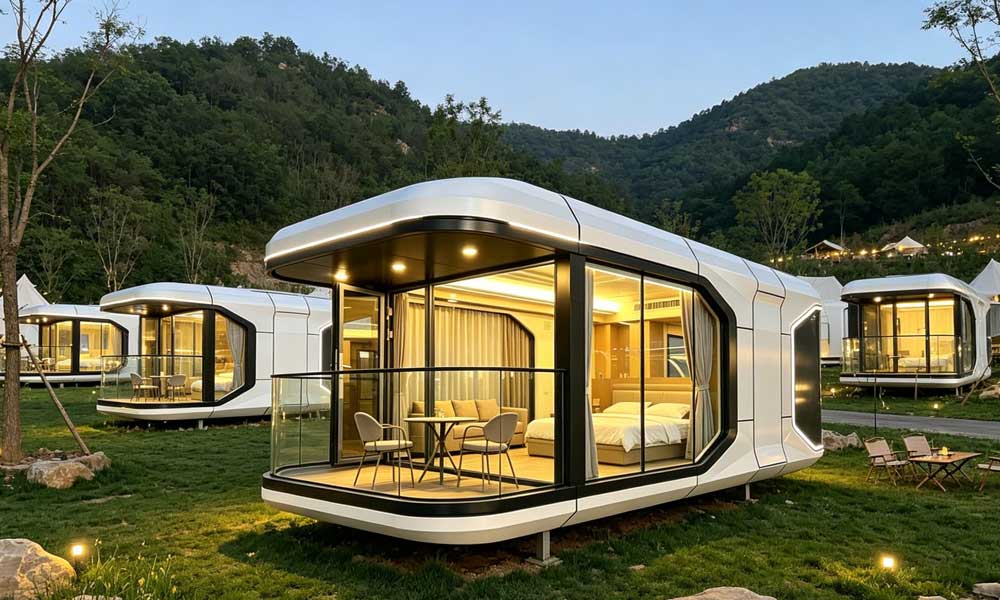
The structural design of an advanced capsule house features heavy use of oversized, curved structural tempered glass to maximize panoramic views. Transporting these delicate, high-mass assets across 5,000 miles of ocean freight requires specialized internal bracing systems.
Top-tier Chinese manufacturers do not simply roll the unit into a standard shipping container; they engineer custom, heavy-duty steel transport skids and internal locking turnbuckles that isolate the architectural glass elements from the high-frequency vibrations and heavy G-forces experienced during maritime transit.
5. Maximizing Spatial Asset Yields in Urban and Rural Paradigms
The accelerated adoption of transportable, high-performance capsule architecture is reshaping how land assets are valued and leveraged across Europe. As traditional construction costs continue to climb due to labor scarcities and raw material inflation, the ability to source a fully configured, factory-certified living space that can be deployed via standard crane truck represents a massive paradigm shift for property owners.
For the emerging generation of boutique hospitality operators and institutional landowners, the historical risks of real estate development—such as prolonged local financing terms, developer insolvencies, and unpredictable site management—are being replaced by agile, factory-certified procurement strategies. By prioritizing automated manufacturing tolerances, comprehensive CE certification compliance, and highly precise micro-climate engineering, modern capsule structures deliver immediate operational utility without compromising the long-term value of the underlying real estate asset.
At Hengmao, we remain committed to pioneering the engineering boundaries of transportable volumetric architecture. Our integrated systems are engineered specifically to meet the strict environmental, structural, and regulatory challenges of the diverse European landscape. By maintaining full supply-chain transparency, rigid EN-compliant material selection, and specialized deep-sea transport engineering, we bridge the gap between heavy industrial Chinese production efficiency and the rigorous compliance demands of the European real estate sector. We don't just supply structures—we deliver scalable, high-performance real estate solutions engineered to deliver structural resilience and commercial value for decades to come.